Reviewed · GUIDED
Lisbon on foot: From the hills to the river – Dutch guide
Lisbon reveals itself best on foot, especially on a route that drops from a hilltop viewpoint to the Tagus River. This walk with Dutch-speaking guide Gino links lookout points, old quarters, cafés, earthquake history, and a pastel de nata in about two hours.
I like the 100 percent Dutch narration, which makes the stories easy to follow, and the route’s smart downhill direction. I also like the finish at Time Out Market, where you can keep your evening going with food or a drink. The main drawback is the terrain: hills, stairs, and uneven streets make this a poor choice if you have mobility limits.
Key points at a glance
- Starts high above Lisbon: Begin at São Pedro de Alcântara with views toward the city and São Jorge Castle.
- Guided entirely in Dutch: Gino explains Lisbon’s past and daily life without a language switch.
- Covers several central districts: Walk through Bairro Alto, Chiado, Baixa, and the riverfront.
- Connects history with real places: Hear about the Age of Exploration, the 1755 earthquake, Fernando Pessoa, and the 25th of April Bridge.
- Includes a pastry stop: Pause for what Gino considers the best pastel de nata in Lisbon.
- Ends at Time Out Market: Finish near Cais do Sodré, with an easy place to eat or have a drink afterward.
Starting above Lisbon at São Pedro de Alcântara
The tour begins at the Miradouro de São Pedro de Alcântara, one of Lisbon’s classic high viewpoints. From here, you can look across the city toward São Jorge Castle and get your bearings before walking downhill.
This is a useful starting point because Lisbon can feel confusing at street level. The city is built on hills, and its neighborhoods change quickly. From the viewpoint, Gino can put the streets below into context before you enter them.
Bring a camera, but do not let the view distract you from the practical matter of footwear. You need comfortable walking shoes. The walk is only two hours, but the route includes slopes and old streets, and you will not have a formal break during the walk apart from the pastry stop.
More Guided in Lisbon:
- Best of Lisbon Small-Group Guided Walking Tour
★ 5.0 · 4,869 reviews - Lisbon: Private Guided Tuk-Tuk Tour with Hotel Pickup
★ 4.9 · 4,552 reviews - From Lisbon: Fátima, Nazaré, Batalha, and Óbidos Guided Tour
★ 4.7 · 3,060 reviews
Bairro Alto and Praça Luís de Camões
From the viewpoint, the route moves through Bairro Alto. By day, this district gives you a close look at Lisbon’s older street pattern, with narrow streets and traditional façades. Gino uses the neighborhood to explain both the city’s past and its present-day character.
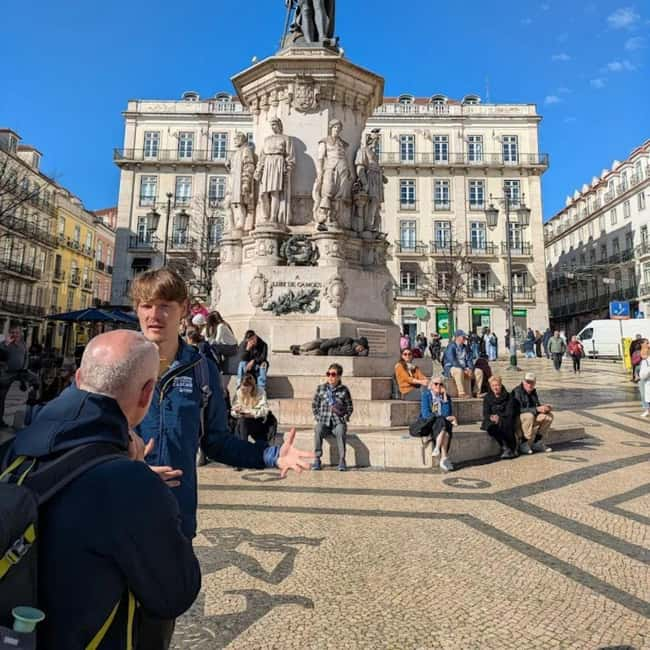
The route then reaches Praça Luís de Camões, named for Portugal’s famous poet. This is where the tour connects Lisbon’s cultural life with the country’s maritime past. You will hear about the Age of Exploration and figures such as Vasco da Gama and Luís de Camões.
I like this part of the walk because it avoids treating Lisbon as a collection of pretty photo stops. The places are tied to larger stories: navigation, poetry, empire, and the way Portugal remembers its past. The Dutch language also helps here. Historical names and dates are easier to follow when you are hearing them in your own language.
The tradeoff is pace. Two hours is enough for a useful introduction, not an exhaustive tour of Bairro Alto or Chiado. If you want time for detailed photography, shopping, or long stops inside buildings, you may find the schedule brisk.
Café A Brasileira and Fernando Pessoa
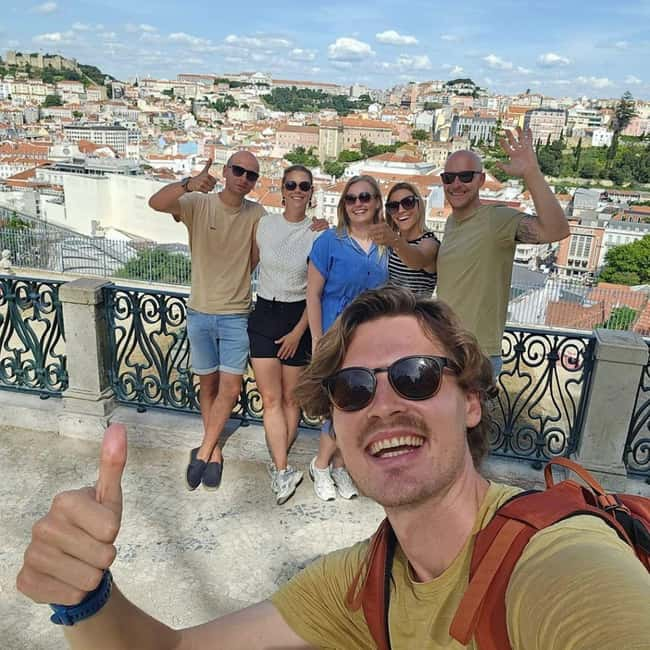
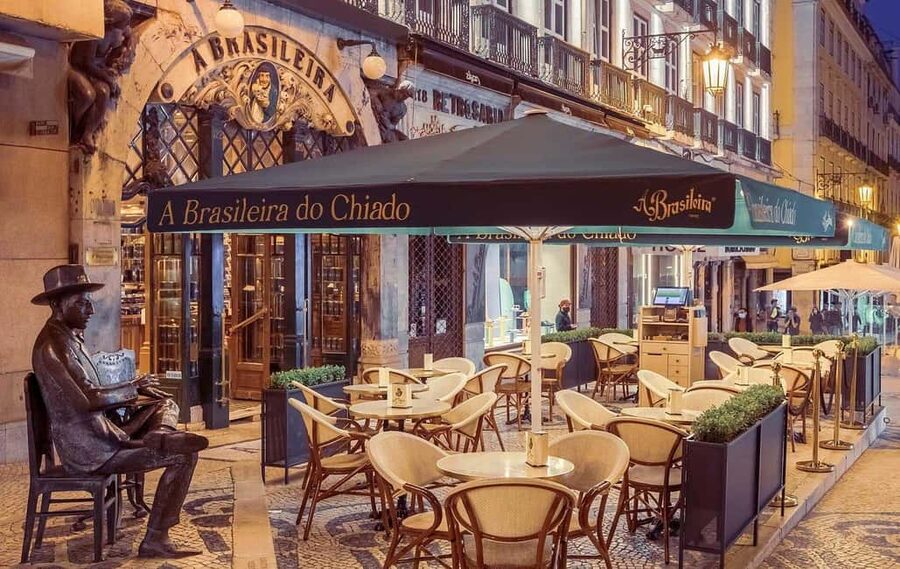
In Chiado, you visit Café A Brasileira, one of Lisbon’s best-known cafés. Outside, a statue of Fernando Pessoa provides an easy way into the story of one of Portugal’s most famous literary figures.
The café stop is mainly about the setting and the city’s cultural life. Do not expect a long seated coffee break, since the walk has no planned rest period. The value here comes from seeing a place connected with Lisbon’s writers and café culture while Gino explains why it matters.
This is also a good example of the tour’s approach. You are not simply looking at a church or café and moving on. You are hearing how people, literature, daily routines, and public spaces fit together. If you prefer a tour with formal museum visits, this will feel light on interiors. No attraction entrance fees are included, and the group does not go inside the sights.
Carmo Convent and the 1755 earthquake

The walk continues to the Carmo Convent, a powerful reminder of the 1755 Lisbon earthquake. From here, Gino explains how the disaster changed the city and led to the rebuilding of Baixa.
This section gives the tour a clear historical turning point. Lisbon is not only a city of old buildings and steep lanes. Much of central Lisbon reflects decisions made after the earthquake, when the Baixa district was reconstructed in a more ordered form.
You will not go inside the Carmo Convent, so this is a short outdoor visit rather than an archaeological or architectural tour. That limitation is worth knowing before booking. You get the story and the setting, but not a detailed interior exploration.
Still, the stop works well within a walking route. It helps you understand why the streets ahead look different from the older quarters above. A guide can point out that contrast as you move downhill toward Baixa.
Something different to do with a day in Lisbon:
- Lisbon City Center Tour – The Unmissable Lisbon
★ 5.0 · 22,234 reviews - Lisbon: Sintra, Pena, Regaleira, Cabo da Roca & Cascais
★ 4.7 · 19,656 reviews - Sintra: Pena Palace and Park Entrance Ticket
★ 4.2 · 17,410 reviews - Lisbon: Jerónimos Monastery Entrance Ticket
★ 4.1 · 14,164 reviews
St. Dominic’s Square and the lower city
St. Dominic’s Square is another stop on the route through central Lisbon. The square adds a different layer to the walk, with Gino continuing to explain the city’s past and daily life.
The appeal of this stop is its place within the larger sequence. You begin at a viewpoint, pass through historic neighborhoods, and gradually enter the lower city. Each change in elevation also changes the way Lisbon feels. You do not need a separate lecture on urban design to notice that the streets become broader and more structured as you approach Baixa.
Because this is a short tour, the stop is likely to be brief. Think of it as part of the walking story rather than a full visit with extended free time. You will see several places, but the guide’s explanations are the main reason to book.
Baixa and the pastel de nata break
In Baixa, you get a short pause and a chance to taste a pastel de nata. Gino considers this the best pastel de nata in the city, making the pastry stop one of the more personal parts of the experience.
This is not a full meal, and the tour does not include a general food tasting program. It is a small, practical break in the middle of a walking route. You can use it to catch your breath, enjoy a classic Portuguese pastry, and hear more about Gino’s own Lisbon preferences.
The lack of a longer break is important. You should carry water, especially on a sunny day, and bring sunscreen and a hat if the forecast calls for strong sun. The pastry stop gives you something to eat, but it does not replace lunch.
Baixa is also where the earthquake story becomes easier to understand. After walking through narrower streets in Bairro Alto and Chiado, the lower district feels more planned. Gino explains how Lisbon was rebuilt after 1755, giving the streets you are walking through a clear historical purpose.
Commerce Square and the riverfront
The route continues to Commerce Square, then toward the Tagus River along Ribeira das Naus. This is one of the best transitions on the tour. Lisbon shifts from hilltop neighborhoods and city squares to an open riverfront.
The river matters to Lisbon’s identity, and Gino uses the waterfront to return to Portugal’s seafaring past. Earlier, you heard about Vasco da Gama and the Age of Exploration. Here, the Tagus gives that history a physical setting. You can look out over the water while hearing how the river shaped the city’s trade, travel, and public life.
The walk along Ribeira das Naus also gives your legs a break from constant uphill movement. The tour starts high and generally heads downward, but it is still a walking activity with no scheduled seated rest. The riverfront portion should feel more open than the older lanes above.
You may want to save some camera space for this part. The route includes scenic views on the way to the 25th of April Bridge, and the open river setting offers a different view of Lisbon from the one you had at São Pedro de Alcântara.
Seeing the 25th of April Bridge
The 25th of April Bridge is included as a talking point and scenic feature near the river. Gino explains the bridge’s place in Lisbon while you view it from the route.
This stop is useful because it brings the city’s modern appearance into a tour that otherwise focuses heavily on older districts, writers, earthquakes, and maritime history. Lisbon is not frozen in the past. The bridge is part of the city’s present-day image, and its position across the Tagus is easy to appreciate from the riverfront.
You should not read this as a bridge tour or a crossing. The experience provides views and background, not entry onto the bridge. The same applies to the other landmarks: the route is outdoors, and entrance fees are not part of the price.
Finishing at Time Out Market
The walk ends at Time Out Market near Cais do Sodré. This is a strong finishing point because you do not have to search for somewhere to eat immediately after the tour. You can stop for a snack or drink and decide what to do next.
The ending also makes practical sense for an afternoon or evening plan. After two hours of walking, you may want food rather than another scheduled sight. The market gives you that option without forcing the group to stay for a meal.
Do check the exact meeting point when you book. The start can vary depending on the option selected, while the tour description places the finish at Time Out Market. The experience is available as a private walk or for small groups, so the atmosphere may differ depending on your booking.
What the $36 price delivers
At $36 per person, this is priced as a guided orientation walk rather than a full sightseeing package. The fee covers the Lisbon walking tour and Gino’s Dutch-language guiding. It does not cover hotel pickup, drop-off, attraction admissions, or a full meal.
I see the best value here in the route and the language. You cover several important central areas in two hours, and a Dutch-speaking guide can explain complicated subjects such as the Age of Exploration and the 1755 earthquake without translation slowing things down.
The price makes more sense if you are visiting Lisbon for the first time, want a city overview, or prefer a small private experience. It makes less sense if you mainly want free time at each landmark or plan to visit interiors on your own. In that case, a self-guided walk may give you more control, though not the same personal storytelling.
One useful sign is the 4.9 rating from 17 reviews, with praise focused on Gino’s clear explanations and pleasant guiding style. One detailed account describes a two-and-a-half-hour version that covered many places, added useful facts, and used smart public-lift routes to move around Lisbon quickly. That suggests the tour can deliver a lot in a short period, but it also confirms that you should be ready for a fairly active walk.
Who should book this Dutch walking tour
I would choose this experience if you want an introduction to Lisbon that feels personal rather than scripted. It suits Dutch-speaking visitors who want to understand the city while walking through the actual neighborhoods, not sitting on a bus.
It is also a good fit for:
- First-time Lisbon visitors who want an overview before exploring alone
- Couples, families, or friends who prefer a private booking
- People who enjoy history, city views, literature, and local food
- Anyone who wants a guide to connect the hills with the river
- Visitors who appreciate a small group and a Dutch-speaking explanation
I would hesitate if you have difficulty with hills, stairs, or uneven pavement. The activity is specifically not suitable for people with mobility impairments. I would also look elsewhere if your main goal is entering monuments, taking a long café break, or sampling several foods.
Practical advice before you go
Wear shoes you can comfortably walk in for two hours. Lisbon’s slopes are part of the experience, not a minor detail.
Carry a water bottle. There is no regular break, and the pastel de nata stop is a treat rather than a hydration stop. Check the weather before leaving, and add a hat and sunscreen on bright days.
Bring a camera for São Pedro de Alcântara, the Tagus, and the 25th of April Bridge. If you want to take notes, keep them brief. The route moves through several districts, and pausing too long can make the schedule feel tight.
You can cancel up to 24 hours before the activity for a full refund, and a reserve-now, pay-later option is available. Those terms are useful if your Lisbon plans are still changing.
Should you book Gino’s Lisbon walk?
Book it if you want a Dutch-language introduction to Lisbon with a smart downhill route, strong city views, a pastry stop, and stories that connect the Age of Exploration, the 1755 earthquake, local writers, and the modern riverfront.
Skip it if you need step-free access, want extended visits inside attractions, or prefer to explore at your own slow pace. For everyone else, $36 is a fair price for a focused two-hour orientation, especially when you finish at Time Out Market with the rest of Lisbon ready to explore.
FAQ
How long does the Lisbon walking tour last?
The tour lasts two hours. Check availability for the current starting times.
What language is the tour conducted in?
The live tour is conducted in Dutch.
Where does the tour start?
The starting meeting point may vary depending on the option booked. One listed starting point is the Miradouro de São Pedro de Alcântara.
Where does the tour finish?
The route finishes at Time Out Market near Cais do Sodré.
Is food included?
The tour includes a stop for a pastel de nata. A full meal, drinks, and other food are not included.
Is the tour suitable for people with mobility impairments?
No. The tour is not suitable for people with mobility impairments, and comfortable walking shoes are recommended.
Just reviewed in Lisbon
- Private tour Lisbon – full day★ 5.0 · 8 reviews
- Private Tour: Portuguese Food and Wine Tour★ 5.0 · 33 reviews
- Lisbon Football Experience – Private stadium and Museum Tour★ 4.0 · 10 reviews
- Lisbon and Sintra Essence 8H – Private Tour★ 5.0 · 5 reviews
- Private Tour: Lisbon Sunset Walking Tour with Fado Show and Dinner★ 5.0 · 30 reviews
- Private Catamaran Tour: Lisbon coast cruise with barbecue and drinks★ 5.0 · 20 reviews
- Lisbon: Helicopter Tour over Cascais & Cabo da Roca★ 5.0 · 4 reviews
- Private Tour Fátima – Nazaré – Batalha – Óbidos★ 5.0 · 6 reviews
Guided, compared.

Best of Lisbon Small-Group Guided Walking Tour
Read our review →

Fátima, Nazaré, Batalha, and Óbidos Guided Tour
Read our review →
Guided Tour to Sintra, Pena, Regaleira, Cabo da Roca and Cascais
Read our review →

Welcome Lisbon Tour with Local Guide in Private Eco Tuk Tuk
Read our review →