
Reviewed · CITY TOURS
Lisbon Private Tour – The best introduction to the city
Lisbon’s oldest quarters make more sense when you walk them with someone who can connect the steep lanes, churches, Moorish traces, and fado traditions. This private tour moves from Commerce Square to Alfama and Mouraria, giving you a useful first look at the city rather than a long list of disconnected sights.
I like the private format, with only your group of up to six, and I like the strong mix of major landmarks and smaller street details. The views from Portas do Sol, Santa Luzia, and Graça are a real draw. The main drawback is the pace: three hours is enough to get oriented, but not enough for extended time inside every church or museum.
Key points to know before booking
- Commerce Square is the starting point, placing you at one of Lisbon’s clearest central landmarks.
- Alfama and Mouraria receive the most attention, with about 30 minutes of walking in each neighborhood.
- Three famous viewpoints are included, at Portas do Sol, Santa Luzia, and Graça.
- The tour is private for up to six people, so your guide can adjust the walk to your group.
- Guides named in guest feedback include Sarah, Clayver, and Keiber, with special praise for clear explanations and flexible pacing.
- The tour ends at Praça da Figueira, not back at the starting point, so plan your next stop from there.
Why this is a smart first walk in Lisbon
I see this as a city orientation tour with a strong old-town focus. You begin at Praça do Comércio, Lisbon’s grand riverside square, then move toward the streets that survived or grew around the city’s oldest core.
That route gives you useful bearings. You see where central Baixa fits into the city, then climb gradually toward Alfama and Mouraria. By the end, you have a much clearer sense of Lisbon’s hills, viewpoints, old neighborhoods, and central squares.
The private setup matters here. Lisbon’s older districts are filled with narrow streets, sudden stairways, small churches, and details that are easy to miss in a large group. With a private guide, you can ask why a building matters, pause for a photo, or spend less time at a stop that does not interest you.
The tour is offered in English and costs $181.48 per group of up to six. If six people join, that works out to about $30 per person for three hours of private guiding. For two people, it is a much bigger per-person expense, but you are paying for personal attention rather than a seat on a standard group walk.
More Private in Lisbon:
- True 4Hour Private Tuk Tuk Tour: Discover Lisbon with a Local!
★ 5.0 · 8,008 reviews - Lisbon: Private Guided Tuk-Tuk Tour with Hotel Pickup
★ 4.9 · 4,552 reviews - Private Lisbon Sightseeing Tuk-Tuk Tour: Alfama, Belém & More
★ 5.0 · 4,277 reviews
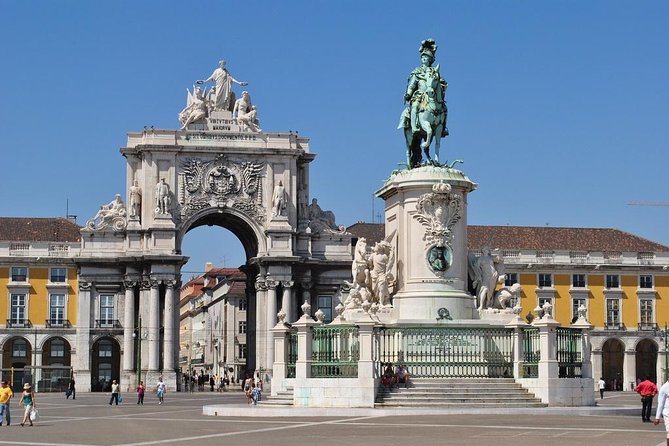
Starting at Praça do Comércio
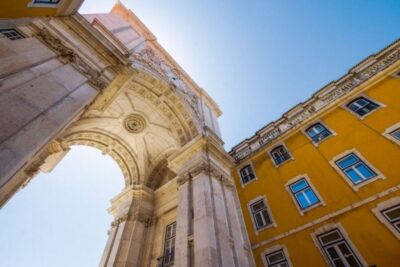
The tour begins at Praça do Comércio, the large square beside the Tagus River. It is one of Lisbon’s easiest meeting points, and the open space makes it less confusing than trying to meet in one of Alfama’s tight lanes.
Your guide uses the square to set the scene for the walk. From here, you move toward the older parts of the city, passing through a sequence of historic buildings before reaching the hills.
Because the meeting point is central and near public transportation, it works well as the first activity of a Lisbon stay. You can also use the end point, Praça da Figueira, as a practical base for continuing on your own.
Churches and old buildings near Baixa
The first short stops show how much history is packed into a small area. At Igreja de Nossa Senhora da Conceição Velha, you see a church built on the site of an old synagogue in the 16th century. The stop is brief, about five minutes, so expect a look and explanation rather than a long interior visit.
Casa dos Bicos follows. This unusual old palace was built in the Manueline style by a former mayor of Lisbon and now houses the José Saramago Foundation. Its distinctive stone-covered facade gives you an early taste of Lisbon’s architectural variety.
The walk also passes a Roman Catholic church built on the place where Saint Anthony of Lisbon was born. The supplied route does not assign this stop a formal number or a stated time, so your guide’s treatment may be brief. Still, it adds a personal and religious layer to the city’s central streets.
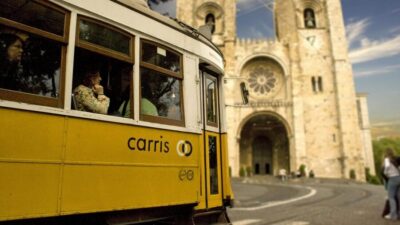
You then reach Lisbon Cathedral, or Sé, described as the city’s oldest church and built on the site of an earlier mosque. The listed visit lasts about five minutes. That is enough for an introduction, but not enough if you want to study the building at length or spend time inside on your own.
This is an important point about the tour’s design. The guide is helping you understand the setting, not offering a detailed cathedral tour. If Sé becomes a priority, you may want to return later with extra time.
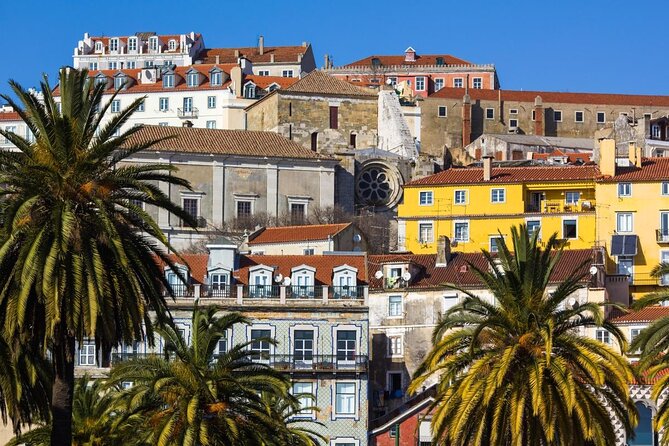
Walking through Alfama’s steep old streets
Alfama is the heart of the experience. The route spends about 30 minutes walking through Lisbon’s oldest neighborhood, where the streets feel very different from the broad geometry of Baixa.
The value here comes from moving through the district rather than simply stopping at a viewpoint. You see how the lanes twist, how the neighborhood rises toward the hills, and how small details can tell you more than a single large monument.
The route also includes an old fountain built in the 14th century. The information provided does not name it, but its inclusion shows the tour’s interest in small civic landmarks as well as famous buildings.
You should expect some uphill walking and uneven streets in this part of Lisbon. The activity information says most people can participate, but it does not promise a flat or easy route. Wear shoes you can trust on stone pavement, and do not treat the three-hour duration as three hours of gentle strolling.
One of the tour’s strengths is the chance to ask about daily life in Alfama as you go. The named guides received praise for being engaging, flexible, and good at explaining the area. Clayver was specifically praised for adapting to the group’s needs, while Keiber was credited with taking the group to less obvious places and avoiding cruise-ship crowds.
That does not mean the route will always be empty. Alfama is one of Lisbon’s most popular districts. It does mean a private guide may be able to adjust the walk instead of following a rigid script.
More City Tours in Lisbon:
- Lisbon City Center Tour – The Unmissable Lisbon
★ 5.0 · 22,234 reviews - Lisbon: Daytime/Sunset/Night City Sailboat Tour with Drink
★ 4.9 · 3,114 reviews - Lisbon: City Highlights and Viewpoints E-Bike Tour
★ 4.9 · 1,556 reviews - Lisbon: Private City Tour by Eco Tuk Tuk
★ 4.9 · 1,215 reviews
Portas do Sol and Santa Luzia
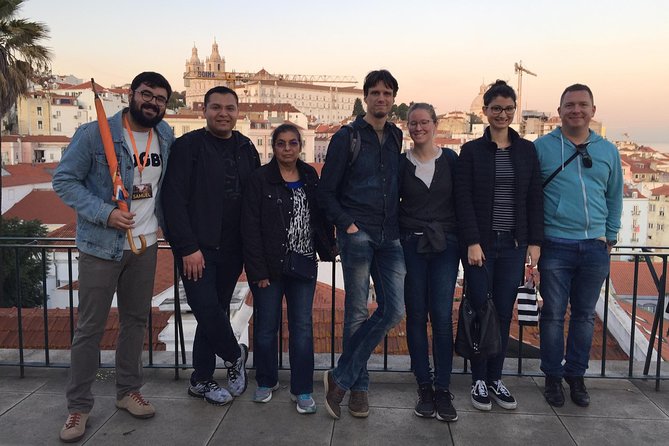
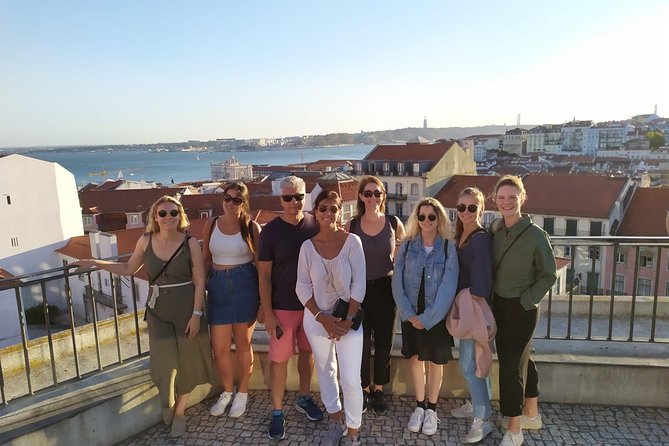
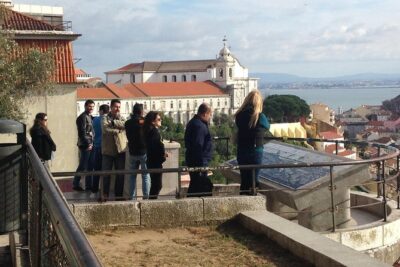
After Alfama’s lanes, the views open at Miradouro das Portas do Sol. This is one of Lisbon’s best-known lookout points, and the stop lasts about ten minutes.
This is where the city’s hills begin to make visual sense. You can look across the old rooftops and see how Lisbon rises and falls toward the river. It is also a good place to pause after the tighter streets of Alfama.
The next stop is Miradouro de Santa Luzia, another ten-minute viewpoint near the church of Santa Luzia. The setting offers a different angle and gives your guide another chance to explain the neighborhood’s layout.
Two viewpoints in a row may sound repetitive, but they help you understand the city from changing angles. The drawback is that photo stops can take time away from the streets themselves. If you prefer local shops, interiors, or food stops, this route gives more attention to scenery and orientation.
The Amália Rodrigues pavement portrait
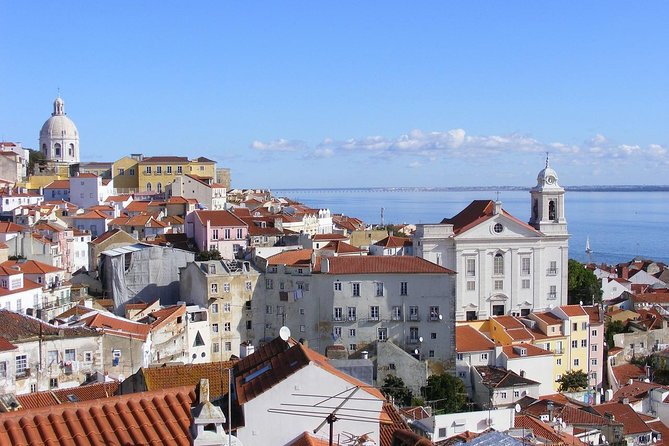
A quick stop at Calçada da Amália adds a modern cultural note to the walk. Portuguese pavement stones form a portrait of Amália Rodrigues, the queen of fado.
The stop lasts only about three minutes, so it is more of a pointed introduction than a full lesson in fado. Still, it connects the physical streets of Alfama and Mouraria with one of Portugal’s best-known musical traditions.
I like this kind of detail because it keeps the tour from becoming only a parade of churches. You get architecture, city views, neighborhood life, and a small reminder of Lisbon’s performance culture.
Graça viewpoint and Moorish traces

The walk continues to Miradouro da Graça, also known as the Sophia de Mello Breyner Andresen viewpoint. This is another major lookout, with about ten minutes set aside.
By now, you have seen Lisbon from several heights. Graça gives you a broader view and helps explain why the city is often described through its hills. It is one of the most scenic moments of the route, but reaching it adds to the physical demand of the walk.
The itinerary also points to a landmark originally from the Moorish period. The description does not identify it by name, so you should ask your guide for the exact story and location when you reach it. Its inclusion fits the wider purpose of the tour: showing how Lisbon’s Christian, Moorish, and later layers overlap.
Mouraria, fado, and a neighborhood shaped by change
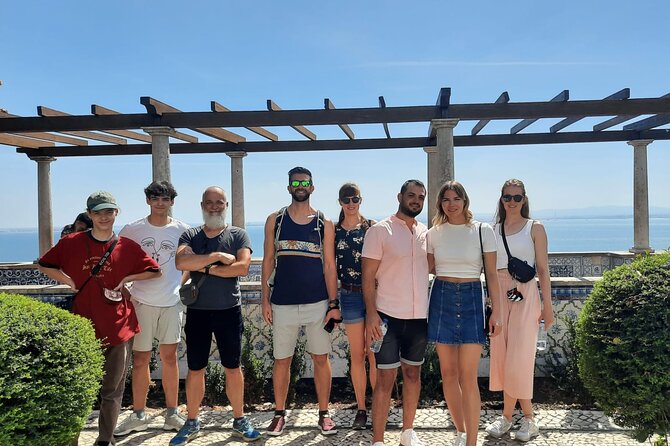
The final major neighborhood stop is Mouraria, with about 30 minutes of walking. The area was built by the Moors after Christians conquered the city, and the route introduces it as one of the places tied closely to the origins of fado.
The stop at Monumento Mouraria Berço do Fado gives that connection a clear marker. The walk through Mouraria is especially useful if you want more than postcard Lisbon. The neighborhood has a different feel from the formal squares and major viewpoints, and your guide can help you understand why it matters.
The route also passes a square built on the site of Lisbon’s largest hospital. The information does not name the square, but it is described as one of the city’s best-known squares. Again, this is an example of the tour’s broad approach. You are not only seeing monuments. You are following the changing uses of city spaces.
Keiber’s praised approach is particularly relevant here. The group was taken to less obvious spots and away from the densest cruise crowds. A private walk through Mouraria can feel more useful than simply checking off a famous viewpoint, especially if you want to see how older districts function today.
What the three-hour schedule really means
The listed stops add up to a compact route. Some are only three to five minutes, while Alfama and Mouraria receive about 30 minutes each. The viewpoints receive about ten minutes apiece.
That schedule works if your goal is to get your bearings quickly. It is less suitable if you want long church visits, museum time, a meal, or a slow photographic walk.
Food and drinks are not included. You should plan to eat before or after the tour rather than expecting a café stop during the route. The end point at Praça da Figueira gives you a practical place to continue, but no specific meal arrangement is part of the experience.
The tour is mobile-ticket based, and confirmation is provided at booking. It is near public transportation, and the activity is described as suitable for most people. Since the route includes Alfama, Mouraria, viewpoints, and Lisbon’s hills, ask about the walking demands if anyone in your group has difficulty with slopes or uneven pavement.
Guides and the value of a private group
The strongest personal element comes from the guide. Sarah was praised for being engaging and insightful. Clayver was praised for flexibility and clear explanations, and Keiber for finding less obvious places while avoiding the busiest cruise-ship crowds.
Guide assignments can change, so you should not book on the assumption that one particular person will lead your tour. Still, the pattern is useful: this experience depends on a guide who can explain the city and respond to your interests, not just recite dates.
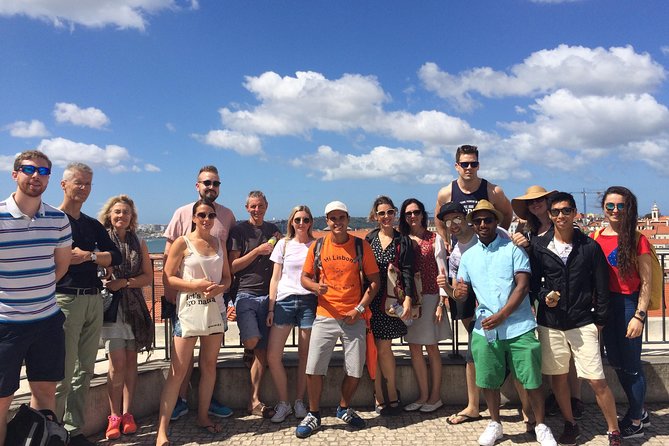
A private group of up to six is ideal for families, couples traveling with friends, or anyone who dislikes large walking tours. You can ask questions without holding up a crowd, and the guide can adjust the balance between views, architecture, and neighborhood walking.
If you are alone or traveling as a couple, the price deserves closer thought. The $181.48 group rate is easier to justify when divided among several people. For a small party, you are paying a premium for privacy and flexibility.
Who should book this Lisbon walk?
Book it if you want a strong first look at Lisbon’s oldest neighborhoods and prefer a private guide to a large group. It suits first-time visitors who want help understanding the city’s layout, as well as repeat visitors who want more context for Alfama and Mouraria.
It also suits people who value authentic neighborhood walking over a long list of paid admissions. Every listed stop is free, and the cost goes toward the guide rather than entrance tickets.
You may want another kind of tour if you need extensive time inside the Sé Cathedral, a dedicated fado performance, food tastings, or a full-day exploration. This is a short introduction, not a complete cultural program.
Free cancellation is available if you cancel at least 24 hours before the local start time. Changes or cancellations inside that window are not accepted for a refund, so keep the deadline in mind when making plans.
Should you book it?
I would book this tour if you want to understand Lisbon quickly, especially if you are staying only a few days. The mix of Alfama, Mouraria, old churches, fado references, and three viewpoints gives you a useful framework for exploring on your own afterward.
The best value comes with four to six people. For two people, the cost is harder to defend unless private guiding and flexible conversation are important to you. Go in ready for hills, short stops, and a brisk route, and you will get a focused introduction to the parts of Lisbon that first-time visitors most want to see.
FAQ
How long is the Lisbon private tour?
The tour lasts approximately three hours.
How much does the private tour cost?
The price is $181.48 per group, with up to six people included.
What language is the tour offered in?
The tour is offered in English.
Where does the tour begin?
The meeting point is Praça do Comércio, 1100-148, Portugal.
Where does the tour end?
The tour ends at Praça da Figueira, 1100-241 Lisboa, Portugal.
Which Lisbon neighborhoods are included?
The tour includes walks through Alfama and Mouraria.
Are food and drinks included?
No. Food and drinks are not included in the price.
Can I cancel for a full refund?
Yes. You can receive a full refund if you cancel at least 24 hours before the experience start time. Changes or cancellations made less than 24 hours before the start are not accepted.
Just reviewed in Lisbon
- Lisbon: Morning of Equestrian Art with Lusitano Horses★ 4.4 · 87 reviews
- Lisbon: Entry Tickets to Mosteiro de São Vicente de Foram★ 4.6 · 50 reviews
- Lisbon: National Palace of Ajuda E-Ticket & City Audio Guide★ 4.1 · 87 reviews
- Lisbon: Early Morning TukTuk Tour – hotel/cruise ship pickup★ 4.9 · 45 reviews
- Sintra: Quinta da Regaleira e-Ticket & Sintra City Audios★ 4.1 · 12 reviews
- Lisbon E-Bike Tour TAGUS★ 5.0 · 3 reviews
- Lisbon: E-bike Trip from the Sintra Mountains to Cascais Sea★ 5.0 · 67 reviews
- Lisbon: Discover Belem by electric Tuk Tuk★ 4.9 · 86 reviews
City Tours, compared.
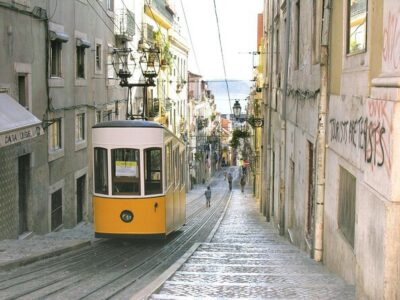
Lisbon City Center Tour – The Unmissable Lisbon
Read our review →
Daytime/Sunset/Night City Sailboat Tour with Drink
Read our review →


Browse the lists this tour appears in