
Reviewed · LISBON WALKING TOURS
Lisbon: Private walking tour
Lisbon’s story is easiest to grasp on foot, and this private three-hour tour links the city’s grandest spaces with the daily life of its residents. You’ll move from Rossio Square to the Santa Justa Lift, Rua Augusta, Praça do Comércio, and Chiado while your guide explains how earthquakes, trade, politics, music, and food shaped the capital.
I like the flexible itinerary, especially for families or mixed-age groups who need a slower pace or a short break. I also like the practical local advice built into the tour. Guides such as Maria, Marianne, Robinson, Savio, and others have been praised for clear explanations, warm humor, useful shortcuts, and restaurant suggestions.
The main catch is that this is a walking overview, not a museum tour. Entrance tickets are not included, and three hours can only give you a taste of Lisbon’s major sights. You’ll also need good shoes for cobbles, slopes, and uneven pavements.
Key points to know
- Start with Lisbon’s central story: Meet at Rossio Square, or request pickup from a hotel in the central districts.
- See the city’s major symbols: The route can include Rossio, Santa Justa Lift, Rua Augusta Arch, Praça do Comércio, and Chiado.
- Learn how history affects daily life: The 1755 earthquake and the rebuilding led by the Marquis of Pombal are central to the walk.
- Keep the route private: Your group can include up to eight people, with a program shaped around your interests.
- Get useful local tips: Guides provide suggestions for food, sights, shortcuts, and places to visit during the rest of your stay.
- Plan for a real city walk: Comfortable shoes are essential, and the tour runs in rain or shine.
Rossio Square and Lisbon’s city-center rhythm
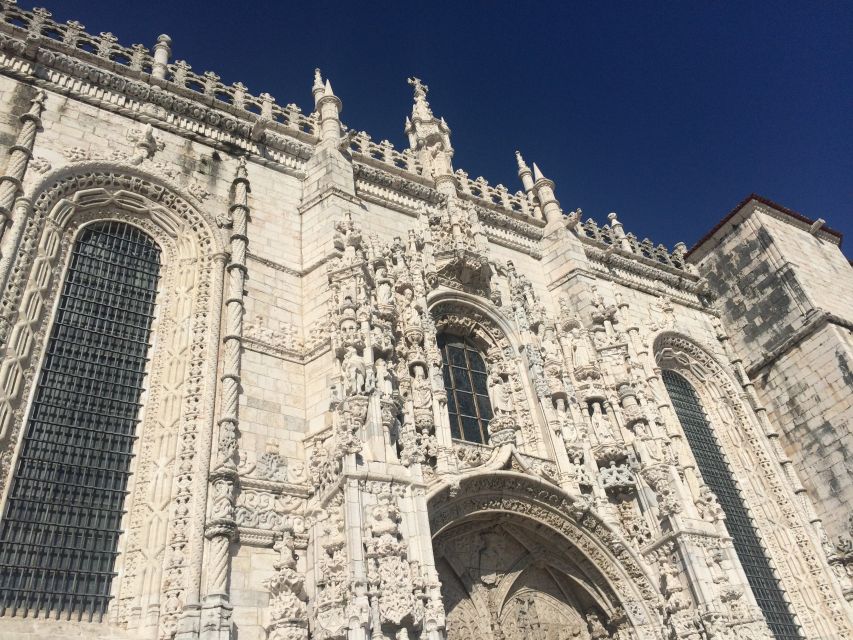
Rossio Square is a sensible place to begin because it puts you in the middle of old Lisbon. The square has long been tied to public life, transport, celebrations, and ordinary city routines. From here, your guide sets the scene before leading you into the Baixa district.
One early detail to watch is the façade of Rossio train station. Its decorative entrance is easy to miss if you are rushing toward the next sight, but a guide can point out why it matters as part of Lisbon’s grand public architecture. The square itself is also a useful introduction to the capital’s pace, with people crossing in every direction and the city opening out toward the river.
If you are staying near Rossio, Restauradores, Chiado, Martim Moniz, or Praça do Comércio, pickup may be available from your hotel lobby. You need to be ready ten minutes before the arranged time. If your hotel is outside the listed central areas, the stated meeting point is Rossio Square.
This opening section suits first-time visitors because it gives you a mental map before the route becomes more complicated. It is also a good place to ask your guide for help with the rest of your stay. You can use the private format to ask about neighborhoods, food, transport, or sights that are not part of the main walk.
More Lisbon Walking Tours:
- Lisbon: History, Stories and Lifestyle Walking Tour
★ 4.8 · 10,902 reviews - Best of Lisbon Small-Group Guided Walking Tour
★ 5.0 · 4,869 reviews - Lisbon: Food and Wine Small Group Walking Tour
★ 4.9 · 4,082 reviews
Santa Justa Lift and the problem of Lisbon’s hills
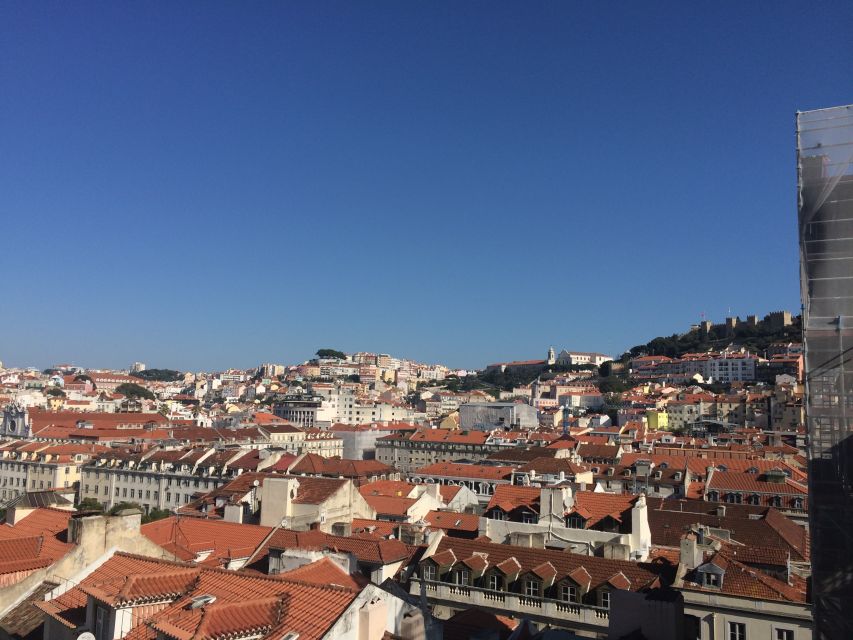
The Santa Justa Lift is one of Lisbon’s most recognizable structures, but the useful story is more practical than decorative. Opened in 1902, it connects the lower streets of Baixa with the higher streets of Chiado. Its original purpose was simple: help people deal with Lisbon’s steep streets.
That detail tells you something about the city. Lisbon is not hard to understand from a map, but it can be tiring on foot. The slopes and cobbles are part of its character, yet they also shape how people move around. Your guide can explain the lift as a piece of city infrastructure, not just a photo stop.
The tour description does not include a ride on the lift or a ticket to enter attractions. That matters if you hope to go up the structure or visit any paid site. Entrance fees are separate, and the guide may focus on the exterior and its place in the city instead.
You should wear shoes with a firm sole. Sandals with little support may not be a good choice, especially if you are walking for the full three hours. One useful feature of a private tour is that the guide can adjust the pace. Robinson, one of the named guides, was especially flexible with a group that included children and older adults, allowing extra time and breaks without making a fuss.
Rua Augusta and the story behind the 1755 earthquake
From the lift area, the route continues toward Rua Augusta, Lisbon’s main pedestrian thoroughfare. This is where the walk shifts from small streets and urban details to a broad ceremonial axis leading toward the water.
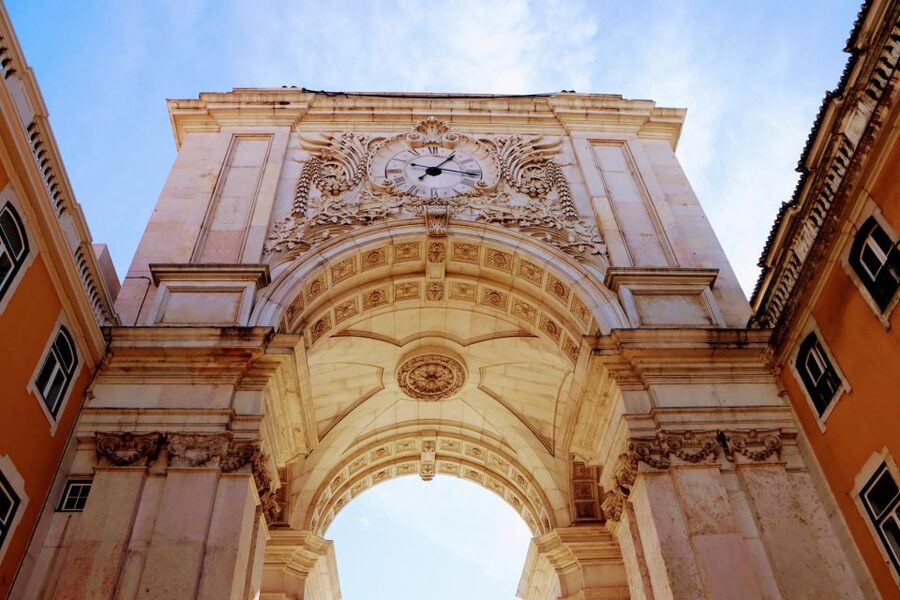
The Rua Augusta Arch marks the entrance to Praça do Comércio. It is also a good place to hear about Lisbon’s recovery after the 1755 earthquake. The arch represents the city’s strength after a disaster that destroyed much of the old center, including the royal palace by the river.
This is one of the most valuable parts of the tour because the earthquake is not treated as a remote date. It explains why the central districts look the way they do. The rebuilt Baixa has wide streets and a more orderly plan than the older hills around it. As you walk, the contrast between the straight lower streets and the irregular upper districts becomes easier to understand.
A private guide can make this section as broad or focused as you want. You might ask for more detail about the earthquake and reconstruction, or shift the conversation toward architecture and present-day life. The supplied information describes the tour as a way to connect major historical events with the lives of Lisboetas, the people of Lisbon. That connection is more useful than a long list of dates.
Praça do Comércio beside the Tagus estuary
Praça do Comércio is the grandest open space on this route. Its yellow buildings face the Tagus estuary, and the square once served as Lisbon’s front door for people arriving by boat. Kings, heads of state, merchants, and ordinary citizens all passed through this riverfront setting.
The square occupies the site of the royal palace destroyed in the earthquake. The Marquis of Pombal directed the rebuilding of the center, and the new design helped give Baixa its broad, formal shape. Your guide can turn the square into a lesson about power, trade, disaster, and urban planning all at once.
I like this stop because it gives the walking tour room to breathe. After narrower streets, the open riverfront helps you see Lisbon as a port city. It also makes a clear link between the past and the present. The same area that once received royal arrivals now functions as one of the capital’s most important public spaces.
The square is a photo-friendly stop, but do not let the views distract you from the explanation. Ask your guide about how the waterfront connects to Lisbon’s food culture and daily routines. Food and drinks are not included, yet the guide can provide recommendations for authentic places to eat during the rest of your visit.
Something different to do with a day in Lisbon:
- Lisbon City Center Tour – The Unmissable Lisbon
★ 5.0 · 22,234 reviews - Lisbon: Sintra, Pena, Regaleira, Cabo da Roca & Cascais
★ 4.7 · 19,656 reviews - Sintra: Pena Palace and Park Entrance Ticket
★ 4.2 · 17,410 reviews - Lisbon: Jerónimos Monastery Entrance Ticket
★ 4.1 · 14,164 reviews
Chiado, Rua Garrett, and Lisbon’s artistic side
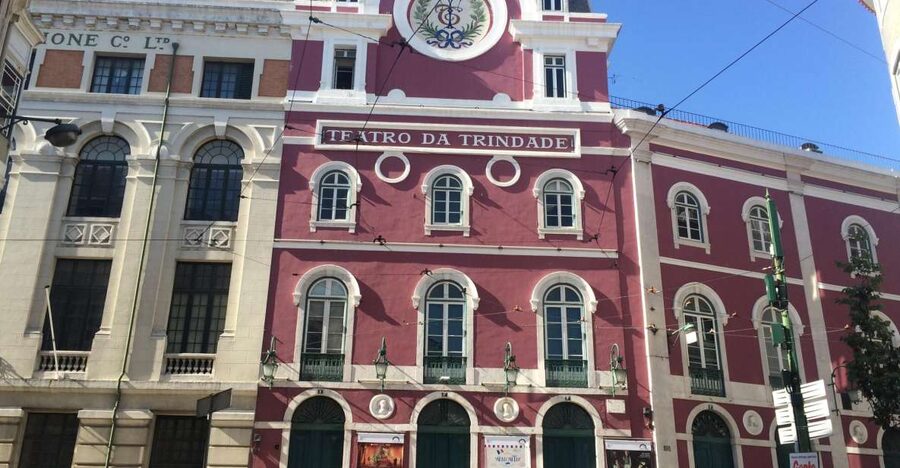
The route then changes mood as you enter Chiado, the city’s bohemian and artistic district. This section has a different feel from the formal Baixa streets. It is a useful reminder that Lisbon is not only about monuments and major events. It is also about books, cafés, meeting places, music, and local habits.
Rua Garrett is one of the main streets to expect here. Your guide may point out the Bertrand bookshop, a long-standing literary landmark, and explain why this area has been linked with Lisbon’s cultural life. The tour information does not promise entry into the bookshop, so think of it as a stop for context and observation rather than a scheduled shopping visit.
Praça Luís de Camões is another important point. It functions as a meeting place for Lisbon residents and offers a chance to discuss the city beyond its royal and commercial past. This is where the flexible format helps. If you are interested in writers, Fado, cafés, or local customs, you can steer the conversation in that direction.
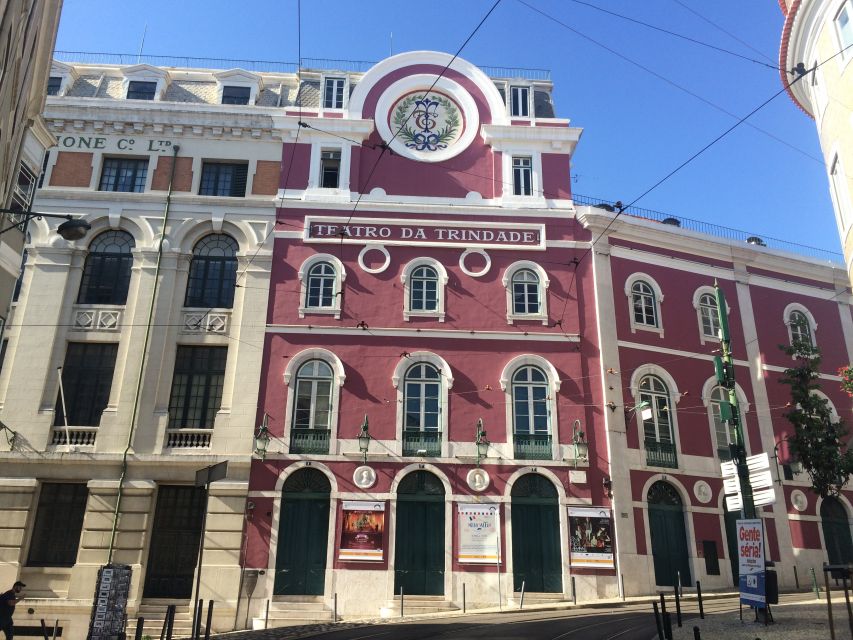
The walk also includes Largo de São Carlos, an 18th-century Rococo square. Its smaller scale makes a pleasant contrast with Praça do Comércio. Your guide can explain how these different spaces serve different roles, from ceremonial riverfront plaza to neighborhood meeting point and cultural quarter.
Food advice, Fado, and the Lisbon you experience after the tour
Lisbon is often reduced to three familiar ideas: yellow squares, Fado, and cod. The tour uses those ideas as a starting point, then places them in the wider story of the city.
You should not expect a meal or tasting. Food and drinks are excluded, and there is no stated restaurant reservation or food stop. The value here is the chance to ask your guide where to eat and what local dishes or customs to seek out. The guides are also expected to offer recommendations for your wider Lisbon stay, which can save you from choosing a restaurant at random in a busy tourist area.
This advice may be one of the most useful parts of the tour if you take it early in your visit. A three-hour walk can help you decide where to return later for dinner, which sights need more time, and how to fit Fado or museums into your schedule.
The guide’s personal style matters. Marianne was praised for explaining political, social, and cultural subjects in simple terms while also sharing shortcuts and good addresses. Maria was described as lively and considerate, with the flexibility to show as much as possible. Savio and Robinson were also singled out for clear explanations and an easy manner. Since the guide assigned to your tour may differ, you should think of these names as examples of the service style rather than a guarantee of a particular guide.
What the private format is worth at $147
The price is $147 per group of up to eight people. That works out to about $18.38 per person if you fill all eight places. For two people, the per-person cost is much higher, but you are paying for privacy, a tailored route, and the ability to ask questions without a large group setting.
This is a better value for families, couples who want a focused introduction, or groups with different interests. It is also useful if one person wants history, another wants food advice, and someone else needs a slower pace. A standard group tour may follow a fixed route, while this option lets you shape the program.
The price includes a professional guide in English or Spanish, hotel pickup and drop-off when the hotel is in the listed central areas, and a tailored program. It does not include food, drinks, or entry tickets. If you want to visit a museum or ride a paid attraction, budget for that separately.
A rating of 4.9 from 13 published ratings suggests very strong satisfaction, though the sample is small. One lower rating described the walk as pleasant but somewhat general and scattered. That is a fair warning: a flexible overview can feel broad rather than tightly focused. Tell your guide what matters most at the start if you want a more coherent route.
Who will get the most from this Lisbon walk
I would choose this tour if you are visiting Lisbon for the first time and want a quick orientation without being tied to a large group. It is especially suitable for:
- Families with children and older relatives
- Couples who want to set the pace themselves
- Visitors who want history explained in plain language
- People who need restaurant and sightseeing advice for later
- Small groups that prefer English or Spanish
- Anyone with only a few hours to get familiar with central Lisbon
It may be less suitable if your main goal is entering museums, riding the Santa Justa Lift, or taking a dedicated food tour. Those are not included. It may also feel too general if you already know central Lisbon well and want specialist architecture, Fado, or earthquake history.
The tour runs in rain or shine, so check the forecast and dress for walking. Comfortable shoes are the one item specifically required, and that advice is worth taking seriously.
Booking flexibility and practical details

You can cancel without a fee up to 24 hours before the scheduled start and receive a full refund. Cancellations made within 24 hours or no-shows are charged the full amount. The reserve-now, pay-later option lets you hold your place without paying immediately, which is useful while your Lisbon plans are still shifting.
The tour lasts three hours, though the exact start time depends on availability. Pickup is available only for the private option and only from central Lisbon hotels in the stated areas. Be in the lobby ten minutes before pickup.
The tour is offered in English and Spanish. If you have children, older relatives, or anyone who walks slowly, mention this when arranging the tour and again when you meet the guide. Robinson’s handling of a mixed-age group shows that the format can allow breaks and a gentler pace, but the route still involves city streets, slopes, and cobbles.
Should you book this private Lisbon tour?
Book it if you want a friendly introduction to central Lisbon with room to ask questions and shape the route. The strongest reasons are the private group format, the connection between major sights and everyday life, and the practical advice you can use after the walk.
Skip it if you want a ticketed attraction tour, a full meal, or a specialist subject covered in great depth. For most first-time visitors, though, $147 is reasonable when shared by a group of up to eight. Start at Rossio, wear good shoes, tell the guide your priorities, and use the three hours to build a plan for the rest of your stay.
FAQ
How long does the Lisbon private walking tour last?
The tour lasts three hours. Starting times depend on availability when you book.
How many people can join the private tour?
The price covers one private group of up to eight people.
Where does the tour start?
The standard meeting point is Rossio Square. Pickup is available from hotels in central areas including Rossio, Restauradores Square, Martin Moniz, Chiado, and Praça do Comércio.
Is hotel pickup included?
Yes, pickup and drop-off are included for private tours from hotels in the listed central Lisbon areas. You should be in your hotel lobby ten minutes before the scheduled pickup.
Which languages are available?
The live guide is available in English or Spanish.
Are food, drinks, and entrance tickets included?
No. Food, drinks, and entrance tickets to museums and attractions are not included.
Can I cancel the tour for a full refund?
Yes. You can cancel at least 24 hours before the booked time for a full refund. No-shows and cancellations made less than 24 hours before the tour are charged the total cost.
Just reviewed in Lisbon
- Private tour Lisbon – full day★ 5.0 · 8 reviews
- Private Tour: Portuguese Food and Wine Tour★ 5.0 · 33 reviews
- Lisbon Football Experience – Private stadium and Museum Tour★ 4.0 · 10 reviews
- Lisbon and Sintra Essence 8H – Private Tour★ 5.0 · 5 reviews
- Private Tour: Lisbon Sunset Walking Tour with Fado Show and Dinner★ 5.0 · 30 reviews
- Private Catamaran Tour: Lisbon coast cruise with barbecue and drinks★ 5.0 · 20 reviews
- Lisbon: Helicopter Tour over Cascais & Cabo da Roca★ 5.0 · 4 reviews
- Private Tour Fátima – Nazaré – Batalha – Óbidos★ 5.0 · 6 reviews
Lisbon Walking Tours, compared.
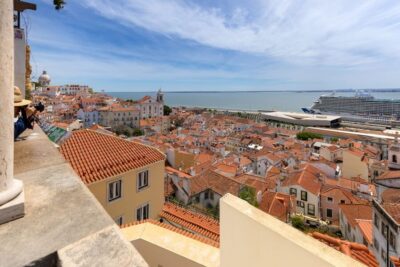
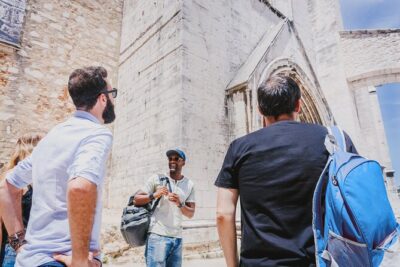
Best of Lisbon Small-Group Guided Walking Tour
Read our review →

Best of Lisbon Walking Tour: Rossio, Chiado & Alfama
Read our review →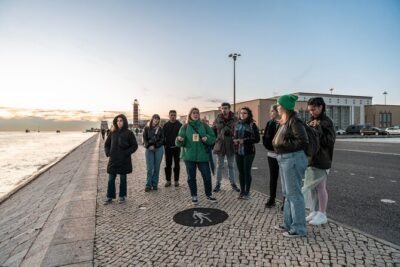

Lisbon Roots – Small group Food & Culture Walking Tour w/tastings
Read our review →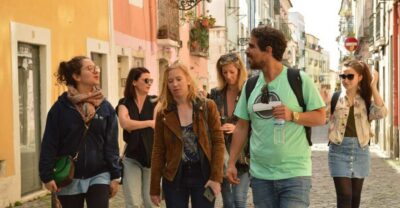
Starter Walking Tour to the highlights in German
Read our review →
Browse the lists this tour appears in