
Reviewed · LISBON WALKING TOURS
Lisbon – Small Group Walking Tour
Lisbon reveals itself one old street at a time, and this three-hour walk gives you a useful cross-section of the city center. You move from the ornate Igreja de São Roque through Bairro Alto, Chiado, Baixa, and the grand Praça do Comércio, with stops for churches, architecture, viewpoints, and difficult chapters of Portuguese history. The small group, capped at eight people, keeps the experience personal.
I like the way the route mixes famous sights with places you could easily pass without understanding, such as the Carmo ruins, the São Domingos church, and the memorial to the 1506 Jewish massacre. I also like the guides’ calm pace and willingness to answer questions. Rui, Andre, Andriy, and Andy are all praised for clear storytelling and thoughtful pacing.
The main drawback is physical: three hours on Lisbon’s streets means hills, paving stones, and plenty of standing. Some guides describe the route as mostly downhill, but you still need moderate fitness. The itinerary also covers a lot of ground, so individual stops are brief rather than museum-length visits.
Key points at a glance
- A maximum of eight people: This is small enough for a conversational tour, easy questions, and a better chance of hearing your guide.
- A strong first-day route: You cover São Roque, Bairro Alto, Chiado, Baixa, Santa Justa, and Praça do Comércio in one morning or afternoon.
- More than postcard views: The walk includes the Carmo earthquake ruins, São Domingos church, and the 1506 massacre memorial.
- Guides who adapt well: Rui, Andre, Andriy, and Andy receive special praise for history, pacing, patience, and practical suggestions.
- A downhill-leaning walk: Several comments describe the route as all downhill, but Lisbon’s paving and slopes still call for comfortable shoes.
- Good value at $39.78: For three hours with a professional local guide and no extra admission fees, the price is fair, especially for a first visit.
Why this walk works as your Lisbon orientation
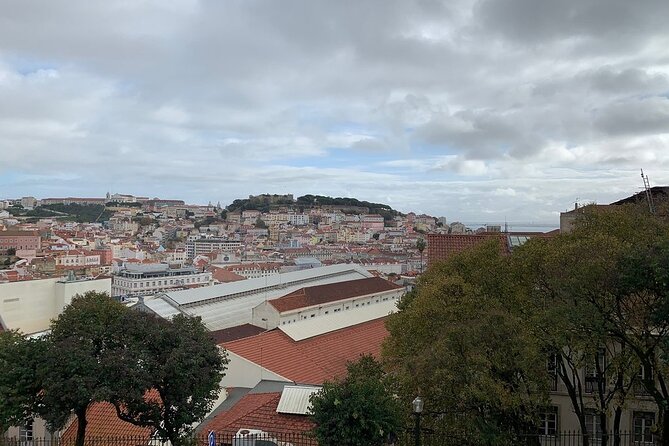
Lisbon can feel confusing at first. Its historic center is spread across different districts, with steep streets, grand squares, small lanes, old churches, and viewpoints that do not always appear on a standard sightseeing list. This tour gives you a map in your head as much as a list of sights.
You begin at the Church of Saint Roch, walk through the older central districts, and finish at Praça do Comércio beside the Tagus. That point-to-point design is useful because you do not simply return to the place where you started. You finish in a central area where you can continue exploring on your own.
The route also works well early in a Lisbon stay. You get a basic sense of Bairro Alto, Chiado, Baixa, and the main squares, then your guide can point out places worth returning to. One guide even helped connect the tour to later plans by suggesting areas and sights to explore after the walk.
The price is $39.78 per person. Since the cost includes the local guide, tour host, taxes, and local charges, you are mainly paying for interpretation and direction rather than entrance tickets. That is a fair deal for three hours, especially when the group has no more than eight people. It is less attractive if you prefer to walk independently and read about buildings later, but the route and historical context save you from spending your first day simply finding your way around.
More Lisbon Walking Tours:
- Lisbon: History, Stories and Lifestyle Walking Tour
★ 4.8 · 10,902 reviews - Best of Lisbon Small-Group Guided Walking Tour
★ 5.0 · 4,869 reviews - Lisbon: Food and Wine Small Group Walking Tour
★ 4.9 · 4,082 reviews
Starting at Igreja de São Roque
The meeting point is Largo Trindade Coelho, at the Church of Saint Roch. This is a good starting place because the church introduces you to Lisbon’s artistic and religious traditions before the walk moves into the streets.
Inside, your guide discusses the church’s Baroque decoration and Portugal’s artistic skill. You have about 15 minutes here, so expect a focused explanation rather than a long religious-art seminar. The stop is free, and the interior gives you an immediate sense of the elaborate work that appears throughout Lisbon.
The guide may also explain the Saint Roque Mission and the church’s connection to Catholic worship. This opening stop is especially useful if you are not familiar with Portuguese Baroque art. It gives you details to watch for later, rather than leaving churches as attractive but mysterious buildings.
Bairro Alto, Bica, and Cais do Sodré
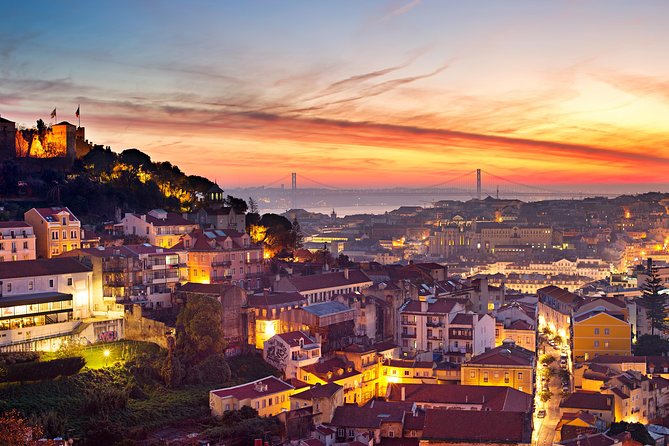
The next section moves into some of Lisbon’s oldest and more unusual neighborhoods. The 20-minute walk through Bairro Alto, Bica, and toward Cais do Sodré is less about entering one major attraction and more about reading the city’s streets.
Your guide helps you notice how old Lisbon is organized, how neighborhoods differ, and where traditional businesses and daily life fit into the tourist center. This part is also good for photographs. Expect narrow streets, older façades, and changing views as the route works through the central hills.
The pace matters here. Several guides, especially Rui, Andre, and Andriy, receive praise for keeping the walk moving without making it feel hurried. That balance is important in Lisbon, where stopping too often can turn a three-hour route into a much longer outing.
Trindade and the stories behind old businesses
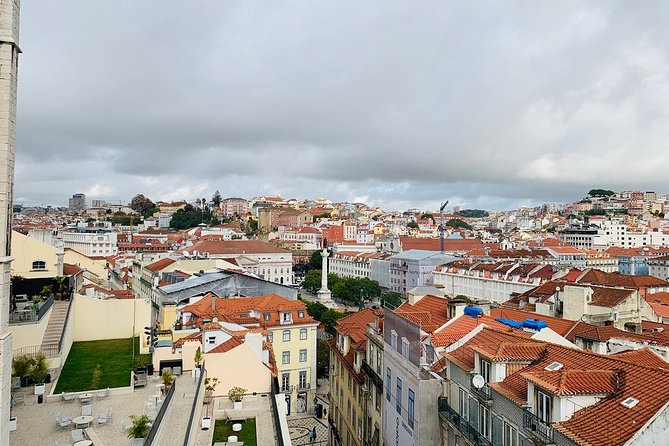
The Trindade stop lasts only about five minutes, but it has an unusual angle. You learn about a peculiar Lisbon restaurant and its links with Catholic worship, beer, and freemasonry.
That is the sort of brief local story that adds flavor to a walking tour. It is not another grand monument. Instead, it gives you a small example of how food, religion, social groups, and city life have overlapped over time.
Do not expect a meal here. Food and drinks are not included, although the tour may allow time for a coffee and pastel de nata depending on the guide and the group’s pace. One morning tour included such a break, but you should treat that as a possible courtesy rather than a guaranteed part of the schedule.
Something different to do with a day in Lisbon:
- Lisbon City Center Tour – The Unmissable Lisbon
★ 5.0 · 22,234 reviews - Lisbon: Sintra, Pena, Regaleira, Cabo da Roca & Cascais
★ 4.7 · 19,656 reviews - Sintra: Pena Palace and Park Entrance Ticket
★ 4.2 · 17,410 reviews - Lisbon: Jerónimos Monastery Entrance Ticket
★ 4.1 · 14,164 reviews
Largo do Carmo and the 1755 earthquake
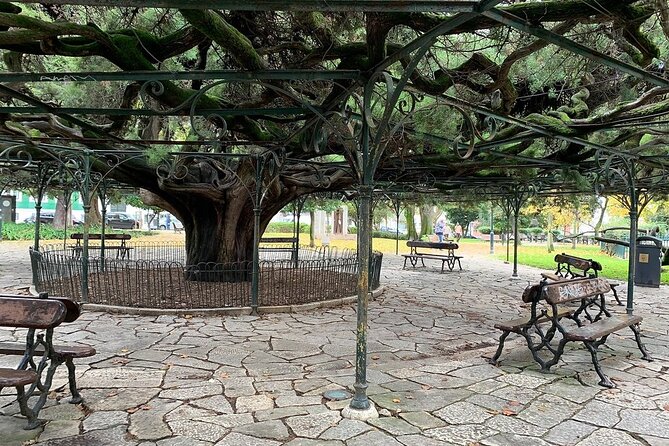
Largo do Carmo is one of the most atmospheric stops. The square is home to the Gothic ruins of the Carmelite Convent, damaged in the great earthquake of 1755.
You get around ten minutes here, enough to understand why the ruins matter and to take photographs. The open stone arches create one of Lisbon’s most memorable views, but the real value is the story attached to them. The earthquake changed Lisbon’s buildings, streets, government, and identity. Your guide places the ruins within that larger event.
This is also a good place to pause and ask questions. The square is more restful than the narrow streets around it, and the history can lead naturally into the rebuilding of Baixa under the Marquis of Pombal.
Santa Justa Elevator and the view over Lisbon
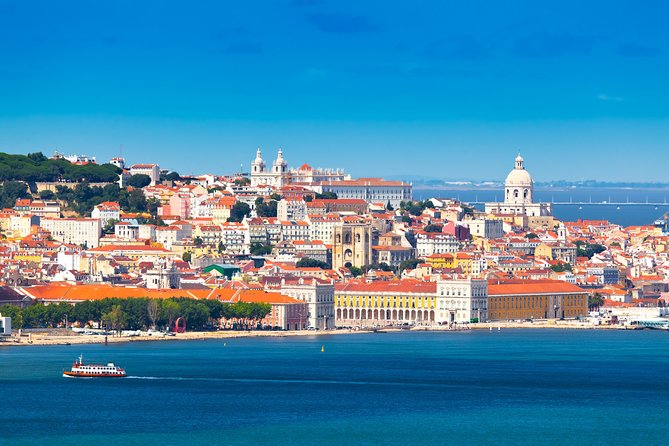
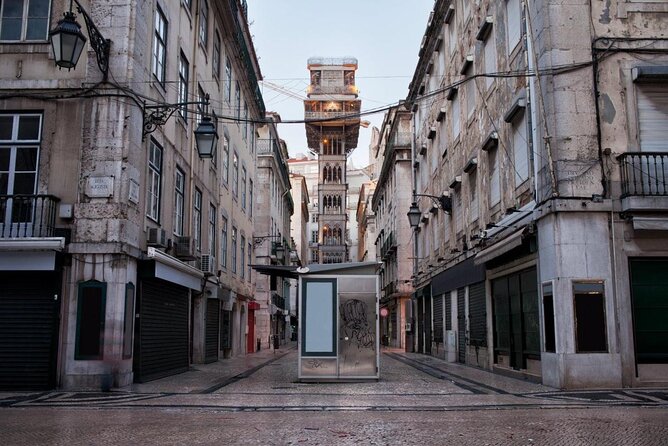
The Santa Justa Elevator is one of Lisbon’s most recognizable pieces of ironwork. The tour gives you about ten minutes to see the elevator and take in its high view over the city and the Tagus.
The stop is short, so do not assume you will have a long private visit or a leisurely ride. The exact access experience can depend on timing and conditions. Still, the guide’s explanation helps you see the elevator as part of Lisbon’s urban design, not only as a photo stop.
You should keep your camera ready here. The elevated position gives you a useful view of the city center, and it helps explain Lisbon’s steep terrain. This is one of the clearest moments when the walking route’s hills become visible from above.
Chiado, the bookstore, and the old railway station
Chiado introduces you to Lisbon’s main concentration of traditional shops and businesses. You have about 15 minutes in the district, with time to hear how the area fits into the city center and to look at its commercial architecture.
The tour also includes an opportunity to visit the world’s oldest bookstore. That is a small but worthwhile addition, especially if you enjoy literary or local-business history. The stop gives the walk a human scale. You are not only looking at monuments, but also at institutions that have served Lisbon for generations.
Another point of interest is a late 19th-century railway station known for Neo-Manueline architecture. The station’s elaborate style offers a sharp contrast with the older religious buildings and the more orderly Baixa streets. Since the exact stop is not given a timed entry in the schedule, treat it as a viewing point along the route rather than a separate extended visit.
Largo de São Domingos and São Domingos Church
Largo de São Domingos brings some of the hardest history on the tour. Here, the guide explains the Jewish massacre of 1506 and points out the memorial honoring people who died through religious persecution.
The stop lasts about five minutes, but the subject deserves attention. A good guide does not rush past it as just another square. Andriy and Rui are especially praised for explaining difficult historical subjects clearly and responding to questions.
Nearby, you enter Igreja de São Domingos for about ten minutes. The church is one of Lisbon’s more unusual places of worship, and its interior adds another layer to the city’s religious story. The contrast between the church’s decoration and the painful history connected with the nearby square makes this section particularly worthwhile.
It is also a reminder that Lisbon’s past is not only grand architecture and famous explorers. The city’s story includes persecution, disaster, rebuilding, and memory.
Downtown squares and pedestrian streets
After São Domingos, the route continues through historic squares, traditional businesses, and one of the main pedestrian streets in downtown Lisbon. This section links the separate sights into a functioning city center.
You pass coffee shops, old commercial buildings, and the Santa Justa Elevator area again from street level. The guide can point out details you might otherwise miss, including businesses with long local connections and buildings shaped by the post-earthquake rebuilding of Baixa.
This is where the tour’s value becomes practical. You learn not only what a building is, but also how the central districts connect. If you plan to return later for shopping, cafés, or independent exploring, this orientation can save time.
Praça do Comércio and the end of the route
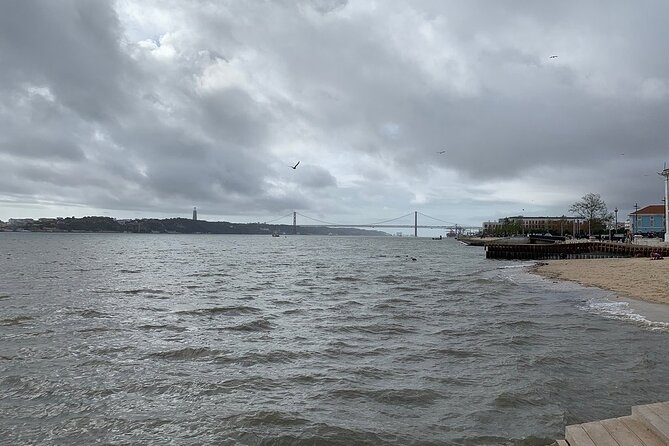
The tour ends at Praça do Comércio, also called Terreiro do Paço. This huge riverside square provides a fitting finish after the tighter lanes and smaller plazas earlier in the walk.
You spend about ten minutes learning about the square’s links to Portuguese political figures, including the Marquis of Pombal and the regicide of 1908. The square’s open scale makes the city’s reconstruction easier to understand, and the riverfront gives you a natural place to continue your day.
The itinerary also includes Praça Dom Pedro IV, one of the key squares in Baixa Pombalina. Here you can see the Queen Mary National Theater and Opera House, Tabacaria Mónaco, and other long-established businesses. The order of these central stops may feel a little less straightforward than a simple route from one district to the next, but the subjects fit together well.
Once the tour ends, you are positioned in the heart of central Lisbon. You can continue toward the river, remain in Baixa, or use public transport nearby. Hotel pickup and drop-off are not included, so you need to reach Largo Trindade Coelho on your own and make your own way back afterward.
What the guides do especially well
The strongest part of this experience is the guide service. Rui is repeatedly praised for clear historical explanations, useful comparisons, and a friendly manner. Andre is praised for patience, pacing, and making room for questions, while Andriy receives high marks for covering art, architecture, topography, history, and present-day life without making the walk feel heavy.
Several comments describe guides choosing shade, checking that everyone could hear, and adjusting the pace to the group. Those details matter in Lisbon, where sun, slopes, and hard paving can wear you down.
The guides also seem comfortable with weather changes. One rainy-day walk continued with only one participant, and the guide adapted the experience. Still, the activity requires good weather, and poor conditions can lead to a different date or a full refund.
The tone may vary by guide. One assessment found the walk informative but somewhat focused on buildings and light on humor. If you want a lively performance packed with jokes, this may not be your ideal tour. If you want patient explanations and room for questions, it is a better match.
Walking conditions, timing, and group size
The tour lasts about three hours and requires moderate physical fitness. Comfortable walking shoes are important because Lisbon’s streets can be steep and paved with uneven stone.
Some guides describe the route as all downhill, which is encouraging if you worry about Lisbon’s famous slopes. Even so, do not read that as a completely effortless walk. You will still stand, walk continuously, and navigate city streets. A rainy day can also slow the group, while strong sun may make shade and water important.
The maximum of eight people is a real advantage. A guide can answer questions without holding up a large crowd, and you are more likely to hear explanations at churches and squares. The small format also makes the tour a better choice for solo visitors or couples who want some conversation without joining a large bus group.
The tour is offered in English. Children must be accompanied by an adult, and service animals are allowed. The route is near public transportation, but there is no hotel transfer.
Is $39.78 a fair price?
I consider $39.78 reasonable for this tour. You receive three hours with a local guide, a route through several major central districts, historical interpretation, and a group limited to eight people. The fact that the churches, squares, streets, and viewpoints are free means your fee goes mainly toward the guide’s time and expertise.
The value is strongest if this is your first visit to Lisbon. You get an efficient introduction and can mark places to revisit. It is also a good choice if you enjoy architecture and history but want someone to explain the connections between sites.
The value is weaker if you prefer a very slow pace, extensive interior visits, or a food-focused experience. Food and drinks are not included, and the timed stops are generally brief. Think of this as a city orientation with strong historical content, not a full-day cultural workshop.
Who should book this Lisbon walk?
Book it if you want a compact introduction to central Lisbon, enjoy asking questions, and prefer a guide who can explain both famous sights and less obvious stories. It suits first-time visitors, solo travelers, couples, and small families with older children who can manage three hours of walking.
It is also a smart choice for history fans. The route covers Baroque art, the 1755 earthquake, religious persecution, Portuguese politics, architecture, old businesses, and the rebuilding of Baixa.
You may want a different activity if you have limited mobility, dislike hills and uneven paving, or want long visits inside each church. The walk is active and broad rather than slow and specialized.
Should you book it?
I would book this as an early Lisbon activity, ideally near the start of your stay. The route gives you a useful mental map, introduces several districts, and leaves you at Praça do Comércio with plenty of city still ahead.
The best reason to choose it is the combination of small-group size and strong guiding. Rui, Andre, and Andriy are praised for making complex subjects understandable and for keeping the pace comfortable. Just bring good shoes, allow for weather, and remember that a three-hour overview cannot give every church or square more than a short visit.
FAQ
How long does the Lisbon walking tour last?
The tour lasts approximately three hours.
How much does the tour cost?
The listed price is $39.78 per person.
What language is the tour offered in?
The tour is offered in English.
How many people can join the tour?
The group has a maximum of eight participants.
Where does the tour start?
The meeting point is the Church of Saint Roch at Largo Trindade Coelho, 1200-470 Lisboa, Portugal.
Where does the tour end?
The tour ends at Praça do Comércio, 1100-148 Lisboa, Portugal.
Are food and drinks included?
No. Food and drinks are not included, although the route may allow time for a coffee and pastel de nata.
What happens if bad weather cancels the tour?
If poor weather causes cancellation, you will be offered a different date or a full refund. You can also cancel for a full refund up to 24 hours before the start time.
Just reviewed in Lisbon
- Lisbon: Catamaran Boat Party with Music, Open Bar & Dives★ 4.2 · 109 reviews
- Lisbon: Capture its Charm with a Laidback Photoshoot★ 5.0 · 4 reviews
- Lisbon: Fado Night Tour★ 3.3 · 7 reviews
- Lisbon Dinner with Fado Show and Sights by Night★ 4.1 · 45 reviews
- Lisbon by Night: Guided Walking Tour – The Unholy Secrets★ 4.8 · 93 reviews
- Lisbon: Tagus Estuary Nature Reserve Birdwatching Boat Tour★ 4.9 · 117 reviews
- Lisbon: Guided Nighttime Electric Bike Tour★ 5.0 · 3 reviews
- Lisbon Bike Tour: Langs de rivier van Belém naar Lissabon★ 4.7 · 59 reviews
Lisbon Walking Tours, compared.
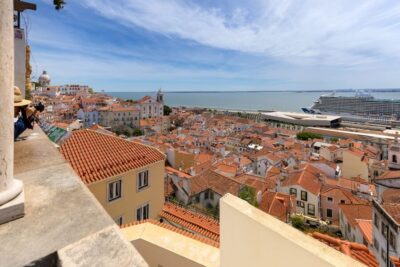
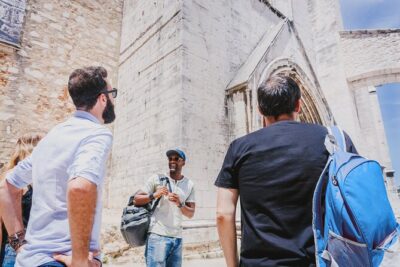
Best of Lisbon Small-Group Guided Walking Tour
Read our review →
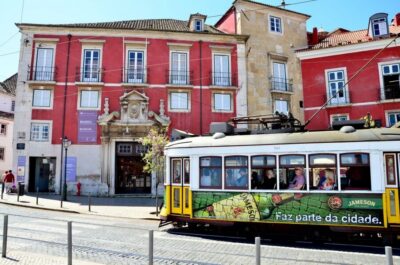
Best of Lisbon Walking Tour: Rossio, Chiado & Alfama
Read our review →

Lisbon Roots – Small group Food & Culture Walking Tour w/tastings
Read our review →
Starter Walking Tour to the highlights in German
Read our review →
Browse the lists this tour appears in