
Reviewed · LISBON WALKING TOURS
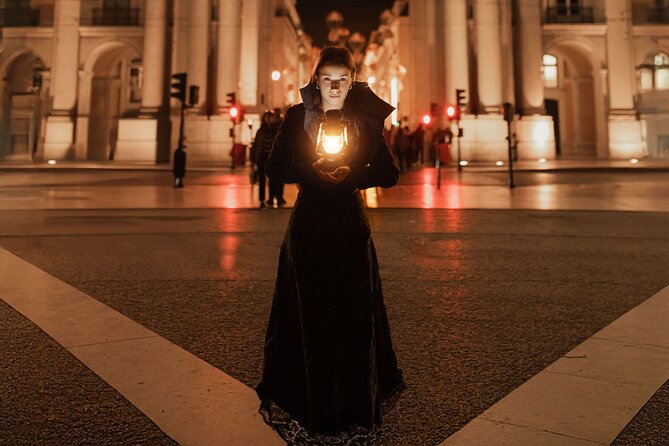
Lisbon Walking Tour The Dark Unholy Secrets
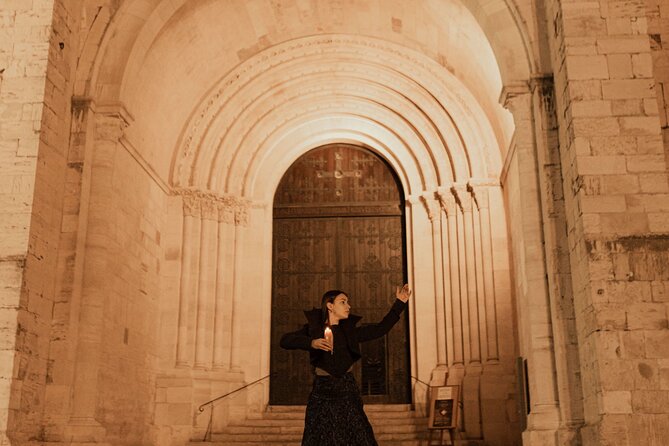
Lisbon’s past gets much darker than its sunny viewpoints suggest. This evening walk links Rossio, Baixa, the cathedral, and Alfama through stories of the Portuguese Inquisition, religious violence, trapped souls, and the grim events that shaped the city. It is history with a pulse, not a parade of dates.
I like the nighttime timing, which leaves your daylight hours open for museums, trams, and long lunches. I also like the route itself: you move from grand central squares into older streets and hilltop viewpoints, so the city’s setting changes as the stories grow more intense.
The main drawback is physical and practical. You cover a lot in 1 hour 45 minutes, often at a brisk pace and up hills. Also, confirm the language before paying: the experience is presented as English-language, but one booking problem involved a guide who could offer Spanish only.
Key points to know before booking
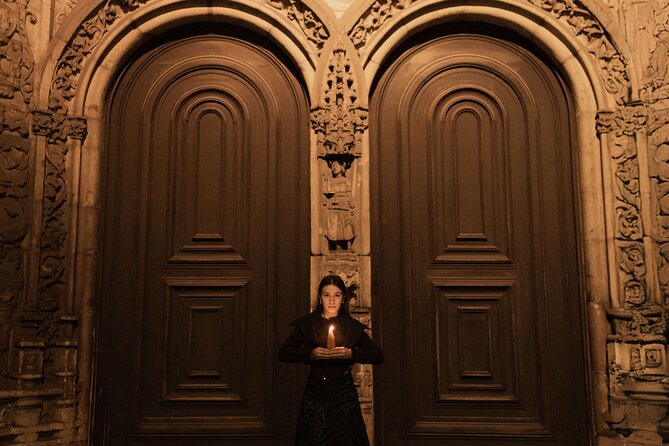
- The Portuguese Inquisition is the central subject: Expect morbid history, religious persecution, shocking punishments, and sad human stories rather than a parade of ghost tales.
- The route finishes in Alfama: You walk from Praça Dom Pedro IV through Baixa and past Lisbon Cathedral before ending on Rua das Damas.
- The tour is short but active: At about 1 hour 45 minutes, it covers nine stops, with hills and a quick pace.
- Guides bring much of the value: Andreia is animated and passionate, while Amanda is praised for clear storytelling and strong command of Lisbon’s past.
- The group can reach 25 people: That gives the walk a social feel, though a larger group may make it harder to hear in narrow streets.
- Check the language carefully: English is listed as the operating language, but confirm it at booking and before setting out.
Why Lisbon’s dark past works so well at night
Many Lisbon walks focus on tiled façades, earthquake rebuilding, explorers, and pastel-colored streets. This one takes a different route through the city’s memory. You still see major landmarks, but the guide asks you to picture what happened there before the streets became pleasant places for cafés and evening strolls.
The focus is largely the Portuguese Inquisition. That makes the tour more historical than supernatural. You may hear about persecution, public punishment, religious conflict, and people caught in systems they could not control. The tone can be grisly, shocking, or sad, so this is not the best pick if you want a light introduction to Lisbon.
I appreciate the format because the stories are tied to real places. A square, church, theater, or narrow lane becomes easier to remember when you know what unfolded there. The guide also has room to answer questions. Andreia, in particular, is described as lively and willing to handle questions about Lisbon’s history and politics beyond the planned material.
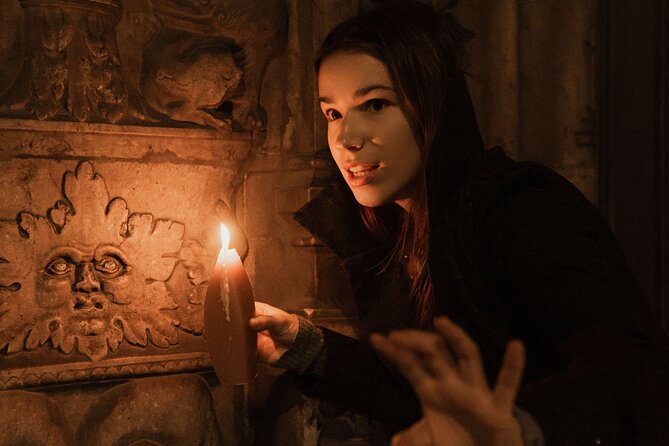
The nighttime setting helps, but do not expect a haunted-house performance. The stories may include legends and lost souls, yet the main appeal is morbid history. If you want frequent ghost stories, this may feel too factual. If you want a sharper look at the forces that shaped Lisbon, it is a good fit.
More Lisbon Walking Tours:
- Lisbon: History, Stories and Lifestyle Walking Tour
★ 4.8 · 10,902 reviews - Best of Lisbon Small-Group Guided Walking Tour
★ 5.0 · 4,869 reviews - Lisbon: Food and Wine Small Group Walking Tour
★ 4.9 · 4,082 reviews
Starting in Rossio at Praça Dom Pedro IV
The meeting point is Praça Dom Pedro IV, usually called Rossio, at Praça Dom Pedro IV 7. The tour begins with a proper welcome and an introduction to the city’s darker side.
This is a useful place to start because Rossio is one of Lisbon’s main central squares. You begin in a broad, open urban space before moving toward older streets and more enclosed places. The change in setting supports the storytelling: Lisbon’s public center becomes the first stage for the evening.
Your guide may need to gather a group of up to 25 people here, so arrive ready to listen for instructions. The tour is offered with a mobile ticket, and confirmation is sent at booking. Since this is a group walk, a few minutes early gives you a better chance of finding the meeting point without rushing.
Teatro Nacional Dona Maria II and the Estaus Palace
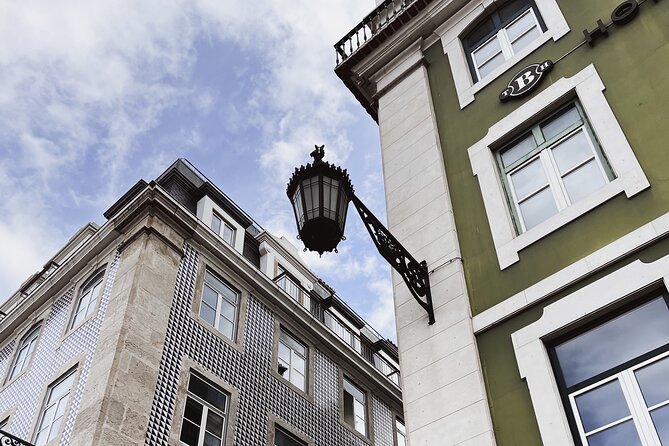
The next stop is the National Theatre Dona Maria II, where the guide introduces the building’s connection to the former Estaus Palace. The visit is outside, and no admission ticket is included or needed for the stop.
This is one of the tour’s useful tricks. A building you might pass while admiring Rossio becomes part of the story. The theater is not treated only as a grand cultural landmark. Instead, the guide points you toward the older role of the site and the darker events linked to it.
You will spend about 11 minutes here. That is enough for a focused explanation, but not for a full architectural visit. If you want to go inside the theater, you will need to do that separately.
Largo de São Domingos and the memorial mark
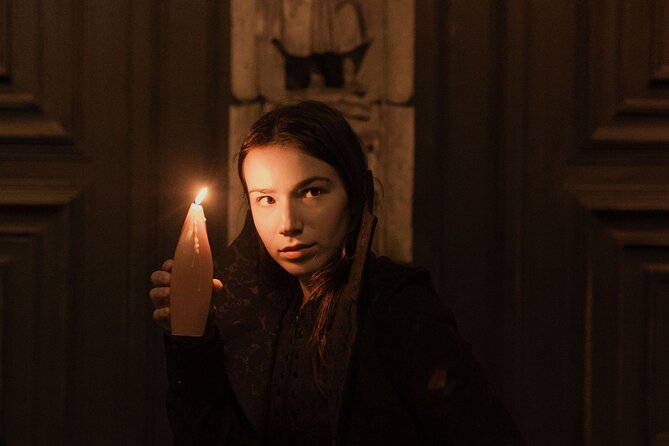
At Largo de São Domingos, the route turns to a memorial mark and the event behind it. This is one of the longer stops, at about 19 minutes, giving the guide time to explain the setting and its human cost.
The stop shows why a story-based walk can add value to a standard city route. You may have passed through this square without knowing why a particular marker matters. Here, the guide connects the visible place to a disturbing chapter in Lisbon’s past.
This part may be among the more difficult sections emotionally. The tour does not soften the subject into a neat legend. If you are comfortable with accounts of persecution and violence, the detail adds meaning. If you prefer cheerful sightseeing, this is a point to consider before booking.
Something different to do with a day in Lisbon:
- Lisbon City Center Tour – The Unmissable Lisbon
★ 5.0 · 22,234 reviews - Lisbon: Sintra, Pena, Regaleira, Cabo da Roca & Cascais
★ 4.7 · 19,656 reviews - Sintra: Pena Palace and Park Entrance Ticket
★ 4.2 · 17,410 reviews - Lisbon: Jerónimos Monastery Entrance Ticket
★ 4.1 · 14,164 reviews
Igreja de São Nicolau and the people behind the story
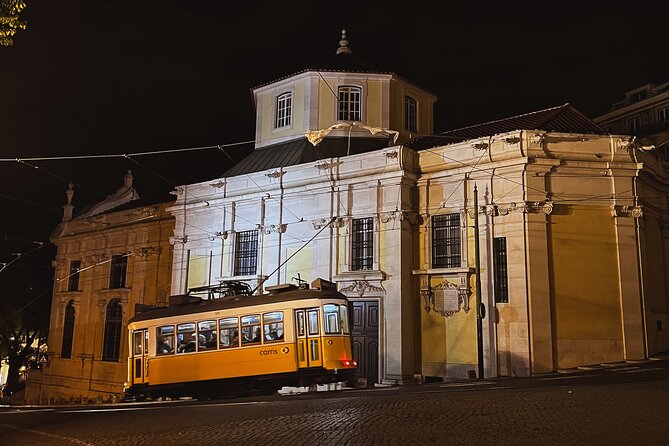
The walk continues to Igreja de São Nicolau, where the guide introduces the people at the center of the evening’s account. The stop lasts about 12 minutes.
I like this part because it shifts the focus from institutions and landmarks to individuals. Dark history can become abstract when it is reduced to dates and political labels. Stories about the people involved help you understand how religious rules and public power affected real lives.
The church also adds a different kind of setting. After the open square, you are looking at a place associated with worship and community. That contrast makes the discussion of religious conflict more pointed.
As with the other stops, the tour does not include interior admission. The value here is the guide’s explanation and the connection between the church and the wider story.
Praça do Comércio and Lisbon’s unsettling center
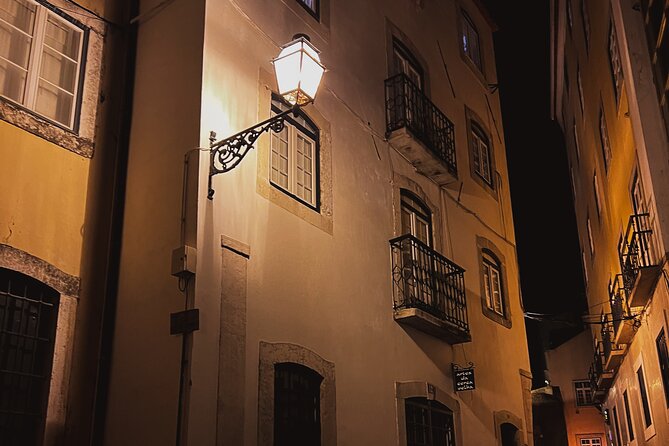
Praça do Comércio receives about 18 minutes, making it one of the major stops. The square is one of Lisbon’s grandest open spaces, with its broad riverfront setting and formal buildings. Here, the guide asks you to see it through a darker lens.
This is a strong location for storytelling because its present-day appearance can hide its past. You may associate the square with light, space, and river views. The tour adds a more troubling layer and encourages you to picture how public places once functioned when punishment and power were displayed openly.
The open layout may help a group of 25 stay together, but it can also be windy or noisy. Listen closely when the guide begins speaking, and stay near enough to hear. The tour is designed as a moving narrative, not a private lecture.
Lisbon Cathedral and the trapped souls
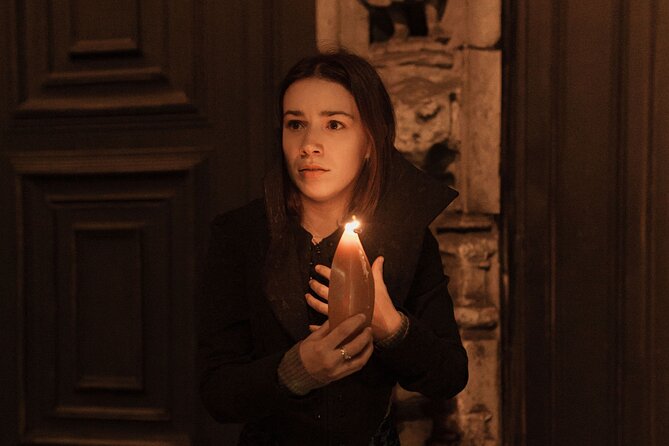
At Lisbon Cathedral, the story turns to lost souls and suffocating darkness. The stop lasts about 13 minutes and brings you toward the older Alfama side of the city.
This is where the tour’s mood becomes more atmospheric. The cathedral is already one of Lisbon’s key historic sights, but the guide frames it through the people and fears attached to the place. You are not simply checking off another landmark. You are hearing how religious belief, punishment, and fear shaped the way people understood their world.
The cathedral is also a useful orientation point. By this stage, you have moved away from the spacious central squares and toward the older hill district. The route is becoming more uneven, and the city feels less formal and more intimate.
Santa Luzia and the fires that changed Lisbon
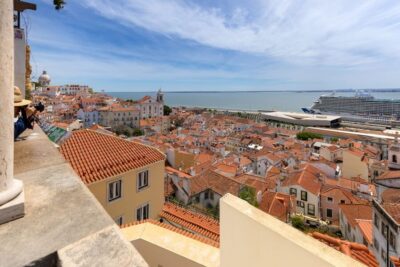
The stop at Miradouro de Santa Luzia is shorter, about seven minutes, but the location gives the story room to breathe. The guide explains how fear and flames helped reshape Lisbon’s future.
The viewpoint is one of the route’s scenic pauses. You get a break from the darker details and a chance to look across the city. I like the contrast between the view and the subject. Lisbon can look calm and beautiful from above, even while the guide is describing events marked by fear and destruction.
Because the stop is brief, you should not expect a long photography break. Take your pictures quickly, then stay attentive. The tour keeps moving.
Portas do Sol and the legend of Lisbon’s symbol
At Miradouro das Portas do Sol, the guide combines another panoramic view with a legend connected to one of Lisbon’s beloved symbols. The stop lasts about five minutes.
This is the shortest stop, so it works as a compact change of pace. After the grim material, a local legend adds a more familiar and symbolic side of Lisbon. The guide still keeps the evening’s shadowy tone, but the focus is not only punishment and tragedy.
The viewpoint also helps you understand the city’s steep shape. You have been walking uphill toward Alfama, and the view rewards that effort. If hills are hard for you, this is one reason to think carefully about joining the route, even though the total time is under two hours.
Rua das Damas and the end in Alfama
The final stop is Rua das Damas, a narrow street in Alfama. The guide uses this shadowed setting to discuss the end of the Portuguese Inquisition.
It is a fitting finish. The tour begins in a large central square and ends in a smaller, older street where the atmosphere feels more enclosed. The change in scale mirrors the route’s movement from public landmarks to personal stories and final consequences.
The walk ends at R. das Damas, 1100 Lisboa. From there, you are already in Alfama, a useful area for an evening meal. The supplied meeting details suggest enjoying traditional food afterward, but the meal itself is not part of the tour. Water is not included either, so bring a bottle.
Pace, hills, and group size
The advertised duration is about 1 hour 45 minutes, with nine stops. That sounds relaxed, but the route covers a fair amount of central Lisbon and climbs toward Alfama. I would plan for comfortable shoes and a brisk walking pace.
One account of the experience describes lots of walking, hills, and quick movement. That is important information for anyone with limited mobility or a tight schedule. Most people can participate, and service animals are allowed, but the route is not presented as flat or slow.
The group can include up to 25 people. That size is large enough to create a social evening and give solo visitors a chance to meet others. It is also large enough that you may need to stay close to the guide, especially at busy squares or on narrow streets.
The tour is near public transportation, which helps at the start. The endpoint is in Alfama, so you should consider how you will continue your evening from there. The walk does not return you to Rossio.
How the guides shape the experience
The guide is the main reason this tour works. The subject is serious, and a flat delivery would make it feel like a list of unpleasant facts. Andreia is described as animated, fun, passionate, and ready to answer questions. Amanda is praised for clear explanations and strong storytelling.
That difference matters because the tour covers difficult material. You want a guide who can explain persecution without turning suffering into cheap entertainment. The best moments should help you understand the forces behind the events, not just shock you with grisly details.
The guide can also help you get your bearings on the first evening in Lisbon. One useful feature is the chance to ask about places along the route and receive suggestions for later in your visit. Still, the exact guide can vary, so do not book solely on the expectation that Andreia or Amanda will lead your departure.
Is $34.84 a fair price?
At $34.84 per person, this is not the cheapest way to walk around central Lisbon. You are paying for a planned route and a guide who connects nine public locations into one story. No paid admissions are included, so the value depends almost entirely on the quality of the narration.
I think the price is fair if you want a focused evening activity and would otherwise miss the meaning behind these places. It is less appealing if you prefer to explore at your own speed, stop often for photos, or read about Lisbon independently.
Group discounts may improve the cost for a larger party. The tour is also booked about 21 days ahead on average, which suggests you should not leave it until the last minute if the date matters to you. Free cancellation is available up to 24 hours before the start time. Changes or cancellations inside that window are not accepted for a refund.
Who should book this Lisbon night walk?
I would choose this tour for a first or second night in Lisbon, especially if you want a quick orientation with a strong theme. The route introduces central squares, Baixa, the cathedral area, viewpoints, and Alfama in one evening.
It suits you if you enjoy:
- Dark chapters of religious and political history
- Lively guides who welcome questions
- A short evening activity
- Meeting other people in a group setting
- Seeing major places after the daytime crowds fade
I would think twice if you want a classic architecture tour, a gentle stroll, or a ghost tour packed with supernatural stories. The dark material is real history first, with legends added around the edges.
Also check the language details carefully. English is the stated language, but a language mismatch caused a serious booking problem for one person. Make sure your confirmation clearly matches the language you need before the cancellation deadline passes.
Should you book The Dark Unholy Secrets?
Book it if you want Lisbon’s landmarks tied to difficult, memorable stories rather than a standard list of monuments. The combination of Rossio, Praça do Comércio, the cathedral, Santa Luzia, Portas do Sol, and Alfama gives you a useful first look at the city, while the Inquisition theme keeps the walk focused.
Skip it if you dislike grim subjects or need a slow, level route. At $34.84, the tour earns its price through storytelling, not included sights. For the right audience, especially history fans looking for an evening introduction, it is a sharp and unusual way to meet Lisbon.
FAQ
How long does the walking tour last?
The tour lasts approximately 1 hour and 45 minutes.
What language is the tour offered in?
The tour is offered in English. Confirm the language shown for your specific booking because a language mismatch has occurred in the past.
Where does the tour start?
It starts at Praça Dom Pedro IV 7, 1100-581 Lisboa, Portugal.
Where does the tour end?
It ends on Rua das Damas in Lisbon’s Alfama district.
How many stops are included?
The route includes nine stops, including Rossio, the National Theatre Dona Maria II, Largo de São Domingos, Igreja de São Nicolau, Praça do Comércio, Lisbon Cathedral, Santa Luzia, Portas do Sol, and Rua das Damas.
Is admission to the sights included?
The experience includes storytelling at public locations. Admission tickets are listed as free for the stops, and no paid attraction entry is included.
How large can the group be?
The tour can have a maximum of 25 people.
Is the tour suitable for people who do not walk easily?
Most people can participate, but the route includes hills and a brisk pace. One account describes it as a lot of walking, so it may not suit anyone looking for an easy or slow stroll.
Are water bottles included?
No. Water bottles are not included, so bring your own.
Can I cancel for a full refund?
Yes, if you cancel at least 24 hours before the scheduled start time. Cancellations or changes made less than 24 hours before the start time are not accepted for a refund.
Just reviewed in Lisbon
- Private tour Lisbon – full day★ 5.0 · 8 reviews
- Private Tour: Portuguese Food and Wine Tour★ 5.0 · 33 reviews
- Lisbon Football Experience – Private stadium and Museum Tour★ 4.0 · 10 reviews
- Lisbon and Sintra Essence 8H – Private Tour★ 5.0 · 5 reviews
- Private Tour: Lisbon Sunset Walking Tour with Fado Show and Dinner★ 5.0 · 30 reviews
- Private Catamaran Tour: Lisbon coast cruise with barbecue and drinks★ 5.0 · 20 reviews
- Lisbon: Helicopter Tour over Cascais & Cabo da Roca★ 5.0 · 4 reviews
- Private Tour Fátima – Nazaré – Batalha – Óbidos★ 5.0 · 6 reviews
Lisbon Walking Tours, compared.
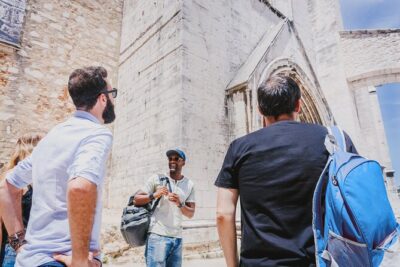
Best of Lisbon Small-Group Guided Walking Tour
Read our review →
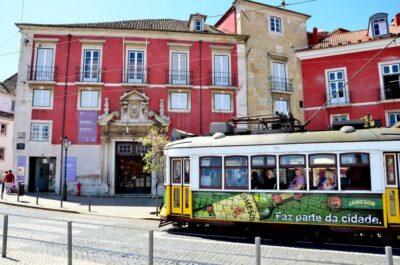
Best of Lisbon Walking Tour: Rossio, Chiado & Alfama
Read our review →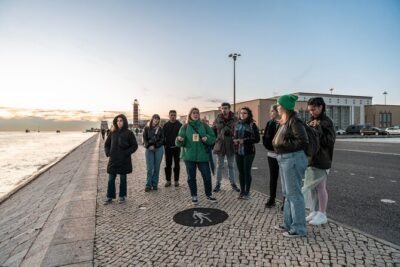

Lisbon Roots – Small group Food & Culture Walking Tour w/tastings
Read our review →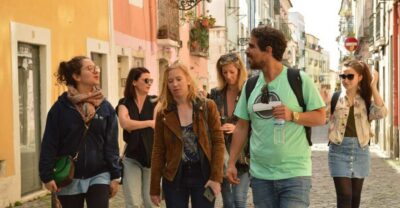
Starter Walking Tour to the highlights in German
Read our review →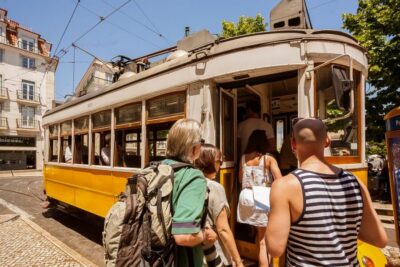
Browse the lists this tour appears in