
Reviewed · LISBON WALKING TOURS
Walking tour: Lisbon in the Shadows of World War II
Lisbon was a waiting room during World War II. Refugees fleeing Nazi persecution gathered here for visas and onward passage, while British, German, and American spies moved through the same streets under the watch of Portugal’s political police. I like that this tour connects those human stories to ordinary places, including cafés, pensions, and grand avenues. I also like the clear route from Marquês de Pombal to the river, which gives you a useful three-hour walk through central Lisbon.
The main drawback is the amount of walking on city streets, with no hotel pickup and no food included. The information also gives two different group descriptions, private groups of up to six and small groups of up to twelve, so confirm the exact setup when booking. The tour is listed as wheelchair accessible, yet it is also marked unsuitable for people with mobility impairments, another point worth checking directly.
Key points about Lisbon in the Shadows of World War II
- Refugee Lisbon: Learn how neutral Portugal became a temporary refuge and waiting place for people escaping war and Nazi persecution.
- Espionage in plain sight: Follow stories of British, German, and American agents watched by Salazar’s political police.
- Historic cafés: Stop at Café Chave d’Ouro and Pastelaria Suiça, places linked to wartime news, meetings, and anxious conversation.
- A practical central route: Walk from Marquês de Pombal through Avenida da Liberdade, Baixa, Chiado, Rossio, and on to Cais do Sodré.
- A guide-led history walk: Leonor Abrantes leads the experience in English or German, with supplemental material available during the tour.
- Private-tour value: At $170 per group of up to six, the cost makes more sense for a family or small group than for a solo visitor.
Why wartime Lisbon makes such a good walking subject
Lisbon’s World War II story is unusual because Portugal stayed officially neutral under António de Oliveira Salazar’s Estado Novo dictatorship. Neutral did not mean untouched. The capital became a place where refugees waited, spies operated, governments watched one another, and news from the war shaped daily conversation.
That tension gives this walk its appeal. You are not simply looking at monuments built long before the war. You are considering what happened in hotels, cafés, pensions, aid offices, and public squares while Europe was in crisis.
Lisbon served as a temporary home for people who had escaped occupied countries but could not yet leave for the Americas or other safe destinations. Some waited for visas. Others waited for transport. The city could feel like a safe haven and a place of uncertainty at the same time.
The tour also presents Lisbon through the eyes of well-known people who passed through or stayed there, including Josephine Baker, Alfred Döblin, and Leslie Howard. Their accounts brought outside impressions of Portugal and its people into the story. That human angle should keep the walk from becoming a dry lesson in dates and political decisions.
More Lisbon Walking Tours:
- Lisbon: History, Stories and Lifestyle Walking Tour
★ 4.8 · 10,902 reviews - Best of Lisbon Small-Group Guided Walking Tour
★ 5.0 · 4,869 reviews - Lisbon: Food and Wine Small Group Walking Tour
★ 4.9 · 4,082 reviews
Meeting at Marquês de Pombal
The walk begins at Praça Marquês de Pombal, in front of Café A Padaria Portuguesa at number 12. This is a practical starting point near a major central avenue, and it puts you close to the former Hotel Aviz, one of Lisbon’s important hotels during the period.
The hotel is central to the opening mood of the tour. A place built for comfort and status became part of a city where diplomats, wealthy visitors, refugees, and agents could cross paths. From the start, the walk asks you to picture Lisbon not as a quiet backwater but as a capital receiving people from a continent at war.
The meeting point is easy to identify, but arrive with enough time to find the café and guide. The tour lasts three hours and ends at Cais do Sodré, so you do not return to the starting point. That one-way route is useful if you plan to continue toward the river or Time Out Market afterward.
Parque Eduardo VII and the view over the capital
The first scheduled stop is Parque Eduardo VII, with about 15 minutes for a guided visit and photo stop. The park gives the tour room to explain the setting before the route narrows into Lisbon’s main streets.
This part is not only about taking a picture. A broad open space helps you understand the shape of central Lisbon and its connection to the avenues below. It also provides a natural place to introduce wartime fears, including the concern that an Axis invasion could reach Portugal.
The city prepared for the possibility of bombing and invasion by considering how to protect important monuments and buildings. You will hear about those precautions as part of the larger story of a country trying to remain neutral while preparing for a war that might not respect its borders.
The stop is short, so do not expect a long park visit. Its value comes from orientation and context rather than a large number of specific sites.
Avenida da Liberdade and the city’s public face
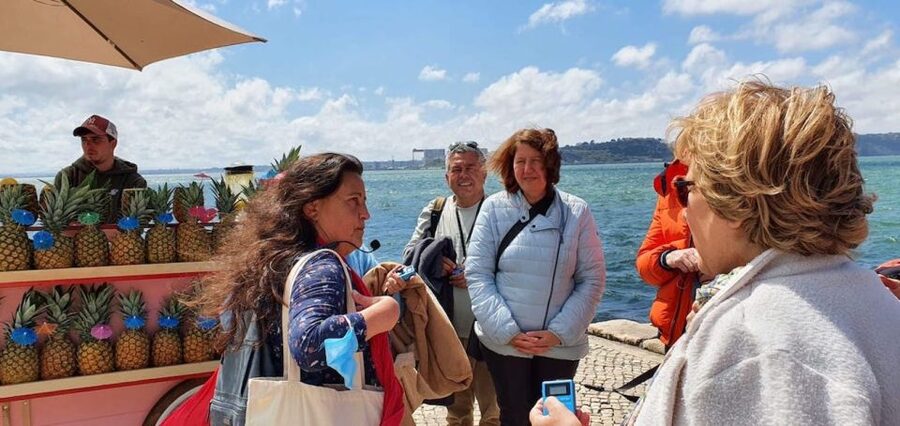
From the park, the route follows Avenida da Liberdade for roughly 20 minutes. This is one of Lisbon’s grandest avenues, and its scale helps show the official face of the capital during the Estado Novo period.
The avenue also works well for a story about contrasts. Public buildings and formal streets can suggest order and control, while nearby pensions and aid organizations served people living with uncertainty. Salazar’s government had policies concerning refugees, and the walk explains those policies rather than treating Portugal’s neutrality as a simple act of kindness.
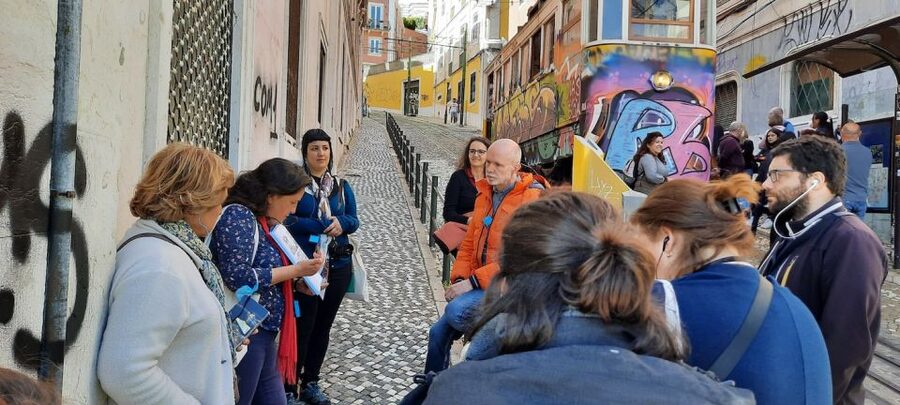
You will want comfortable shoes here. The route covers a fair stretch of central Lisbon, and you will be listening while walking, stopping, and looking around. If you prefer history in a seated setting, this is not the right format. If you like seeing how a city’s ordinary streets carry political meaning, the avenue is a strong early section.
Something different to do with a day in Lisbon:
- Lisbon City Center Tour – The Unmissable Lisbon
★ 5.0 · 22,234 reviews - Lisbon: Sintra, Pena, Regaleira, Cabo da Roca & Cascais
★ 4.7 · 19,656 reviews - Sintra: Pena Palace and Park Entrance Ticket
★ 4.2 · 17,410 reviews - Lisbon: Jerónimos Monastery Entrance Ticket
★ 4.1 · 14,164 reviews
Restauradores Square and stories of arrival
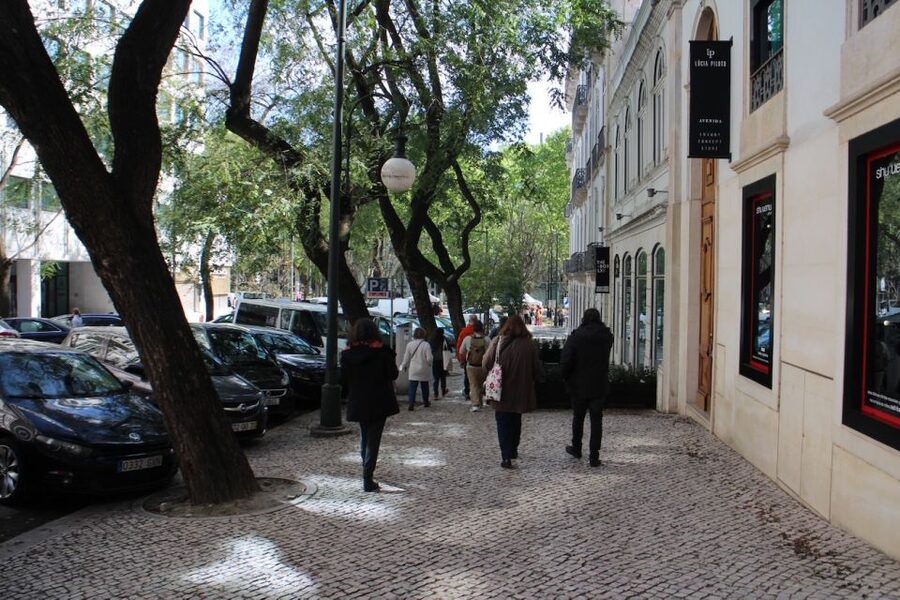
The route continues to Restauradores Square for about 15 minutes. This central plaza sits along one of the busiest parts of the old city and provides another useful stage for talking about arrivals, departures, and the movement of people through Lisbon.
The wartime story here is less about one preserved object and more about the people who passed through the capital. Refugees were not all part of one group or one experience. They arrived with different papers, resources, plans, and chances of finding a way out.
This is where the phrase waiting room becomes meaningful. Lisbon could offer safety from immediate danger, but safety did not guarantee a visa or a quick departure. A person might be out of occupied Europe but still unable to reach a permanent destination.
The tour’s strength is its attention to that uncertainty. It gives you a way to see the square not just as a sightseeing stop but as part of a city handling a human crisis.
Baixa and the pressure of wartime news
The walk reaches Baixa for a short guided section of about 10 minutes. Baixa is a compact, structured part of central Lisbon, rebuilt after the 1755 earthquake and laid out with broad streets and orderly blocks.
Here, the focus shifts toward public life and information. News from the war affected conversations across the city, and cafés became places where people followed events, watched one another, and tried to understand what might happen next.
The shorter timing in Baixa means your guide will likely keep the explanation focused. You will not be stopping at every historic building. Instead, the point is to connect the streets to the wider wartime network of news, waiting, observation, and rumor.
That approach suits you if you want a thematic tour. It may disappoint you if you are hoping for a full architectural tour of Baixa, since the main subject remains World War II rather than Lisbon’s entire building history.
Café Chave d’Ouro and Pastelaria Suiça
The tour includes historic cafés such as Café Chave d’Ouro and Pastelaria Suiça. These stops help bring the espionage story down to human scale.
Cafés were practical meeting places. People could sit, read, listen, pass along information, and observe others without drawing as much attention as they might in a private office. During the war, news could bring both excitement and fear, especially in a city where agents from opposing sides were active.
The cafés also add texture to the walk. Refugee histories can become abstract when told only through official policy. A café setting reminds you that major events were discussed over ordinary drinks and pastries, with people trying to make decisions in an uncertain world.
Food and drinks are not included, so do not assume a scheduled café stop means a refreshment break. The cafés are part of the historical route. If you want a snack, the tour ends within walking distance of Time Out Market, which is a convenient place to continue the afternoon.
Chiado and the personal side of exile
The route then reaches Chiado, with about 15 minutes of guided commentary. Chiado is one of Lisbon’s best-known central districts, but this walk uses it to explore personal impressions of the city during the war years.
Josephine Baker, Alfred Döblin, Leslie Howard, and other notable figures were connected with Lisbon during this period. Their presence reflects the range of people caught up in the war’s movement across borders. Some were escaping danger, some were working, and some were passing through under unusual circumstances.
Their accounts also complicate the picture of Portugal. Lisbon could appear welcoming and calm, yet the dictatorship placed limits on freedom and watched political activity closely. The city’s beauty and its political tensions existed at the same time.
I like this part because it keeps the story from becoming only a study of institutions. Names and personal accounts give you a clearer sense of how strange Lisbon could feel to someone arriving from a Europe under occupation.
Rossio and the visible tension of neutrality
Praça Dom Pedro IV, commonly known as Rossio, receives about 15 minutes of guided attention. This is one of central Lisbon’s major gathering places, making it a fitting setting for the public side of neutrality.
Portugal’s official position did not remove the pressure of the war. The city had to manage refugees, foreign agents, political surveillance, and the risk of military danger. The tour explains how the Estado Novo regime handled refugees while maintaining control at home.
Rossio is also a good place to consider the difference between a city’s appearance and its hidden activity. The square may look like a normal public space, yet during the war the people passing through it could have very different reasons for being in Lisbon.
The stop is not presented as a claim that every square has a secret event attached to it. Its value lies in showing how international politics and everyday city life overlapped.
Finishing at Cais do Sodré
The walk ends at Cais do Sodré, near the river. This location gives the story a natural closing point because Lisbon’s wartime importance depended so much on movement: arriving by sea, waiting for papers, and hoping to leave Europe.
The riverfront finish also makes the tour easy to pair with another Lisbon plan. Time Out Market is within walking distance for a snack or light meal, though food is not part of the tour itself.
Since the route is one way, think ahead about what comes next. You will not finish near Marquês de Pombal, and there is no hotel drop-off. The final location is convenient if you want to continue through central Lisbon, but less convenient if your next appointment is back near the starting point.
Price, group size, and practical value
The price is $170 per group of up to six people. For six people, that works out to about $28.33 per person, making it a reasonable choice for a family or group of friends who want a focused private walk.
For one or two people, the value depends on your interest in the subject. This is a specialist history tour, not a general introduction to Lisbon. You are paying for a themed route, a live guide, and the chance to shape the experience around a small group rather than joining a large public walk.
The group information needs clarification. The activity is described as a private group, while the included details also refer to small groups of up to 12 people. Ask the operator which limit applies to your booking and whether the guide will be exclusively with your party.
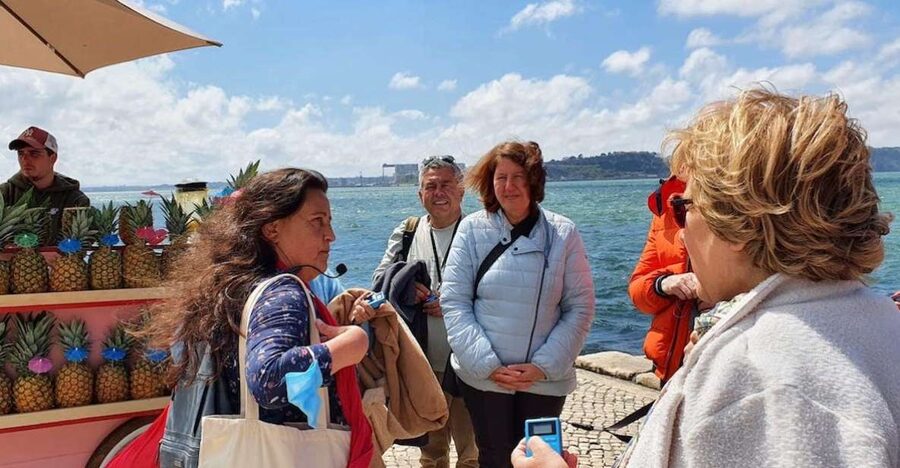
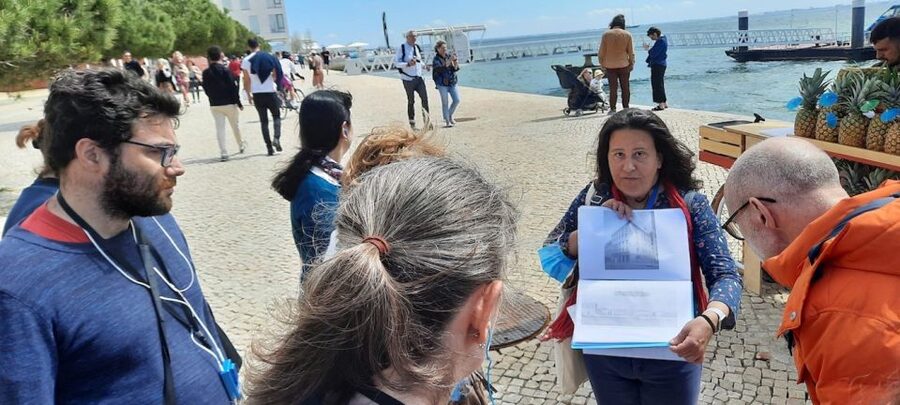
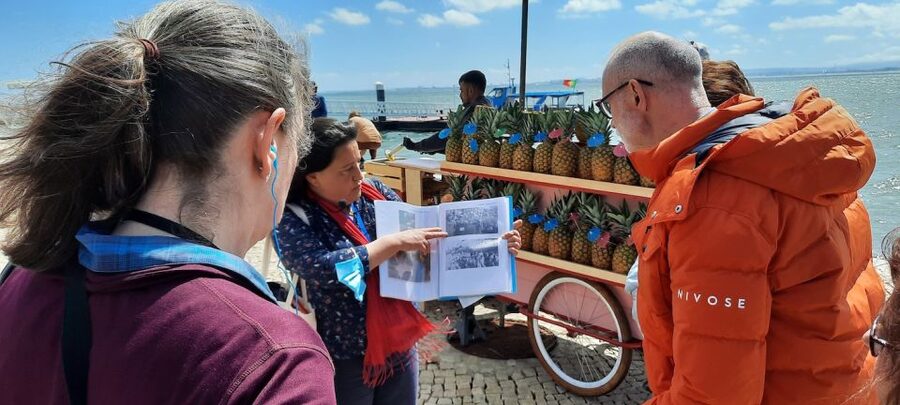
English and German guiding are available. Guide Leonor Abrantes leads the experience, and one verified booking specifically noted that the guide arrived with supplemental materials and made the three hours enjoyable and informative. That detail matters because photographs, documents, or other visual aids can help explain people and events that are otherwise difficult to picture.
The published rating is 5 out of 5 from eight reviews. That is a small sample, so I would treat it as encouraging rather than conclusive. The comments do support two useful conclusions: the guide prepares carefully, and the experience is strongest when you want substantial historical explanation.
Free cancellation is available up to 24 hours before the start, and you can reserve now and pay later. The walk operates rain or shine, so bring suitable clothing and do not book it as a weather-dependent activity.
Who should book this Lisbon history walk
I would recommend this tour to you if you have already seen Lisbon’s major sights and want a more focused story. It also suits anyone interested in World War II, refugee history, intelligence work, dictatorship, or the uneasy role of neutral countries.
The tour may be a good fit for a family with older children, provided they can manage three hours of city walking and follow a serious subject. A private format can also work well for a group that wants to ask questions about Salazar, the refugees, or the people connected with wartime Lisbon.
I would be cautious if you want a relaxed café crawl, a broad sightseeing tour, or a short route with frequent sitting breaks. The walk covers several districts and does not include meals or transportation.
The accessibility information is inconsistent. The activity is marked wheelchair accessible, but it is also listed as unsuitable for people with mobility impairments. Because the route is a three-hour urban walk, contact the provider before booking if stairs, uneven surfaces, distance, or standing time may be a concern.
Should you book it?
Book this tour if Lisbon’s wartime role interests you more than a standard list of monuments. The strongest parts are the refugee stories, the café settings, the espionage angle, and the way the route links grand avenues with ordinary places where people waited and watched.
At $170, it is most worthwhile for a private group that can share the cost. Ask about the actual group limit and mobility arrangements before paying. If those details suit you, this is a thoughtful way to see central Lisbon through a period of fear, forced movement, and uneasy neutrality.
FAQ
Where does the tour begin?
It begins in front of Café A Padaria Portuguesa at Praça Marquês de Pombal 12.
Where does the tour end?
The tour ends at Cais do Sodré near the river.
How long is the walking tour?
The tour lasts three hours.
What is the price?
The price is $170 per group of up to six people.
Is the tour private?
The activity is described as a private group experience. The information also mentions small groups of up to 12 people, so confirm the exact group limit when booking.
Which languages are available?
The live guide is available in English or German.
Is food included?
No. Food and drinks are not included. The tour ends within walking distance of Time Out Market, where you can buy a snack or light meal.
Does the tour run in bad weather?
Yes. The tour takes place rain or shine.
Can I cancel the booking?
You can cancel up to 24 hours in advance for a full refund. A reserve-now, pay-later option is also available.
Just reviewed in Lisbon
- Private tour Lisbon – full day★ 5.0 · 8 reviews
- Private Tour: Portuguese Food and Wine Tour★ 5.0 · 33 reviews
- Private Tour: Lisbon Sunset Walking Tour with Fado Show and Dinner★ 5.0 · 30 reviews
- Lisbon Football Experience – Private stadium and Museum Tour★ 4.0 · 10 reviews
- Lisbon and Sintra Essence 8H – Private Tour★ 5.0 · 5 reviews
- Private Catamaran Tour: Lisbon coast cruise with barbecue and drinks★ 5.0 · 20 reviews
- Lisbon: Helicopter Tour over Cascais & Cabo da Roca★ 5.0 · 4 reviews
- Private Tour Fátima – Nazaré – Batalha – Óbidos★ 5.0 · 6 reviews
Lisbon Walking Tours, compared.
Best of Lisbon Small-Group Guided Walking Tour
Read our review →
Best of Lisbon Walking Tour: Rossio, Chiado & Alfama
Read our review →

Lisbon Roots – Small group Food & Culture Walking Tour w/tastings
Read our review →
Starter Walking Tour to the highlights in German
Read our review →
Browse the lists this tour appears in