
Reviewed · LISBON WALKING TOURS
Lisbon: City of Spies Guided Walking Tour
Lisbon’s most gripping wartime stories are not about armies massing at the city gates. They are about spies, refugees, royals, profiteers, and double agents sharing the same neutral streets. This three-hour walk brings that shadowy Lisbon to life, with tales tied to Nazi gold, escape routes, Allied convoys, and the people who passed through the city on their way to America.
I like the way the tour joins political history to human drama, especially the story of the Portuguese consul in Brussels and the spy network watching ships at sea. I also like the guides’ flexible style. José, Rita, Joana, Ze, and Phillipa have all led tours praised for clear storytelling, humor, and local context. The main caution is that the walking time may not always fill the full three hours. One booking lasted about 1 hour and 40 minutes, while another used half the time for seated discussion, so confirm the format if timing matters.
Key points to know before you book
- WWII Lisbon becomes the main character: Follow stories of spies, refugees, royal families in exile, and escape routes through a neutral capital.
- The Garbo story adds a famous twist: Learn about the double agent whose work helped mislead Nazi commanders before D-Day.
- Politics matters here: The tour explains Portuguese neutrality, Salazar’s dictatorship, and the pressures facing Portugal during the war.
- It is more than a spy walk: You also hear about Nazi gold, movie stars, writers, socialites, and the inspiration Lisbon gave Ian Fleming and Graham Greene.
- The guide can shape the experience: English and Portuguese tours are available, with private and small-group choices.
- Wear good shoes and plan for weather: The tour runs rain or shine, and the meeting point changes with the booking option.
Why WWII turned Lisbon into a city of spies
Lisbon was neutral during World War II, but neutral did not mean quiet. The city became one of the few places in wartime Europe where people from opposing sides could cross paths, trade information, arrange passage, and wait for a ship or plane.
That setting gives the walk its unusual appeal. You are not simply hearing a list of battles. You are learning how a capital could host Nazi agents, Allied operatives, refugees, exiled royals, artists, and socialites at the same time.
Your guide explains the political pressure behind Portugal’s choices. Salazar’s dictatorship, Portuguese neutrality, and the country’s major wartime challenges all help explain why Lisbon became useful to so many competing groups. Without that background, the spy stories can feel like disconnected movie plots. With it, the city’s cafes, hotels, offices, and waterfront connections take on greater meaning.
The tour also places Lisbon in the wider story of Europe. People escaping persecution passed through the city. Royal families waited for a route out. Famous writers and performers spent time there before continuing toward the United States. The result is a wartime story with both high politics and ordinary fear.
More Lisbon Walking Tours:
- Lisbon: History, Stories and Lifestyle Walking Tour
★ 4.8 · 10,902 reviews - Best of Lisbon Small-Group Guided Walking Tour
★ 5.0 · 4,869 reviews - Lisbon: Food and Wine Small Group Walking Tour
★ 4.9 · 4,082 reviews
A walking route built around stories, not monuments
The meeting point varies with the option you book, so you should check the exact location before setting out. The tour is a walking experience rather than a ticketed attraction, and no hotel pickup or drop-off is included.
The route uses Lisbon’s streets and landmarks as prompts for storytelling. The precise stops are not specified, and the guide’s approach appears to matter as much as the route itself. Joana was praised for showing landmarks that a visitor might otherwise pass without noticing. That is useful if you have already seen Lisbon’s main sights and want to read familiar streets in a new way.
I would not book this expecting a standard sightseeing circuit with a long list of named monuments. The point is the wartime meaning attached to the city, not simply the architecture in front of you. You may pause at a place because of who passed through it, what was arranged there, or how it fits into a larger chain of secret activity.
The walk is scheduled for three hours, so wear comfortable shoes. It takes place rain or shine. Lisbon’s hills and uneven streets can make weather and footwear matter, especially if your group prefers to keep moving rather than pause often.
Double agents, coded loyalties, and the Garbo story
The spy material is the tour’s biggest draw. You hear about double agents and the competing networks that operated around Lisbon during the war. The appeal is not just the question of who spied for whom. It is the uncertainty, the shifting loyalties, and the fact that a neutral city allowed these characters to operate close to one another.
The Garbo story gives the tour one of its best-known names. Juan Pujol García, known by the code name Garbo, became famous for feeding false information to the Nazis while working for the Allies. The tour connects this larger spy story to Lisbon’s wartime setting, helping you see how information, deception, and movement across borders shaped the conflict.
You also hear about Allied ship convoys and the spy network watching them. That adds a maritime side to the walk. Lisbon was not only a place where people waited for transport. Its links to ships and sea routes made the city part of a much larger contest.
The account of RAF and Luftwaffe battles off the Portuguese coast widens the frame again. Portugal may have been neutral, but the war still reached its surrounding waters and skies. These details help correct the easy idea that neutral Lisbon sat safely outside the conflict.
The best guides seem to avoid presenting this as a dry lecture. José was praised for using humor while keeping the subject clear, and Ze was noted for bringing the period’s characters to life. That delivery matters. Espionage can quickly become a jumble of code names and dates, but a good guide gives each figure a reason to matter.
Nazi gold, escape routes, and the cost of neutrality
Nazi gold is another major theme. The subject brings economics and moral questions into the tour. Portugal’s position was not only about military neutrality. Trade, money, pressure from larger powers, and the need to protect national interests all formed part of the wartime story.
The tour also examines escape routes. Lisbon served as a waiting room for people trying to leave Europe, but waiting was not the same as safety. Refugees faced uncertainty over papers, transport, money, and the next border. The city’s role in helping people move onward gives the walk a more serious edge than a simple collection of spy anecdotes.
You will hear about anonymous refugees alongside royals and celebrities. That contrast is one of the strongest parts of the subject. A royal family in exile and a person fleeing with almost nothing might pass through the same city, but their options were hardly equal.
The guide also covers the lonely fight of a Portuguese consul in Brussels. This story brings the focus down to one official making difficult choices rather than leaving everything at the level of governments and famous agents. It is the sort of personal episode that can help you understand how political decisions affected real people.
Something different to do with a day in Lisbon:
- Lisbon City Center Tour – The Unmissable Lisbon
★ 5.0 · 22,234 reviews - Lisbon: Sintra, Pena, Regaleira, Cabo da Roca & Cascais
★ 4.7 · 19,656 reviews - Sintra: Pena Palace and Park Entrance Ticket
★ 4.2 · 17,410 reviews - Lisbon: Jerónimos Monastery Entrance Ticket
★ 4.1 · 14,164 reviews
Salazar, Portuguese politics, and the larger Lisbon story
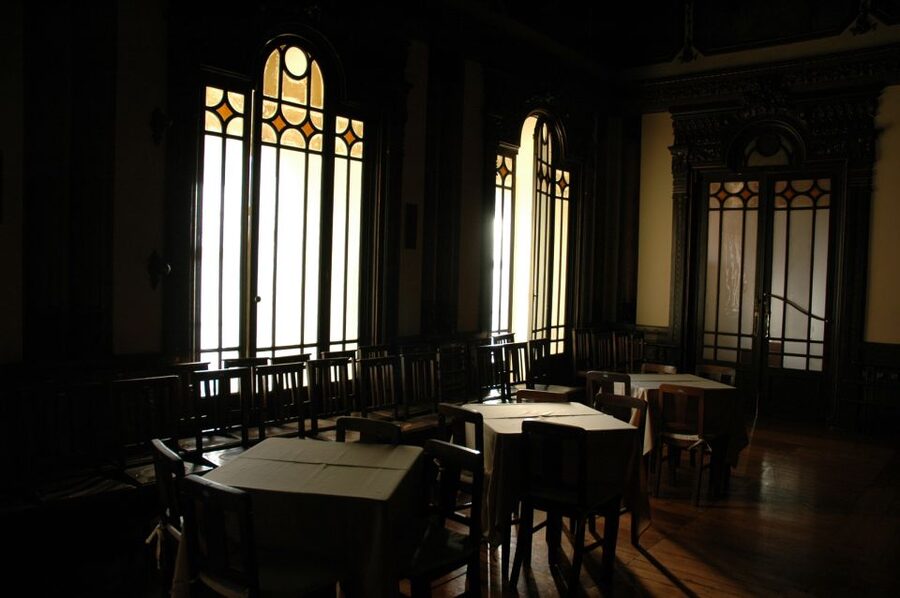
The walk is not only about foreign spies. It also explains Portugal under Salazar. That political setting matters because the country’s internal system shaped how Lisbon dealt with outsiders, information, and wartime pressure.
Rita was especially praised for linking WWII events with broader Portuguese culture and politics. That approach is worth seeking if you want more than a spy-themed novelty. The tour can show how Portugal’s dictatorship and neutrality affected the city’s place in Europe, while also explaining why Lisbon attracted so many unusual visitors.
You should expect discussion rather than a full course in Portuguese political history. Three hours is enough to establish the key pressures and connect them to the espionage stories, but not enough to cover every part of the dictatorship in detail. If you already know little about Salazar, the tour should give you useful bearings. If you are a serious specialist, you may want to treat it as a lively introduction rather than a final word.
One benefit is that you can ask questions as you go. Several guides have been praised for discussing subjects beyond a fixed script. That makes the experience more responsive than a recorded audio walk. If your group wants to ask about Portugal’s neutrality, Jewish refugees, royal exile, or the role of propaganda, this format gives you room to do so.
From Ian Fleming to famous movie stars
Lisbon’s spy reputation reached writers and filmmakers. The tour discusses how the city inspired Ian Fleming and Graham Greene, two authors closely linked with espionage fiction. Hearing about that connection can change the way you see the city’s wartime image. Lisbon was not just a setting for real intelligence work. It also helped shape the popular imagination of the spy world.
Movie stars, artists, writers, and socialites also passed through Lisbon while heading toward the United States. Their presence adds glamour, but the better point is the contrast between public celebrity and private danger. A famous person might attract attention, while an ordinary refugee tried to avoid it. Both were part of the same wartime flow.
This section should appeal to you if you like the overlap between history and popular culture. It also gives the tour a lighter change of pace after discussions of dictatorship, Nazi gold, and desperate escape routes.
Still, you should not expect a film-location tour devoted only to James Bond. The Bond connection is about inspiration and atmosphere rather than a dedicated movie set itinerary. The stronger focus remains real WWII politics, intelligence work, and Lisbon’s role as a crossroads.
The guide makes the greatest difference
The guide roster has included José, Rita, Joana, Ze, Phillipa, Filippa, and Phillips. The exact person depends on the date and booking, but the strongest feedback consistently centers on the guide’s storytelling, command of Portuguese and European history, and ability to answer questions.
José received especially warm praise for turning the tour into a highlight, using humor, and speaking without sounding tied to a rigid script. Rita was praised for passion, broad cultural context, and adapting the walk for people with hearing and walking difficulties. Phillipa and Filippa were also singled out for making the subject lively and easy to follow.
That flexibility can produce different versions of the same tour. One group spent about 90 minutes seated and 90 minutes walking, which worked well for people with mobility concerns. Another booking ended after around 1 hour and 40 minutes, despite the advertised three-hour length. If you need a full three hours of activity, ask about the expected format before you commit.
Private and small-group options are available. A small group can make it easier to hear the guide and ask questions, while a private tour may give you more control over pace and discussion. The public price is $29 per person, which is fair for a three-hour guided history walk if the full time is delivered and the subject suits you.
Who will get the most from this $29 tour?
I would recommend it most strongly to people who already know Lisbon’s basic sights and want a new way to understand the city. It is also a strong pick for anyone interested in WWII, espionage, political history, refugees, or the stories behind classic spy fiction.
You do not need to be a history specialist. The guides use humor and character-driven stories, and the subject has enough drama to hold attention even if you normally avoid formal history tours. Still, you should enjoy listening. The value comes from explanation and context, not from entering a museum, viewing a collection, or receiving a meal.
At $29, the tour costs less than many private sightseeing experiences and gives you a focused subject rather than a general overview. It is especially good value if José, Rita, or another strong storyteller leads your group and the discussion runs close to the advertised duration.
I would think twice if your schedule is tight, your walking ability is limited, or you want a guaranteed three-hour route with a fixed list of sights. The meeting point varies, the weather does not stop the tour, and the actual balance of sitting and walking can differ.
Should you book the Lisbon City of Spies walk?
Book it if you want Lisbon’s WWII story told through people, secrets, money, and moral choices. The best parts are the links between Portuguese neutrality, Nazi gold, the Garbo story, royal exile, and the city’s role as a meeting place for enemies.
I would choose a small-group or private option if you care about questions and pacing. Wear comfortable shoes, check the meeting point, and ask about the expected walking time if the three-hour schedule is important to you.
Skip it if you want a conventional monument tour or a guaranteed film-focused James Bond experience. For everyone else, this is a sharp, unusual way to see Lisbon as a crossroads of wartime Europe, with a price that makes sense when the guide delivers the full story.
FAQ
How long does the Lisbon City of Spies tour last?
The advertised duration is three hours. The exact balance between walking and seated discussion can vary, so ask about the format if you need the full three-hour schedule.
What languages are available?
The tour is offered in English and Portuguese.
Is the tour private or shared?
You can choose between a private tour and a non-private small-group option, depending on availability and the booking choice.
What subjects does the tour cover?
It covers spies, double agents, refugees, Nazi gold, royal families in exile, Portuguese neutrality, Salazar’s dictatorship, escape routes, Allied ship convoys, and famous artists, writers, and movie stars who passed through Lisbon.
Does the tour include hotel pickup?
No. Hotel pickup and drop-off are not included.
Where does the tour meet?
The meeting point may vary according to the option you book. Check your booking details for the correct location.
What should I bring?
Bring comfortable shoes. The tour is a walking experience and runs rain or shine.
Can I cancel for a full refund?
Yes. You can cancel up to 24 hours in advance for a full refund. The activity also offers a reserve-now, pay-later option.
Just reviewed in Lisbon
- Lisbon: Morning of Equestrian Art with Lusitano Horses★ 4.4 · 87 reviews
- Lisbon: Entry Tickets to Mosteiro de São Vicente de Foram★ 4.6 · 50 reviews
- Lisbon: National Palace of Ajuda E-Ticket & City Audio Guide★ 4.1 · 87 reviews
- Lisbon: Early Morning TukTuk Tour – hotel/cruise ship pickup★ 4.9 · 45 reviews
- Sintra: Quinta da Regaleira e-Ticket & Sintra City Audios★ 4.1 · 12 reviews
- Lisbon E-Bike Tour TAGUS★ 5.0 · 3 reviews
- Lisbon: E-bike Trip from the Sintra Mountains to Cascais Sea★ 5.0 · 67 reviews
- Lisbon: Discover Belem by electric Tuk Tuk★ 4.9 · 86 reviews
Lisbon Walking Tours, compared.
Best of Lisbon Small-Group Guided Walking Tour
Read our review →
Best of Lisbon Walking Tour: Rossio, Chiado & Alfama
Read our review →

Lisbon Roots – Small group Food & Culture Walking Tour w/tastings
Read our review →
Starter Walking Tour to the highlights in German
Read our review →
Browse the lists this tour appears in