
Reviewed · LISBON WALKING TOURS
Lisbon Walking Tour – The Perfect Introduction to the City
Lisbon’s story comes together quickly on this 2.5-hour walk through Baixa and Chiado. You begin beneath the grand arch at Praça do Comércio, pass the Santa Justa Elevator and Carmo Church, and finish in Bairro Alto near Camões Square. It is a smart way to get your bearings before spending money on museums, meals, and transport.
I like two things here. First, the tour connects major sights to events that shaped Lisbon, especially the 1755 earthquake and the Carnation Revolution. Second, the guides often add useful advice about inexpensive restaurants, viewpoints, and getting around town. Tiago, José, Natalia, Walter, and several other guides receive especially warm praise for their storytelling and energy.
The main caution is the pay-what-you-wish setup. The booking price is listed as $1.25 per person, but you are expected to decide what to give the guide at the end. One guide asked for a minimum contribution of €10, which left one participant unhappy. Also, a few guides speak quickly, so ask for a slower pace if you need it.
Key things to know before you book
- Praça do Comércio is the starting stage: Find the guide with the orange umbrella between the large arch and the statue of King José I.
- The earthquake is a central theme: You will see how the disaster changed Lisbon’s churches, streets, and downtown plan.
- Carmo Church provides the most striking stop: Its roofless ruins make the 1755 earthquake feel more immediate than a date in a history book.
- The route ends in useful territory: Camões Square puts you near Chiado and Bairro Alto, with plenty of options for continuing your afternoon or evening.
- The guide makes the difference: Tiago, José, Natalia, and Walter are praised for humor, history, restaurant advice, and local tips, though speaking speed may vary.
- This is a real walking tour: Wear comfortable shoes, carry water, and bring rain protection. The tour can continue in wet weather.
Why this is a useful first look at Lisbon
Lisbon can feel scattered when you first arrive. The riverfront is wide and open, Baixa follows a neat grid, Rossio is crowded with movement, and Chiado rises toward Bairro Alto. A first walk helps you understand how those pieces fit together.
This tour concentrates on central Lisbon rather than trying to cover Belém, Alfama, or the city’s outer districts. That focus is a strength. You get a clear introduction to the downtown core without spending half the morning in transit.
The route mixes famous sights with places you could easily pass without understanding. You will see grand squares, a former convent church, a railway station, a memorial to Jewish victims, and a church that survived the earthquake. The guide’s job is not just to point at buildings, but to explain why each one matters.
Several guides receive strong praise for making history easy to follow. Tiago is often singled out for animated storytelling and practical recommendations. José is described as warm, funny, and very strong on history. Natalia is praised for bringing Portuguese history to life and suggesting good-value places to eat. Walter receives credit for handling a group with children and strollers.
That personal element matters. The route itself is public space, so you could walk much of it alone. The value comes from understanding what you are seeing and learning how to use Lisbon after the tour.
More Lisbon Walking Tours:
- Lisbon: History, Stories and Lifestyle Walking Tour
★ 4.8 · 10,902 reviews - Best of Lisbon Small-Group Guided Walking Tour
★ 5.0 · 4,869 reviews - Lisbon: Food and Wine Small Group Walking Tour
★ 4.9 · 4,082 reviews
Meeting the orange umbrella at Praça do Comércio
The tour begins at the Statue of D. José I in Praça do Comércio. Look for the guide with an orange umbrella between the big arch and the statue in the middle of the square.
This is a good meeting point because the plaza is hard to miss and sits at the heart of central Lisbon. It also gives the guide a natural place to explain the city’s relationship with the Tagus River, the rebuilding of downtown, and the importance of the square.
You spend about 15 minutes around the statue, followed by roughly 10 minutes in Praça do Comércio itself. The square is Lisbon’s largest, with open views and grand yellow buildings around its edges. It is an impressive start, but it can also be exposed to sun, wind, or rain, so dress for the day rather than relying on the appearance of a short city walk.
The group size can reach 20 people. That is small enough for a guide to manage, but large enough that you should stay close and keep an ear open when the group moves.
Baixa’s rebuilt streets and public squares
From the riverfront, the walk moves into the Municipal Square, home to Lisbon’s city hall. This is a short stop, only about five minutes, but it helps show the formal side of downtown government.
Next comes the Santa Justa Elevator, one of Lisbon’s most recognizable landmarks. The iron lift rises between Baixa and the higher streets around Carmo. This tour does not include a ride, and the stop is listed as about five minutes, so think of it as an explanation and viewing point rather than an attraction ticket.
The guide can help you see the elevator as part of Lisbon’s vertical layout. The city’s levels are one reason a simple map does not always tell you how a walk will feel. The elevator is also a practical landmark for finding your way around Baixa later.
The route continues to Praça Dom Pedro IV, usually called Rossio. The square is described as Lisbon’s oldest square and has long served as a central meeting place. Spend about 10 minutes here. Notice how the square functions as a public crossroads rather than merely a monument surrounded by pavement.
Rua Augusta follows, with about five minutes devoted to Lisbon’s main pedestrian street. This is a useful place to learn how the tidy Baixa grid was planned after the earthquake. The street also leads naturally back toward Praça do Comércio, so you will begin to recognize the downtown pattern instead of treating each square as an isolated sight.
A difficult history at the Jewish massacre memorial
The stop at the Memorial to the Victims of the 1506 Jewish Massacre adds moral weight to the walk. The memorial honors the thousands of Jewish victims killed in Lisbon in 1506.
The stop lasts about 10 minutes. That is not enough for a full study of the subject, but it gives the guide space to explain a painful chapter that many quick city walks leave out. I value this kind of stop because it makes the city’s past more honest. Lisbon’s beauty should not erase the violence and persecution that also shaped its history.
Nearby, Igreja de São Domingos offers another powerful contrast. The church is described as one of Lisbon’s most impressive, and its damaged interior reflects the city’s difficult past. You spend about 10 minutes here.
This stretch is especially worthwhile if you like history presented through places rather than dates alone. The memorial and church ask you to pause, listen, and consider what happened inside the city you are enjoying today.
Something different to do with a day in Lisbon:
- Lisbon City Center Tour – The Unmissable Lisbon
★ 5.0 · 22,234 reviews - Lisbon: Sintra, Pena, Regaleira, Cabo da Roca & Cascais
★ 4.7 · 19,656 reviews - Sintra: Pena Palace and Park Entrance Ticket
★ 4.2 · 17,410 reviews - Lisbon: Jerónimos Monastery Entrance Ticket
★ 4.1 · 14,164 reviews
Carmo Church and Lisbon’s 1755 earthquake
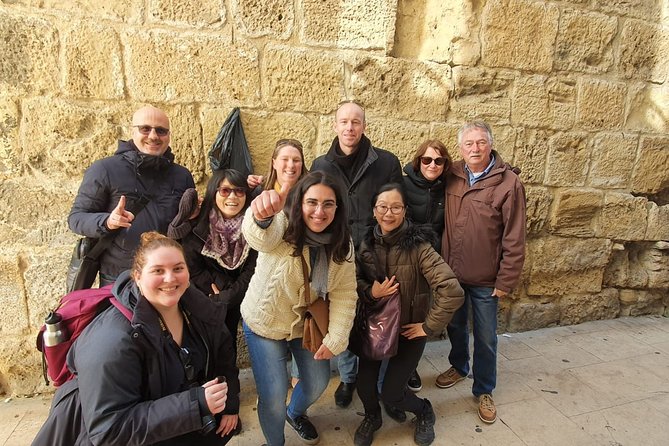
The earthquake story reaches its clearest point at Largo do Carmo and the Carmo Church ruins. The church lost its roof during the Great Lisbon Earthquake of 1755, leaving a dramatic open framework above the nave.
You spend about 10 minutes at Largo do Carmo, the site associated with the Carnation Revolution. That means the guide can connect two major turning points in Portuguese history at one location: the catastrophe that reshaped Lisbon in the eighteenth century and the peaceful 1974 revolution that ended decades of dictatorship.
This is one of the strongest parts of the route. The earthquake is not treated as an abstract disaster. You can look at the church’s exposed arches and understand why the event remains central to Lisbon’s identity.
The guide may also explain how downtown was rebuilt after the earthquake. The wide streets and orderly blocks around Baixa make more sense once you know they were part of a planned reconstruction. You are not just seeing attractive streets; you are seeing a city redesigned after destruction.
The tour also includes Igreja de São Roque, one of the few churches in Lisbon to survive the 1755 earthquake. It is listed as a 10-minute stop. The contrast with Carmo is the point: one church remains roofless, while the other escaped the worst of the disaster.
The exact amount of time you spend looking inside or discussing details may depend on the guide and the group. This is a walking introduction, not a long church visit, so keep your expectations in the right place.
From Avenida da Liberdade to Casa do Alentejo

Avenida da Liberdade receives a brief five-minute stop as Lisbon’s fanciest avenue. It provides a glimpse of the city’s grander side and helps broaden the picture beyond Baixa’s rebuilt commercial streets.
The stop at Casa do Alentejo lasts about 10 minutes. This is described as one of Lisbon’s most charming houses, and it gives the walk a change of mood. Instead of another broad square or major monument, you get a look at a more decorative and intimate interior setting.
Short stops like these are useful because they keep the route moving. You see a lot in 2.5 hours, but no single attraction dominates the whole morning. The trade-off is that you may leave wanting to return and explore Casa do Alentejo, Carmo, or São Roque at greater length.
The railway station at Rossio receives another five-minute stop. Its old central station is one of the city’s most recognizable transportation buildings. This is a practical landmark as well as a historic one, especially if you plan to use trains during your stay.
Finishing in Chiado and Bairro Alto
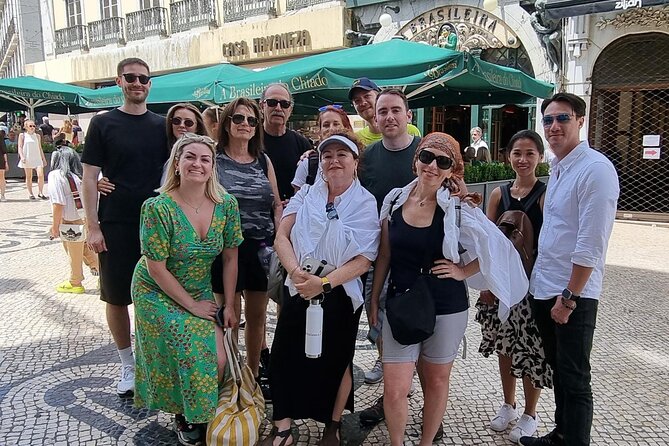
The final section brings you to Praça Luís de Camões, where the tour ends. The square is one of Lisbon’s most iconic, and its location makes it a useful handoff point for the rest of your day.
You also pass through Bairro Alto, the city’s famous nightlife district. During the day, it may feel calmer than its evening reputation suggests. The guide can help you understand how the neighborhood fits into the city, while practical tips may point you toward places to eat or return after dark.
The end point is not a dead end. From Camões Square, you can continue around Chiado or explore Bairro Alto on your own. It is also a good moment to ask the guide for a restaurant suggestion, a viewpoint, or advice on public transportation.
Food recommendations are a recurring strength of this experience. Natalia is praised for suggesting inexpensive places, while Tiago is credited with providing restaurant advice that visitors later found useful. Keep in mind that recommendations are personal, so ask what suits your budget and the kind of meal you want.
What the $1.25 price really means
The listed booking price of $1.25 per person makes this look almost free. That figure should not be treated as the final cost of the experience in the same way you would treat a fixed-price museum ticket.
The format is pay what you see fit at the end. Your payment is the guide’s main compensation, so plan to give an amount that reflects the time, energy, and quality of the walk. One guide told the group that he expected at least €10 per person, while the company explained that guides depend on contributions and have taxes and expenses.
That approach will suit you if you like flexible pricing and want to reward a guide directly. It may not suit you if you prefer to know the complete cost before booking. The most important thing is to understand the arrangement in advance so the end of the tour does not feel awkward.
The tour has a strong value proposition if you use it as a first-day orientation. You get more than a route between famous buildings. You learn which areas connect, where to return, and which historical stories give meaning to the city center.
Pace, weather, and guide style
Most people can participate, and the tour is near public transportation. Service animals are allowed. A guide has also handled a group with children and strollers successfully, though the exact ease of movement can depend on the group and street conditions.
Wear comfortable shoes. The walk includes many stops and plenty of movement between them, even though individual sightseeing pauses are short. Bring an umbrella or rain poncho if wet weather is forecast. The tour continues in the rain, and a previous rainy outing still worked well with proper clothing.
Guide style can vary. The best matches for this experience are guides who tell stories with energy and give you room to ask questions. Tiago, José, Natalia, and Walter are praised for that combination, but you should also be prepared for a guide who speaks quickly.
If you miss information, ask the guide to slow down or repeat it. That is particularly important when history, names, and unfamiliar Portuguese words come in a steady stream. One participant found an accent and fast delivery difficult to follow, so this is a real consideration rather than a minor complaint.
The tour is offered in English. Confirmation arrives when you book, and it is generally booked about 15 days ahead, so reserve early if your dates are fixed.
Who should book this Lisbon walk
I would choose this tour for a first visit, especially if you have only a few days in Lisbon. It gives you a usable framework for Baixa, Rossio, Chiado, and Bairro Alto, then leaves you near places you can explore on your own.
It is also a good fit if you enjoy history more than formal museum visits. The earthquake, the Jewish massacre memorial, the Carnation Revolution, and the surviving church of São Roque provide plenty to think about.
Families can consider it, since a stroller group completed the route with Walter. Still, keep children close and be ready for a 2.5-hour walk with frequent stops rather than a short sightseeing loop.
I would hesitate if you dislike flexible tipping, need guaranteed quiet audio, or want long indoor visits. This is an outdoor city walk with changing guide styles, not a private tour or a fixed-price attraction package.
Should you book the Lisbon Walking Tour?
Yes, if you want an affordable first look at Lisbon and are comfortable paying the guide at the end. The route covers the city center’s most useful landmarks, but its real value lies in the connections between them: earthquake and rebuilding, churches and memory, revolution and modern life.
Book it for one of your first days, wear comfortable shoes, and arrive at Praça do Comércio in time to find the orange umbrella. Ask for slower delivery if needed, listen for restaurant and transportation advice, and budget for a fair contribution beyond the $1.25 booking charge. For a fixed-cost experience, choose another tour. For a lively introduction led by a local guide, this is a strong start.
FAQ
Where does the Lisbon walking tour begin?
It begins at Praça do Comércio, near the Statue of D. José I. Look for the guide with an orange umbrella between the large arch and the statue in the center.
Where does the tour finish?
The tour ends around Praça Luís de Camões at Largo Luís de Camões. This is near the Chiado and Bairro Alto areas.
How long does the walking tour last?
The tour lasts approximately 2 hours and 30 minutes.
What language is the tour offered in?
The tour is offered in English.
Is the tour really only $1.25 per person?
The listed booking price is $1.25 per person, but the guide is paid through a contribution at the end. You decide what you think the tour is worth, although one guide requested a minimum of €10 per person.
Can I cancel for a full refund?
Yes. You can cancel at least 24 hours before the experience start time for a full refund. Cancellations or changes made less than 24 hours before the start time are not accepted.
Just reviewed in Lisbon
- Lisbon: Morning of Equestrian Art with Lusitano Horses★ 4.4 · 87 reviews
- Lisbon: Entry Tickets to Mosteiro de São Vicente de Foram★ 4.6 · 50 reviews
- Lisbon: National Palace of Ajuda E-Ticket & City Audio Guide★ 4.1 · 87 reviews
- Lisbon: Early Morning TukTuk Tour – hotel/cruise ship pickup★ 4.9 · 45 reviews
- Sintra: Quinta da Regaleira e-Ticket & Sintra City Audios★ 4.1 · 12 reviews
- Lisbon E-Bike Tour TAGUS★ 5.0 · 3 reviews
- Lisbon: E-bike Trip from the Sintra Mountains to Cascais Sea★ 5.0 · 67 reviews
- Lisbon: Discover Belem by electric Tuk Tuk★ 4.9 · 86 reviews
Lisbon Walking Tours, compared.
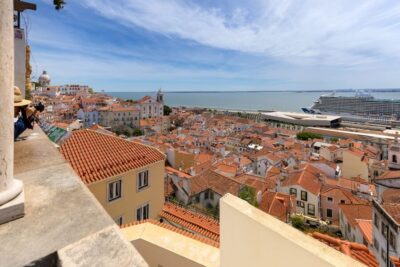

Best of Lisbon Small-Group Guided Walking Tour
Read our review →

Best of Lisbon Walking Tour: Rossio, Chiado & Alfama
Read our review →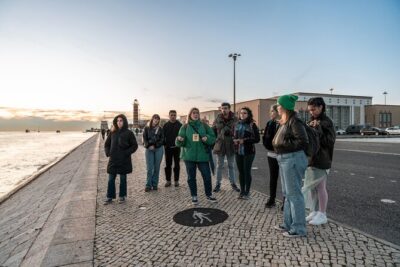

Lisbon Roots – Small group Food & Culture Walking Tour w/tastings
Read our review →
Starter Walking Tour to the highlights in German
Read our review →
Browse the lists this tour appears in