
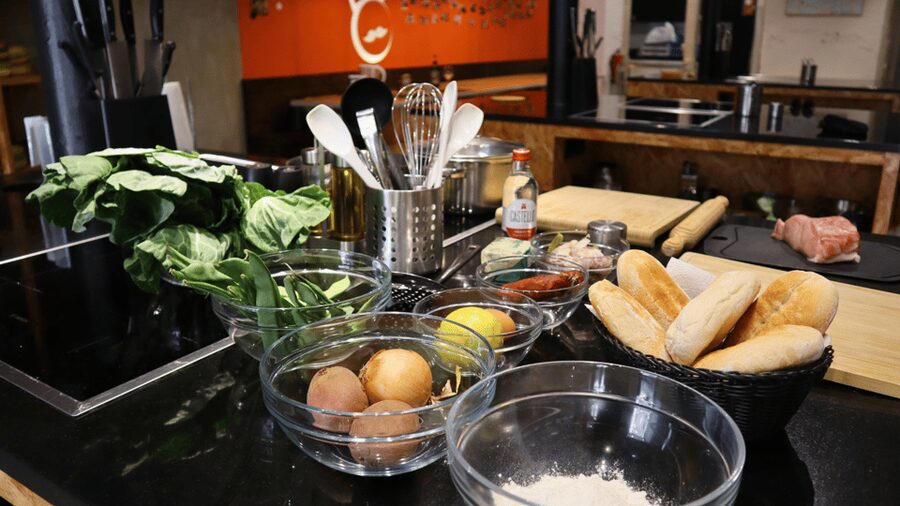
Reviewed · LISBON COOKING CLASSES
Lisbon: Portuguese street food cooking class with Drinks
Lisbon’s street food is simple, filling, and full of stories. In this two-hour class at Compadre Cooking School, you make three Portuguese favorites: bifana, a tender pork sandwich; caldo verde, a comforting greens soup; and peixinhos da horta, crisp battered green beans that helped inspire tempura. I like that the menu skips the usual pastel de nata lesson and focuses on everyday Portuguese food. I also like that the cooking ends with a proper shared meal, wine, and a taste of Ginja.
The class costs $55 per person, which is fair for a guided meal and drinks in Lisbon. The main thing to consider is that this is a shared cooking session, not a private lesson, so your hands-on time depends a little on the group and the instructor. The school is not suitable for wheelchair users, and you should wear comfortable shoes.
Key points at a glance
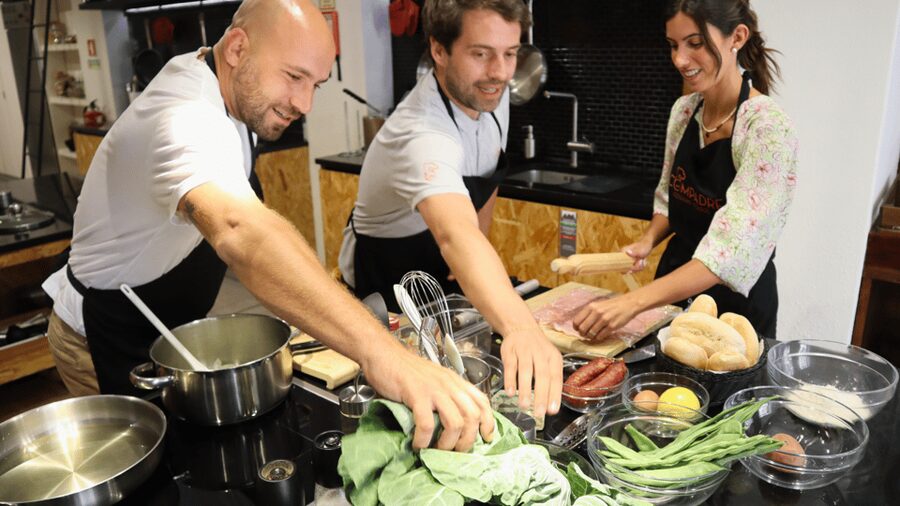
- Three classic dishes: Make bifana, caldo verde, and peixinhos da horta rather than only the most famous Portuguese sweets.
- Food with a story: Learn how these dishes fit into Portuguese snack bars, festivals, homes, and daily life.
- Real participation: You work at cooking stations instead of simply watching a chef prepare everything.
- A full meal included: Sit down afterward to eat the food you helped prepare, with a glass of wine and Ginja.
- Friendly English instruction: The class is led in English, with instructors including Marta, Anna, Martha, and Roy depending on the session.
- Easy for beginners: No cooking background is needed, but comfortable clothes and shoes are important.
Why Portuguese street food makes a good cooking lesson
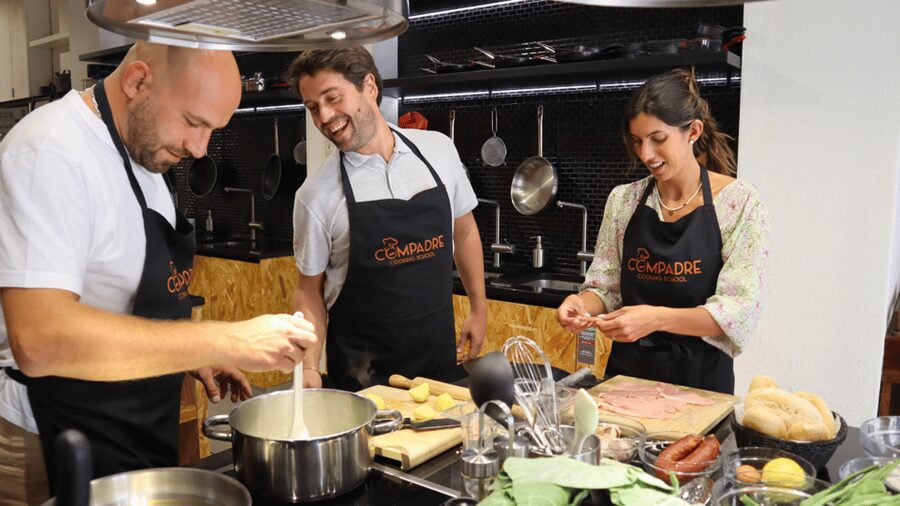
Portuguese food is often at its best when it is unfussy. A bifana is not a complicated sandwich, but the pork, seasoning, bread, and cooking method all matter. Caldo verde uses a small list of ingredients to make a soup that feels far more substantial than its recipe suggests. Peixinhos da horta turns green beans into a crisp snack with a playful name that means little fish from the garden.
That simplicity makes this class useful. You are not just copying a difficult restaurant dish under time pressure. You are learning recipes that can be made at home with ordinary kitchen equipment. The dishes also give you a better sense of how people eat in Portugal outside the polished dining room.
The short introduction at the start sets the scene. You hear where the dishes came from, how they became part of Portuguese food culture, and why they remain popular at local snack bars and festivals. This is a worthwhile part of the class because the food makes more sense once you know its place in daily life.
More Lisbon Cooking Classes:
- Lisbon: Pastel de Nata Baking Class
★ 4.9 · 2,106 reviews - Lisbon: Traditional Portuguese Cooking Class
★ 4.9 · 592 reviews - Pastel de Nata Masterclass at a Real Bakery in Downtown Lisbon
★ 5.0 · 491 reviews
Arriving at Compadre Cooking School
The meeting point is the Compadre Cooking School kitchen in Lisbon. You need to arrange your own way there, since transportation is not included. Plan to arrive about five minutes early so you can settle in, wash up, and get ready without cutting into the cooking time.
The school has been described as modern, clean, and spacious. That matters in a hands-on class. A cramped kitchen can turn simple group work into a shuffle for counter space, while clean, professional cooking stations make it easier for everyone to take part.
Wear comfortable clothing and shoes suitable for standing and cooking. Comfortable shoes are especially useful because the session moves between instruction, preparation, cooking, and the final meal. Smoking, alcohol, and drugs are not allowed during the activity.
The class is taught in English. Depending on the date, you may work with instructors such as Marta, Anna, Martha, or Roy. The teaching style can vary slightly from one session to another. Some participants have found the instructors especially clear, warm, and entertaining, while one person felt that an instructor sometimes took over a bit too much instead of explaining. That is a fair point to keep in mind in any group cooking class.
Starting with bifana, Lisbon’s pork sandwich
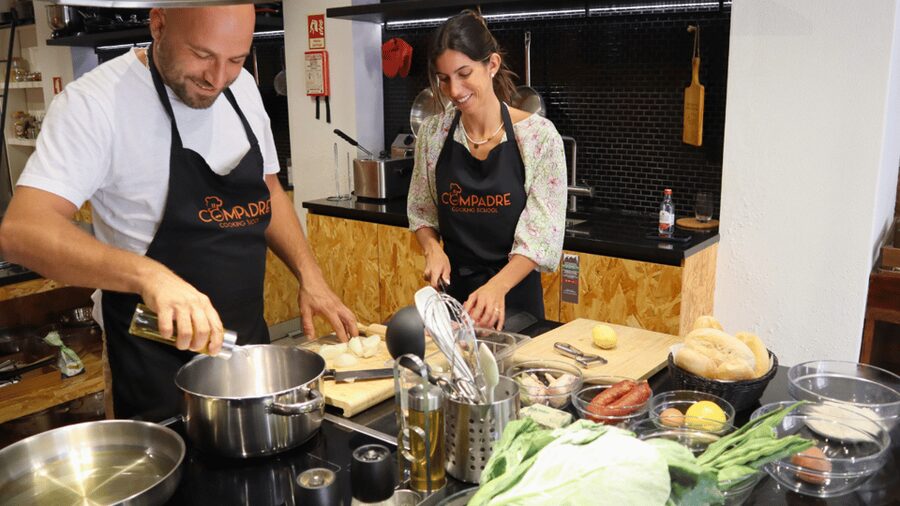
The bifana is one of the best choices for a short lesson because it looks simple but reflects the character of Portuguese snack food. Thin pork is seasoned and cooked before being placed in bread. It is the kind of food associated with quick local meals, casual counters, and festivals rather than formal dining.
You learn the basic preparation with the chef guiding the group through each stage. The point is not to turn you into a professional cook in two hours. It is to show you how a few well-handled ingredients become a satisfying sandwich.
This part of the class should appeal to anyone who wants a recipe they can repeat after returning home. It is also a good introduction to the balance of Portuguese cooking: straightforward ingredients, strong seasoning, and food meant to be eaten with other people.
The group format works well here. Tasks are divided among participants, so you are not left watching someone else cook the entire dish. One of the strongest features of the class is that the recipes include enough separate steps for most people to have a role throughout the session.
Making caldo verde, Portugal’s comfort soup
Caldo verde is the heartiest part of the menu. The soup is made with potatoes and finely sliced greens, producing a dish that is modest in appearance but deeply comforting. It is a classic example of how Portuguese home cooking makes good use of a short ingredient list.
The instructor explains the ingredients and method as you prepare the soup together. You also hear about the dish’s role in Portuguese food culture, which gives the recipe more meaning than a basic list of instructions.
Many people particularly enjoy this part of the meal. The soup is easy to understand, practical to recreate, and well suited to a home kitchen. It is also a useful reminder that Portuguese cooking is not only about seafood, custards, and salted cod. Everyday soups and snacks deserve attention too.
If you are hoping to learn elaborate knife skills or advanced restaurant methods, this is not that kind of class. The appeal is the opposite: you get a clear, approachable recipe that you can reasonably make again.
More Lisbon Food Tours:
- Winner 2025 Undiscovered Lisbon Food & Wine Tour by Eating Europe
★ 5.0 · 6,390 reviews - Lisbon: Food and Wine Small Group Walking Tour
★ 4.9 · 4,082 reviews - Lisbon Small-Group Food Tour with 18 Tastings in Alfama District
★ 5.0 · 1,967 reviews - Lisbon: Baixa District Food Tour with Dinner and Drinks
★ 4.9 · 1,870 reviews
Frying peixinhos da horta, the tempura connection
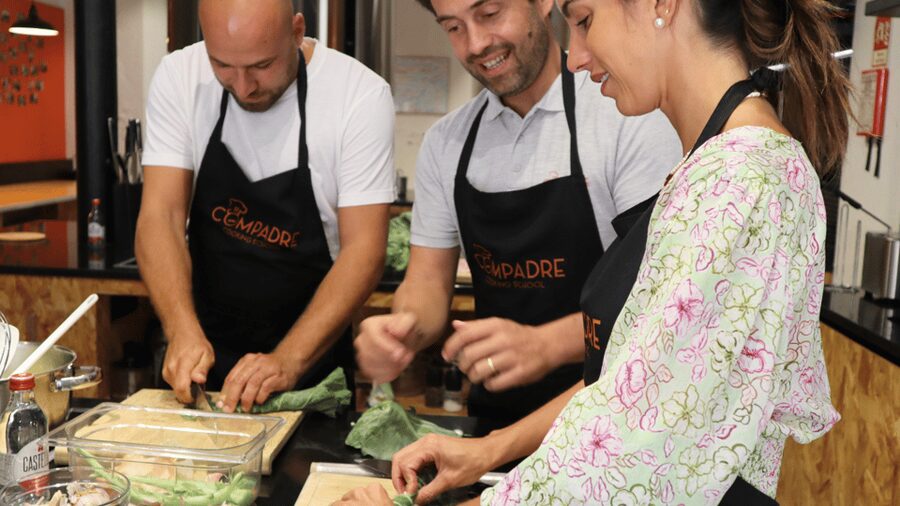
Peixinhos da horta gives the class its most unusual dish. Green beans are coated and fried so they resemble tiny fish from the garden. The dish is often linked to the development of tempura, making it a fun bridge between Portuguese cooking and wider food history.
This is likely the most playful part of the lesson. You see how a humble vegetable can become a crisp snack, and you learn why the dish has such an imaginative name. It also adds texture to the meal, balancing the soft soup and the savory bifana.
The dish is simple enough for beginners, but frying still requires care. Follow the instructor’s directions closely and use the cooking time to watch how the batter and vegetables are handled. The experience is practical, but it is also about understanding the habits behind the food.
For me, this is one of the strongest reasons to choose this class over a more predictable Portuguese cooking course. You still get familiar comfort food, but you also learn a lesser-known recipe with a clear cultural connection.
Sitting down to eat what you made
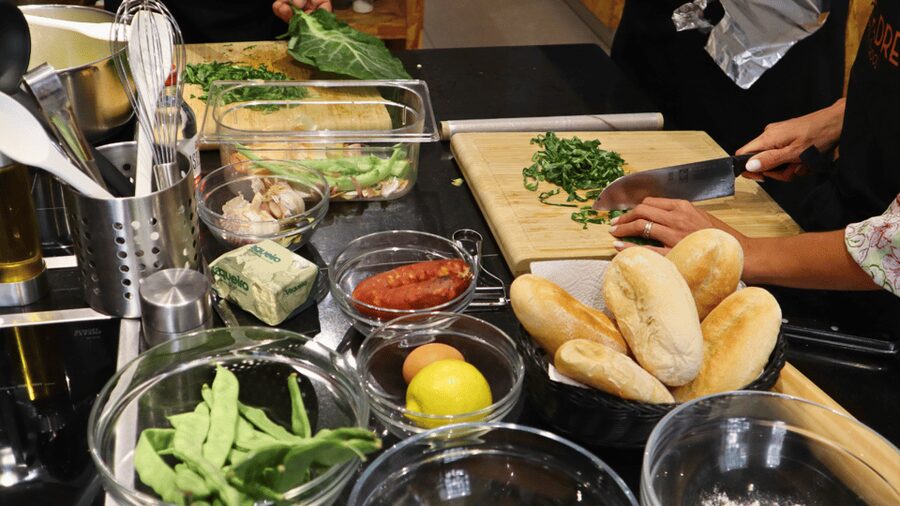
Once the cooking is complete, everyone gathers around the table for a shared meal. This is more than a small tasting. The prepared dishes form a proper lunch or light dinner, and the meal gives you time to enjoy the results without rushing to the next activity.
The shared table is an important part of the class. You cook beside people from different places, then eat together. That format makes it easy to talk, compare notes, and exchange ideas about how you might make the recipes at home.
A glass of wine is included, with red or white available. At the end, you taste Ginja, the traditional Portuguese cherry liqueur. The Ginja tasting gives the class a distinctly local finish and adds a drink lesson to the food preparation.
Additional drinks are not included, so budget for those separately if you want more than the provided wine and Ginja. The class does not allow alcohol or drugs during the activity, but the listed wine and Ginja are part of the planned meal and tasting.
What the $55 price includes
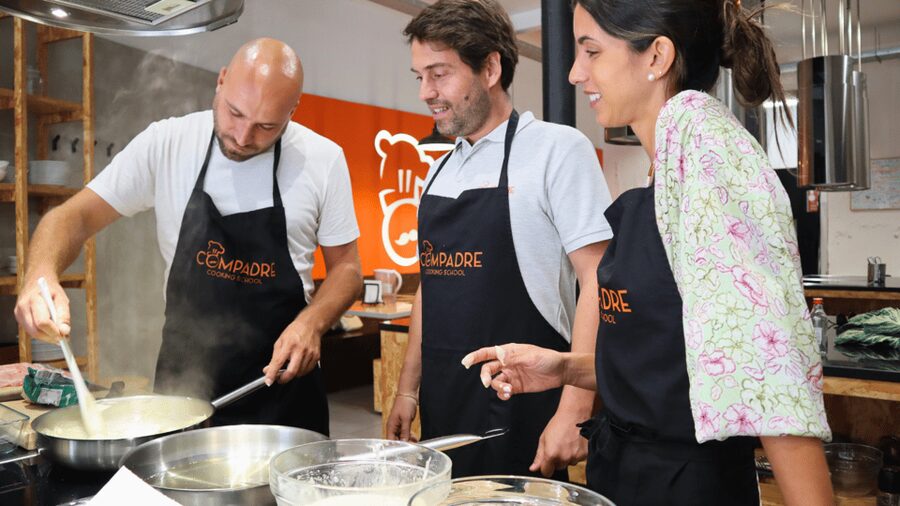
At $55 per person, the value is strongest if you treat this as both a cooking lesson and a meal. You receive:
- Two hours of instruction
- Guidance from an English-speaking local chef
- All cooking ingredients
- A shared meal of the dishes prepared in class
- One glass of red or white wine
- A Ginja tasting
A Lisbon meal with drinks can take a good part of that price on its own, especially in a central area. Here, you also receive instruction, ingredients, kitchen use, and cultural background. The price makes sense for someone who wants an activity with a clear beginning, middle, and end rather than another restaurant reservation.
The value is less obvious if you want a private chef, a long technical course, or a large take-home recipe collection. This is a social, short-format experience. You pay for the food, the guidance, and the chance to cook with a group.
Who should book this class
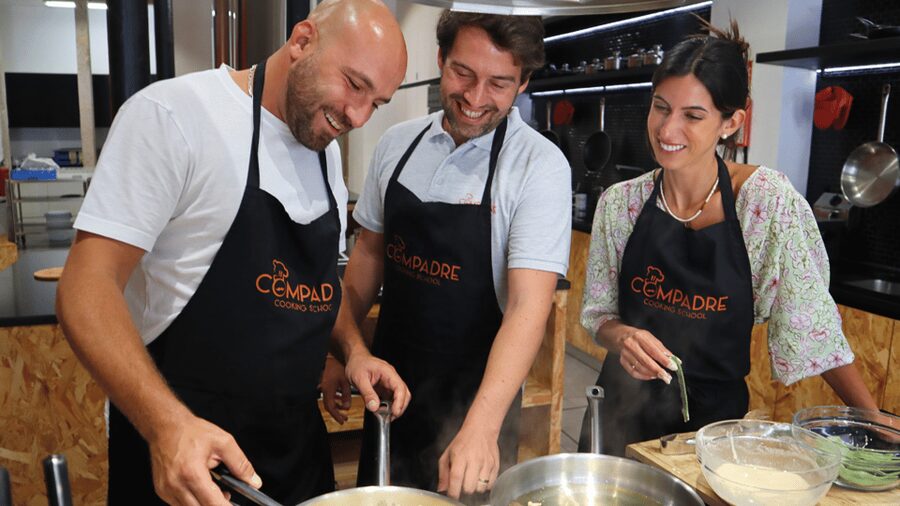
I would recommend it to food lovers who want more than a tasting menu. It is especially suited to first-time visitors who want an accessible introduction to Portuguese home cooking and to curious eaters who have already tried cod, pastries, and grilled fish but want something less expected.
It also works well for solo visitors. The shared meal gives you a natural way to meet people, and the group tasks keep the session from feeling like a lecture. Couples and friends should enjoy it too, particularly if they like cooking together without needing advanced skills.
Families should check the age requirements before booking, since no age policy is provided here. People with dietary needs should contact the school in advance. The recipes can be adapted, but you should not assume a last-minute change is possible without notice.
You should look elsewhere if you need step-free wheelchair access. The activity is not suitable for wheelchair users. You may also want a different class if your main goal is baking pastel de nata or preparing codfish, since this menu deliberately takes a different route through Portuguese cooking.
Timing, practical details, and flexibility
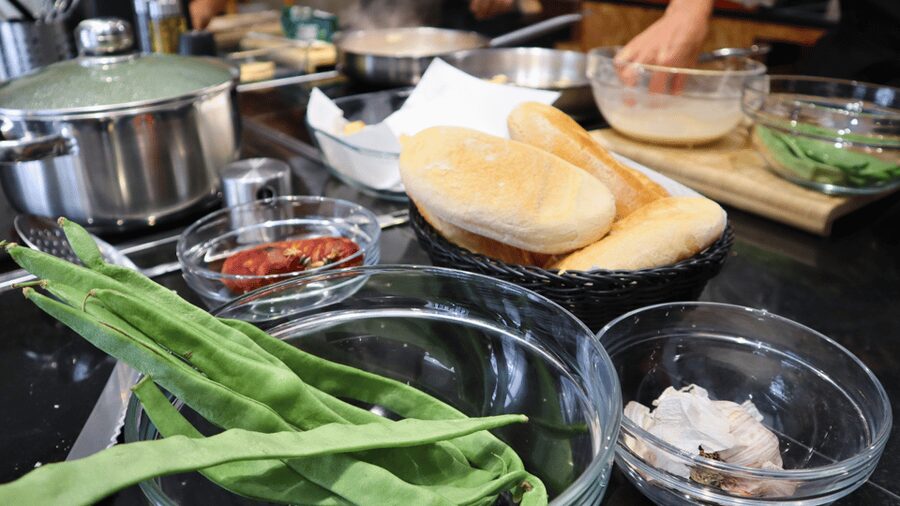
The class lasts two hours, but you should allow extra time to reach the kitchen and get settled. Starting times vary, so check availability when choosing a date. Transportation to and from the cooking school is not included.
Cancellation is free up to 24 hours before the activity for a full refund. You can also reserve now and pay later, which is useful if your Lisbon schedule is still shifting. These policies make it easier to fit the class into a short city break, though you should still confirm the exact start time before booking.
The school asks you to arrive five minutes early. That small buffer is worth taking seriously. In a two-hour class, arriving late can mean missing the introduction or the first preparation step, and those early explanations help the rest of the meal make sense.
The small drawbacks to consider
The class is highly social, which is a strength for some people and a drawback for others. You share tasks, work at the same stations, and eat at one table. If you prefer quiet, individual instruction, this format may feel busy.
Your amount of hands-on time can also vary. The class is designed so everyone can participate, and most of the cooking has enough steps to keep people involved. Still, in a group setting, an instructor may occasionally step in and handle a task directly. If you want to learn at your own pace, ask questions and request a turn when the chef demonstrates a technique.
The menu is focused rather than broad. You make three dishes, not a survey of every Portuguese specialty. That focus is useful for remembering the recipes, but it means you will not cover pastries, seafood, or cod in the same session.
Finally, the price does not include extra drinks or transportation. Those are small points, but they matter when you are planning a full day in Lisbon.
Should you book the Compadre cooking class?
Book it if you want to cook everyday Portuguese food, eat a full meal, and leave with recipes that are realistic to repeat at home. The combination of bifana, caldo verde, and peixinhos da horta gives you three different styles of food, while the wine and Ginja make the session feel like a social meal rather than a kitchen demonstration.
I would choose this class over a standard pastry lesson if you have already tasted Portugal’s famous sweets or want a closer look at savory food culture. I would skip it only if you need wheelchair access, dislike group activities, or want advanced private instruction.
At $55, the class offers solid value for a two-hour Lisbon activity. Arrive early, wear sensible shoes, contact the school about dietary needs, and come ready to share both the cooking and the table.
FAQ
How long does the Portuguese street food cooking class last?
The class lasts two hours.
Where does the class meet?
It meets at the Compadre Cooking School kitchen in Lisbon.
What dishes will I prepare?
You will learn to prepare bifana pork sandwiches, caldo verde soup, and peixinhos da horta, battered green beans.
Is cooking experience required?
No. The class is designed for beginners, and no prior cooking experience is needed.
What drinks are included?
You receive one glass of red or white wine and a tasting of Ginja, a traditional Portuguese cherry liqueur. Additional drinks are not included.
Is the class taught in English?
Yes. The instructor language is English.
Can dietary requirements be accommodated?
The recipes can be adapted for specific dietary needs. Contact the school in advance to discuss your requirements.
Just reviewed in Lisbon
- Private tour Lisbon – full day★ 5.0 · 8 reviews
- Private Tour: Portuguese Food and Wine Tour★ 5.0 · 33 reviews
- Lisbon Football Experience – Private stadium and Museum Tour★ 4.0 · 10 reviews
- Lisbon and Sintra Essence 8H – Private Tour★ 5.0 · 5 reviews
- Private Tour: Lisbon Sunset Walking Tour with Fado Show and Dinner★ 5.0 · 30 reviews
- Private Catamaran Tour: Lisbon coast cruise with barbecue and drinks★ 5.0 · 20 reviews
- Lisbon: Helicopter Tour over Cascais & Cabo da Roca★ 5.0 · 4 reviews
- Private Tour Fátima – Nazaré – Batalha – Óbidos★ 5.0 · 6 reviews
Lisbon Cooking Classes, compared.
Pastel de Nata Masterclass at a Real Bakery in Downtown Lisbon
Read our review →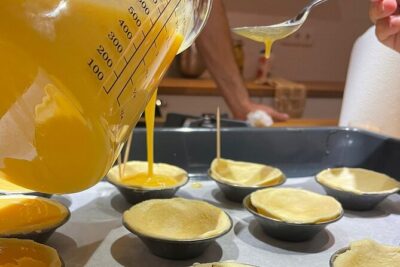
Pastel de Nata Pastry Class: Bake and Enjoy Your Own Treats
Read our review →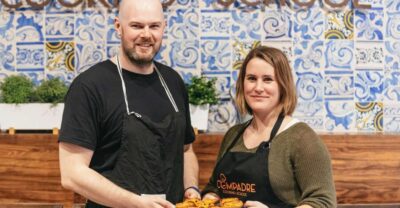
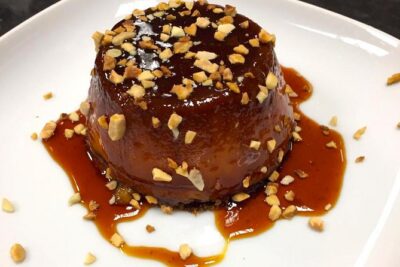
Lisbon Portuguese Cooking Class with 3-Course Dinner
Read our review →
Traditional Portuguese Cooking Class in Lisbon
Read our review →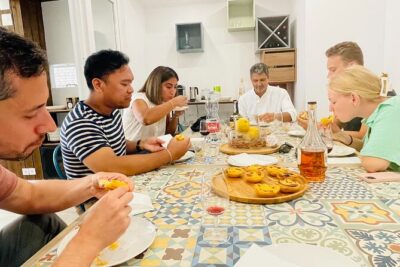
Browse the lists this tour appears in