
Reviewed · LISBON COOKING CLASSES
Traditional Portuguese Cooking Class in Lisbon
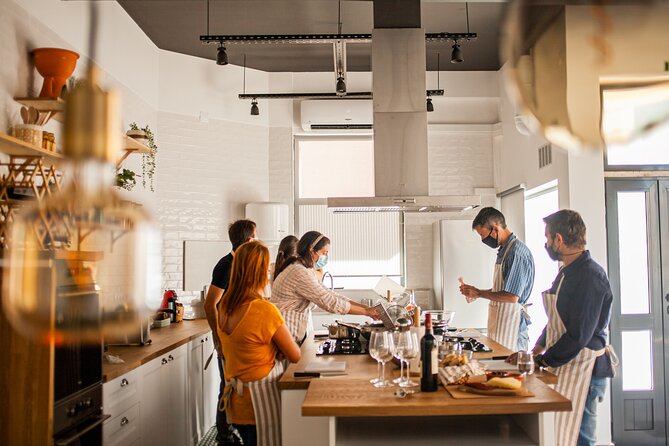
The best part of this Lisbon cooking class is that you do not simply sit down to eat Portuguese food. You help prepare it, from salted cod dishes to pastel de nata, while learning how those foods fit into Portugal’s everyday cooking. The small group, capped at 10, gives you a fair chance to chop, stir, season, and ask questions.
I especially like the relaxed pace and the generous drinks service. Portuguese wine, beer, water, juice, tea, and finger foods are included, so the three-hour session feels like a social meal as much as a lesson. The main point to consider is that this is a family-style class, not a formal chef school. You may work on one part of a dish rather than cook every recipe from beginning to end.
Key things to know before booking
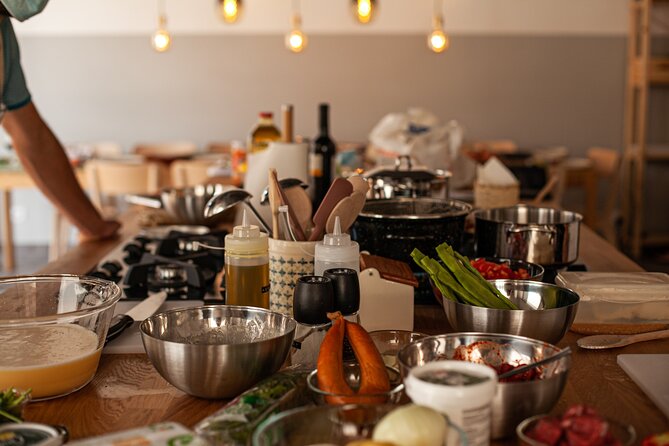
- You prepare a seasonal four-course meal: The exact menu changes with the time of year, but may include caldo verde, bacalhau à Brás, pork with clams, and Portuguese desserts.
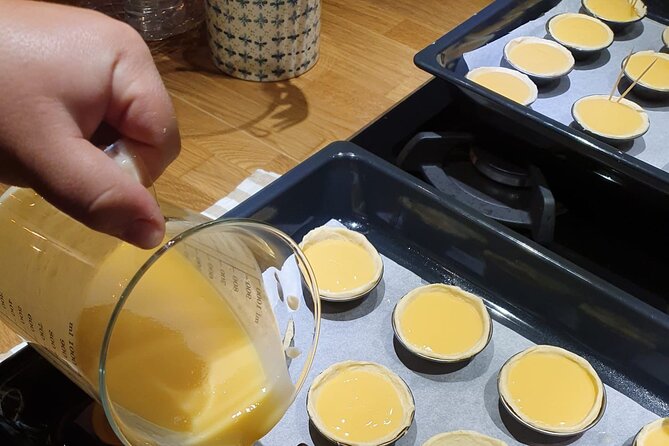
- Pastel de nata is part of the lesson: You prepare and bake the famous custard tart, using pre-prepared puff pastry.
- Wine and beer are included: Nonalcoholic drinks are available for everyone, and alcohol is not served to anyone under 18.
- The class suits beginners: Instructors guide you through each step without expecting professional cooking skills.
- The meeting point is west of central Lisbon: The class begins and ends at R. Aliança Operária 54, in the 1300-049 postal area.
- Confirm the address before leaving: One booking experience involved confusion over two possible locations, so check the final meeting details carefully.
A Portuguese kitchen lesson, not just a meal
This experience begins at R. Aliança Operária 54, where you join a cooking group in a clean, modern kitchen and dining space. The location is not in central Lisbon, so allow time to reach it. Some people have found a taxi easiest for the trip there and used a bus to return.
Once the class starts, the instructor sets out drinks and small bites. This makes a real difference. You are not standing around hungry while onions cook or pastry chills. The finger foods also help turn a room full of strangers into a table of temporary dining companions.
The class is offered in the morning or evening, with sessions lasting about three hours. A morning class can work well as a late lunch activity, while an evening session gives you a social dinner with the food you helped make. The meal is served at the same meeting point, so there is no second restaurant stop to arrange afterward.
The instructors vary by session. Miguel is praised for clear demonstrations and a warm manner. Beatriz brings personal stories and cultural background to the cooking, while Pedro and Teresa are also described as engaging guides. The common thread is a teaching style aimed at ordinary home cooks, not culinary professionals.
You will receive step-by-step guidance, but the class is not rigid. The instructor may divide the work among the group, with several people preparing different components at once. That keeps the food moving, though it can feel a little chaotic at the start.
More Lisbon Cooking Classes:
- Lisbon: Pastel de Nata Baking Class
★ 4.9 · 2,106 reviews - Lisbon: Traditional Portuguese Cooking Class
★ 4.9 · 592 reviews - Pastel de Nata Masterclass at a Real Bakery in Downtown Lisbon
★ 5.0 · 491 reviews
What you may cook from starter to dessert
The menu changes with the seasons, which is a good sign for a class built around local food. A heavy bean and chorizo stew would make little sense on a hot summer day, so you should not expect the same dishes at every visit.
The sample menu includes several classic Portuguese possibilities:
- Caldo verde, a comforting soup usually associated with potatoes, greens, and sausage
- Pica-pau, a small-plate dish of seasoned meat
- Amêijoas à Bulhão Pato, clams with garlic, herbs, and a light sauce
- Bacalhau à Brás, salted cod mixed with potato, egg, and other simple ingredients
- Pataniscas de bacalhau, crisp cod fritters
- Carne de porco com amêijoas, pork with clams
- Migas com entrecosto, bread-based migas served with pork ribs
- Pastel de nata, the famous Portuguese custard tart
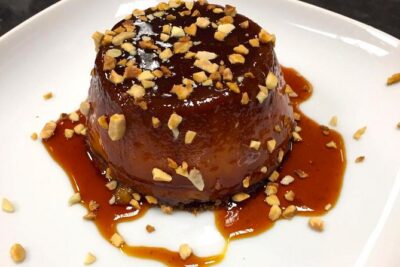
- Arroz doce, Portuguese rice pudding
- Torta de laranja, an orange roll
You will not necessarily make every dish listed above. The sample menu presents the kinds of starters, mains, and desserts that may appear, while the exact choices depend on the season and class plan.
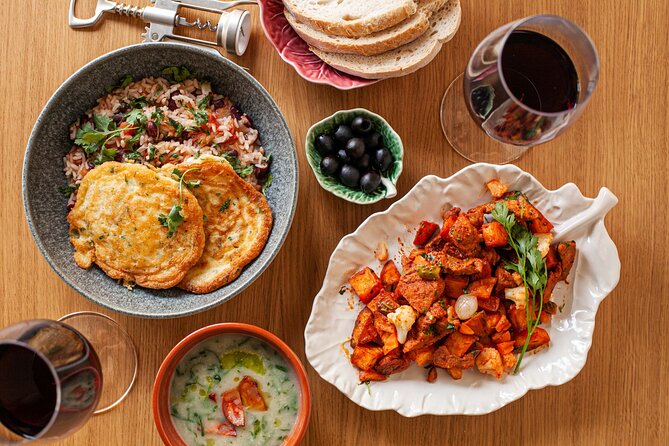
The cooking gives you a useful introduction to Portugal’s fondness for simple ingredients used with care. Salted cod appears in more than one possible recipe, but the preparations differ. Bacalhau à Brás is soft and savory, while cod fritters offer a crisp contrast. Pork with clams shows how seafood and meat can share a plate without making the dish fussy.
The dessert lesson is a strong reason to book. You prepare and bake pastel de nata, although the puff pastry is pre-prepared. That means you learn the filling and baking process without spending the whole class on pastry production. You will not leave as a laminated-dough specialist, but you will gain a better sense of how Portugal’s most famous sweet comes together.
How much hands-on cooking should you expect?
You should expect to participate, but do not assume you will personally cook all four courses from start to finish. The meal is prepared family style, with tasks shared across the table. One person may chop, another may stir a sauce, and someone else may handle pastry or seasoning.
This setup has two benefits. First, it lets the instructor manage several dishes within three hours. Second, it encourages conversation, since you will often work alongside people you did not arrive with. Solo participants can fit in especially well because the format naturally mixes the group.
The tradeoff is worth understanding. If you want a private workstation and a full technical lesson on every dish, this may feel too informal. The class is better for learning the main ideas, helping with real food, and enjoying the meal together.
Recipes are provided by link after the class, so you have a way to recreate the dishes at home. That matters because the cooking method may be more memorable than the exact quantities. Take notes if you want to remember seasoning details, since the class is designed to keep the group moving rather than provide a long written lecture.
Why the drinks and shared table matter
Food classes can become tiring when you spend hours standing in an unfamiliar kitchen with no break. Here, wine, beer, and nonalcoholic drinks are available throughout the experience, along with Portuguese snacks and, in some sessions, liqueurs after the meal.
The alcohol policy is clear: participants under 18 receive water, juice, or tea instead. That makes the class workable for families, and children have been included successfully, including children around 10 and 12 years old. Parents should still expect a cooking activity rather than a dedicated children’s program.
The shared meal is part of the cultural lesson. Portuguese cooking is often connected to family tables, generous portions, and recipes passed between relatives. Sitting down together after dividing the work helps you understand that food here is not just a technical subject.
You may also pick up practical restaurant suggestions during the class. The instructors can connect dishes to Portuguese habits and local food culture, which gives you more context than a recipe card alone.
Something different to do with a day in Lisbon:
- Lisbon City Center Tour – The Unmissable Lisbon
★ 5.0 · 22,234 reviews - Lisbon: Sintra, Pena, Regaleira, Cabo da Roca & Cascais
★ 4.7 · 19,656 reviews - Sintra: Pena Palace and Park Entrance Ticket
★ 4.2 · 17,410 reviews - Lisbon: Jerónimos Monastery Entrance Ticket
★ 4.1 · 14,164 reviews
The setting, group size, and social side
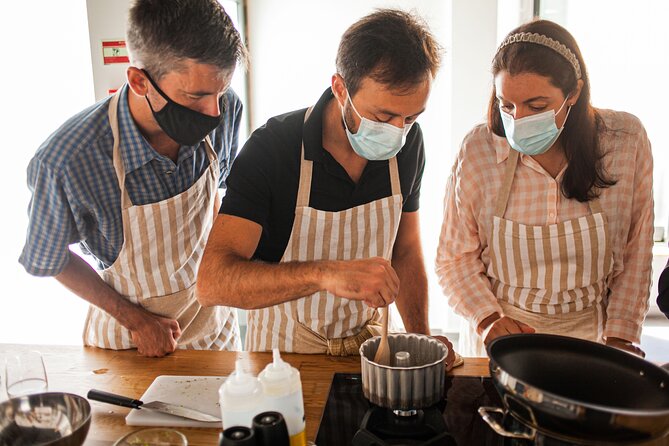
The maximum group size is 10, though some sessions may have fewer people. That is small enough for direct help, and the size is one of the strongest reasons to choose this class over a large demonstration.
The kitchen and dining areas are described as clean, spacious, modern, and inviting. In one session, seven people had room to participate without feeling crowded. Another useful detail: two groups may sometimes share one space, which can make the room louder.
The atmosphere is friendly rather than formal. That suits people who want to meet others over food, but it may not satisfy someone seeking silence and precise culinary instruction. Expect conversation, shared jobs, and a meal where the group’s energy affects the experience.
The class works well for couples, families, solo participants, and friends. It has also been used for birthdays, with the staff offering a personal celebration during the meal. If you are alone in Lisbon, this is a more natural social activity than dining by yourself, since the cooking gives you an easy reason to talk to everyone.
Is the $102.84 price good value?
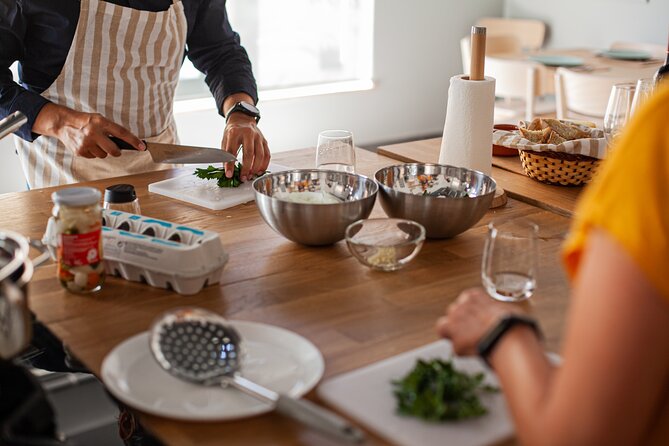
At $102.84 per person, this is not a cheap meal. You can eat Portuguese food for less in Lisbon, especially if you choose a simple café or neighborhood restaurant.
The price makes more sense when you count the full package: about three hours of instruction, a four-course meal, hands-on preparation, snacks, wine and beer, nonalcoholic drinks, and recipes to use later. You are paying for an activity as well as food.
I would consider it good value if you want a structured cultural experience and enjoy meeting people. It is less compelling if your only goal is to taste Portuguese dishes, since a restaurant meal will usually be simpler and less expensive.
The class also gives you access to dishes you might not order on your own. You can taste several traditional preparations in one sitting, then understand how they were made. That combination of tasting and participation is the main reason the cost can be justified.
Getting there and avoiding a common address problem
The stated meeting point is R. Aliança Operária 54, 1300-049 Lisboa, Portugal. The activity ends at the same location.
The address is near public transportation, but it is not in the center of Lisbon. A taxi is a straightforward option for getting there, while a bus can work for the return trip. Check the route before class, since arriving late can add stress to a session that depends on shared preparation.
Most importantly, confirm the exact location in your booking information on the day before the class. A previous booking involved an address mismatch connected with two locations. It was resolved without ruining the experience, but this is an easy problem to prevent.
Confirmation is normally issued at booking. If you book within 12 hours of the start time, confirmation comes as soon as possible and depends on availability. Free cancellation is available up to 24 hours before the start time. Cancellations or changes inside that window are not refunded or accepted.
Who should book this Lisbon cooking class?
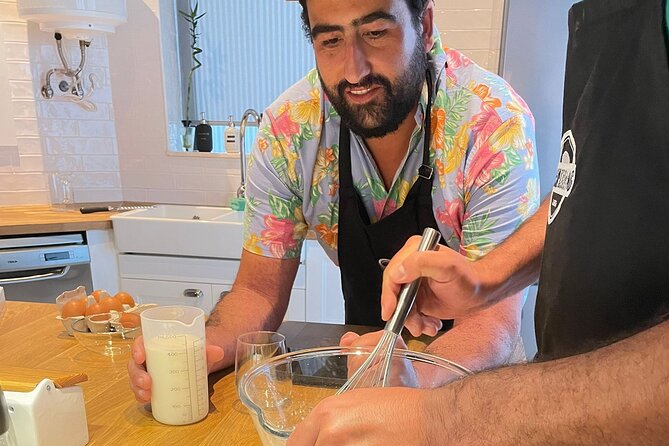
Book this if you want to understand Portuguese food by making it, not just photographing it. It is a particularly good choice for first-time visitors, families with older children, solo participants, and anyone who enjoys a social meal.
It also suits beginners who may feel nervous in a kitchen. The instructors explain the steps clearly, and the recipes are designed to be approachable. You do not need to arrive with cooking experience.
You may want a different activity if you are a serious cook looking for advanced technique. The family-style format means shared tasks, some waiting, and a relaxed pace. You will learn useful methods, but you will not personally master every dish during the session.
For the best experience, arrive ready to cooperate. Help with the part assigned to you, ask questions, and treat the meal as a group project. You will get more from it than if you stand back and wait for the food to appear.
Should you book it?
I would book this class if the price fits your budget and you want a warm introduction to Portuguese home cooking. The small group, included drinks, seasonal menu, and pastel de nata lesson give it more substance than a standard meal with a short demonstration.
Go in with the right expectations. You may not cook every dish yourself, and the room can get lively when two groups share the space. But if you like food, conversation, and practical cultural insight, this is one of the better ways to spend three hours in Lisbon.
Confirm the meeting address, note that the menu changes seasonally, and choose morning or evening based on your sightseeing plans. With those details settled, you can focus on the best part: making a Portuguese meal and then sitting down to enjoy it.
FAQ
How long does the Portuguese cooking class last?
The experience lasts approximately three hours, including the cooking and shared meal.
Where does the class begin and end?
It begins and ends at R. Aliança Operária 54, 1300-049 Lisboa, Portugal.
What food might I prepare?
Possible dishes include caldo verde, pica-pau, clams Bulhão Pato style, bacalhau à Brás, cod fritters, pork with clams, pork ribs with migas, pastel de nata, rice pudding, and orange roll. The menu changes seasonally.
Is pastel de nata included?
Yes. You prepare and bake pastel de nata during the class. The puff pastry is pre-prepared.
Are drinks included?
Yes. Portuguese wine and beer are included, along with water, juice, tea, and other nonalcoholic drinks. Alcohol is not served to anyone under 18.
Is the class suitable for beginners?
Yes. The instructors guide you through the recipes step by step, and cooking experience is not required.
How many people can join?
The class has a maximum of 10 participants.
Can I cancel for a refund?
You can cancel up to 24 hours before the experience start time for a full refund. Cancellations made less than 24 hours before the start time are not refunded.
Just reviewed in Lisbon
- Lisbon: Morning of Equestrian Art with Lusitano Horses★ 4.4 · 87 reviews
- Lisbon: Entry Tickets to Mosteiro de São Vicente de Foram★ 4.6 · 50 reviews
- Lisbon: National Palace of Ajuda E-Ticket & City Audio Guide★ 4.1 · 87 reviews
- Lisbon: Early Morning TukTuk Tour – hotel/cruise ship pickup★ 4.9 · 45 reviews
- Sintra: Quinta da Regaleira e-Ticket & Sintra City Audios★ 4.1 · 12 reviews
- Lisbon E-Bike Tour TAGUS★ 5.0 · 3 reviews
- Lisbon: E-bike Trip from the Sintra Mountains to Cascais Sea★ 5.0 · 67 reviews
- Lisbon: Discover Belem by electric Tuk Tuk★ 4.9 · 86 reviews
Lisbon Cooking Classes, compared.
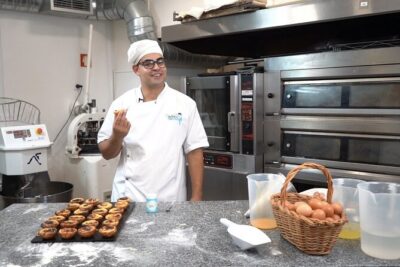
Pastel de Nata Masterclass at a Real Bakery in Downtown Lisbon
Read our review →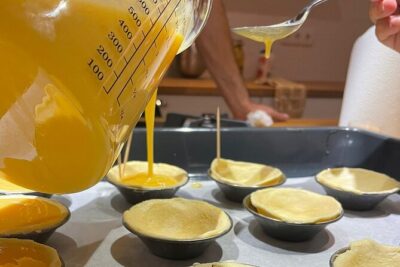
Pastel de Nata Pastry Class: Bake and Enjoy Your Own Treats
Read our review →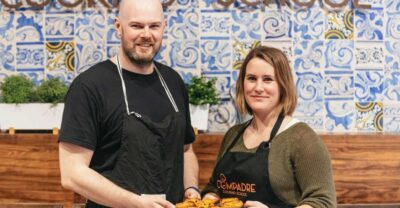
Lisbon Portuguese Cooking Class with 3-Course Dinner
Read our review →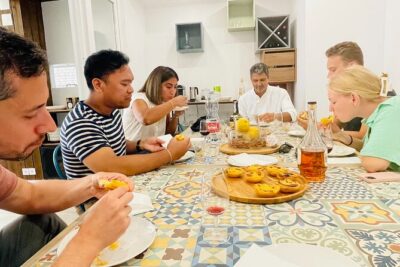

Browse the lists this tour appears in