
Reviewed · MUSEUMS
Lisbon SL Benfica Stadium & Museum Tour with Scarf
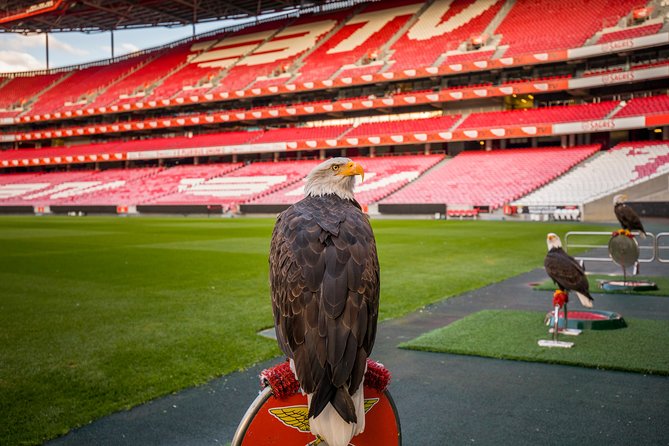
The most memorable part of this visit may be the two live eagles that appear inside Estádio da Luz. They are Benfica’s famous symbols, and seeing them up close gives the stadium tour a moment you cannot get from photographs or a match on television. The new virtual reality experience adds another strong highlight, putting you in a player’s viewpoint.
I like the freedom to move at your own pace, and I like the mix of working stadium spaces with the large Benfica Museum. You can sit in executive seats, see the press room, visit the locker rooms when open, and then spend time with more than 20,000 club artifacts. The main caution is that match schedules, private events, pitch work, and app problems can limit parts of the route.
Key points to know before you go
- The live eagles are a genuine highlight: Their appearance can be the most memorable part for children and football fans.
- The museum deserves time: Its 29 themed areas spread across three floors can take longer than the stadium itself.
- The route is mostly self-guided: Staff are stationed at points along the way to answer questions and explain what you are seeing.
- The stadium access is substantial: Depending on conditions, you can see executive seating, the press room, locker rooms, and the pitch.
- The VR segment is worth seeking out: It gives the visit a modern feature beyond trophy cases and old photographs.
- Check the football calendar: National competition matches and international fixtures can close the tour for several days.
Why Estádio da Luz feels like more than a football ground
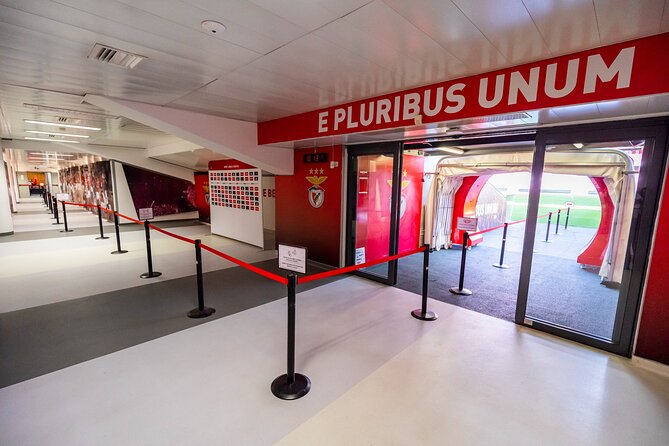
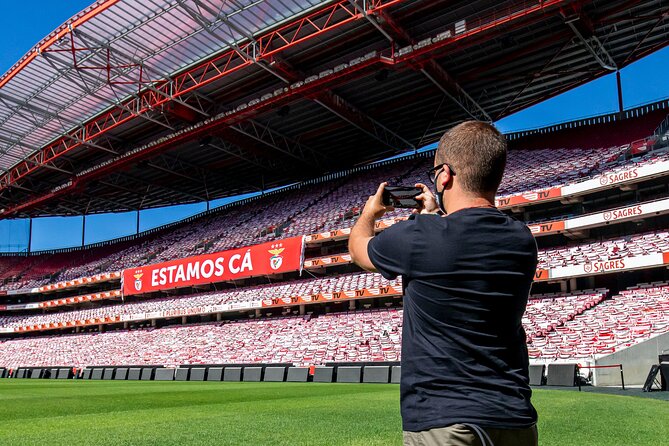
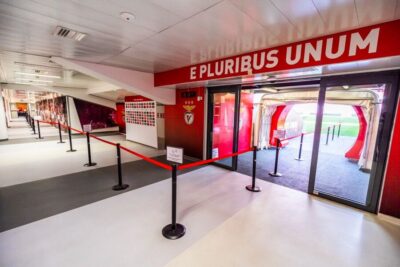
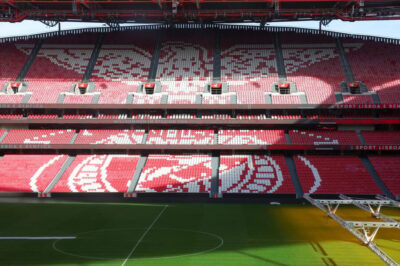
Benfica’s stadium is a 65,000-seat home for Sport Lisboa e Benfica, but the tour gives you a look at the club as a social and sporting institution, not just a set of stands. You move through places usually closed during a normal match visit, including areas connected with players, media, club officials, and match-day ceremony.
The club’s scale is clear from the first look at the seating bowl. Even if you do not follow Portuguese football closely, the size of the arena gives you a feel for what a major European match must be like. If you are already a Benfica supporter, the meaning is stronger. You are walking through the same spaces linked with the club’s players, trophies, and famous traditions.
The visit is generally designed around a set route, but it does not feel like a tightly timed group march. You can stop for photographs, look around the seating areas, and spend longer at the displays that interest you. Staff members are available at key points, and several have a warm, football-first approach. Guides identified by names such as Voldemort and Morta have been especially memorable for their humor, help, and practical advice.
That said, the amount of spoken history may vary. Some parts have staff on hand to explain the setting, while other sections are more self-directed. If you want a full lecture about Benfica’s past, this is not quite the same as a traditional guided museum tour. You will get more from it if you read the displays, use the QR-code material, and ask questions when staff are nearby.
More Museums in Lisbon:
- Lisbon: Luz Stadium Tour & SL Benfica Museum Ticket w/Scarf
★ 4.7 · 3,264 reviews - Lisbon: National Tile Museum Entry Ticket
★ 4.6 · 868 reviews - Lisbon: Banksy Museum Permanent Exhibition Entry Ticket
★ 4.7 · 506 reviews
The stadium route: seats, media rooms, and the pitch
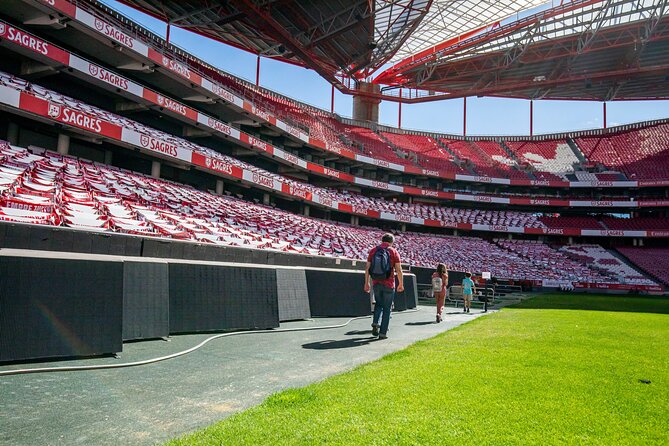
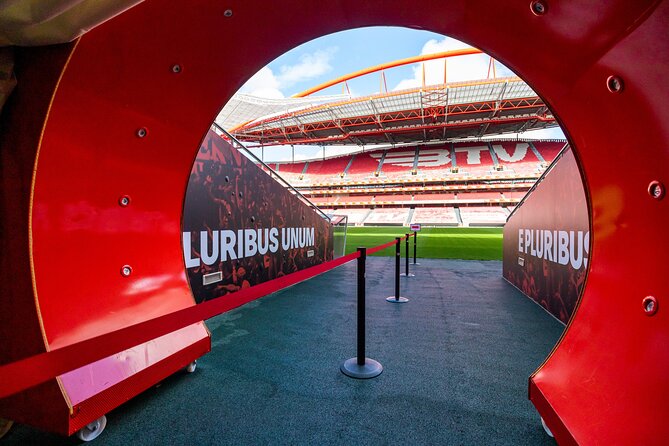
The stadium portion usually takes about an hour, though your full visit can last up to roughly three and a half hours when you add the museum and shopping. You begin by entering Estádio da Luz at your selected time and following the marked route through the club’s public-access areas.
The executive seats give you a useful change of viewpoint. From here, you can consider how club officials and invited visitors watch a match, rather than simply taking in the crowd from a standard seat. It is also a good place for photographs, though the exact areas open to you can depend on events and stadium operations.
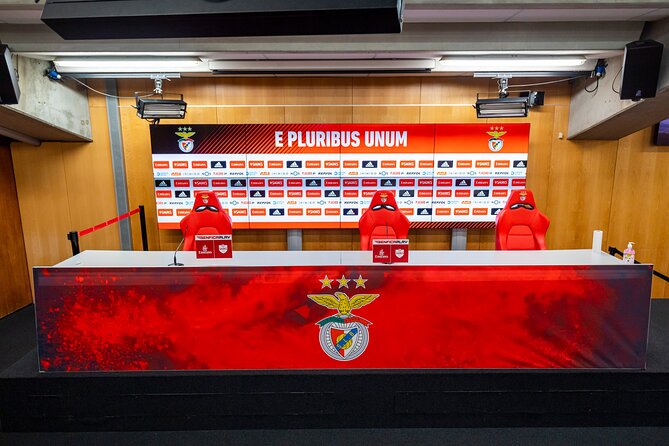
The press room is another popular stop. This is where interviews take place after matches, and it gives you a sense of the club’s public face. You can sit where players and coaches answer questions, then imagine the scene after a tense European night. For many people, this is more interesting than simply looking at rows of seats because it connects the building with the drama that happens inside it.
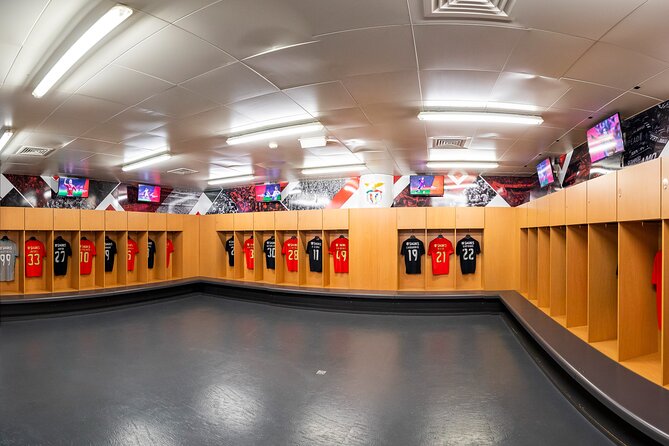
You may also enter the players’ locker room. This is one of the more important variables in the tour. The home locker room can be closed during certain periods, including parts of the season when the club is preparing for competition. If that happens, you still get a substantial stadium visit, but the behind-the-scenes feel is reduced.
The pitch is another major photo stop. When the playing surface is open, you can walk on or near the field and see the stadium from the players’ level. Grounds work can change this section. At one visit, turf was being removed and the goals had been taken away, so the setting felt less like a match-ready arena. That is not a fault with the tour itself, but it is worth keeping in mind if standing on the finished pitch is your main reason for booking.
The VR feature and Benfica’s living symbols
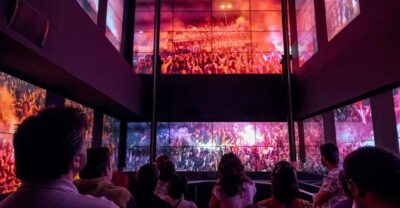
The virtual reality segment gives the tour a welcome change of pace. Rather than only looking at objects or sitting in a viewing area, you use technology to see the stadium and match experience from a player’s perspective. It is short, but it adds a sense of movement and scale that static displays cannot provide.
I would make a point of doing this part even if you are visiting mainly for the museum. It is one of the details that makes the experience feel current rather than focused only on old victories. Children tend to respond well to it, and adults who have attended stadium tours before may appreciate the different format.
The eagles are the most unusual feature. Benfica’s club symbols appear as live birds during the visit, creating a striking moment in the stadium. Their appearance is carefully built into the experience and can be a surprise if you do not know it is coming.
This is also where the tour feels most distinct from a standard football-ground visit. Locker rooms and press rooms can be found at many major clubs. Live eagles inside the stadium are a much more specific part of Benfica’s identity. If you are bringing children, this may be the detail they talk about afterward.
The Benfica Museum and its 29 themed areas
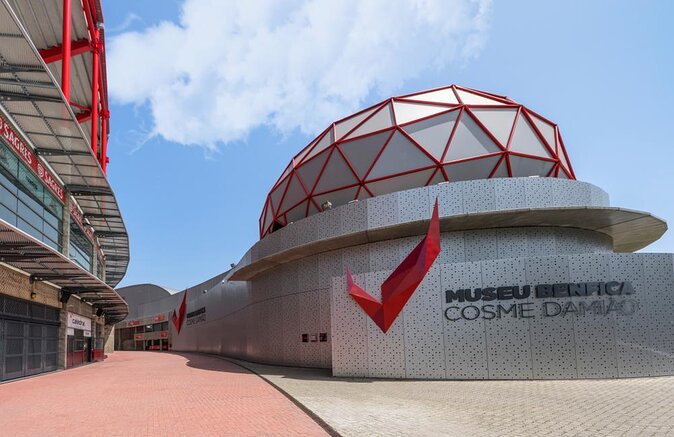
The Museu Benfica, named for Cosme Damião, occupies three floors beside the stadium. Its 29 themed areas cover the people, teams, sports, and key moments tied to Benfica. More than 20,000 artifacts are included, so you should not treat the museum as a quick add-on after the stadium.
The collection includes an enormous display of trophies, along with objects connected to players and club history. The presentation is more varied than a simple line of cabinets. Interactive sections and QR codes add information, while support points provide access to staff who can explain displays or answer questions.
The museum’s size may surprise you. Some sections can be viewed quickly, but others reward a slower pace, especially if you already know the players and competitions being discussed. If you are new to Benfica, you may find the number of names and dates overwhelming without taking time to read the supporting material.
I would allow at least an hour and a half for the museum if you want to see the main areas properly. The stated museum visit is about 90 minutes, but the real time depends on your interest. A dedicated Benfica supporter could easily spend longer with the trophies, photographs, and interactive displays.
The museum also helps explain why the stadium matters to local supporters. The building is not presented as an isolated sports venue. It is tied to generations of players, club officials, major matches, and public memory. You get a better sense of Benfica’s place in Portuguese sport here than you do from the stadium seating alone.
Something different to do with a day in Lisbon:
- Lisbon City Center Tour – The Unmissable Lisbon
★ 5.0 · 22,234 reviews - Lisbon: Sintra, Pena, Regaleira, Cabo da Roca & Cascais
★ 4.7 · 19,656 reviews - Sintra: Pena Palace and Park Entrance Ticket
★ 4.2 · 17,410 reviews - Lisbon: Jerónimos Monastery Entrance Ticket
★ 4.1 · 14,164 reviews
The official store and the scarf
The official store is part of the visit and gives you a chance to buy authentic Benfica merchandise. Tour visitors may find good-value items and, at times, a discount connected with the visit. Prices and stock can change, so I would treat the store as a useful extra rather than build your budget around a particular item.
The official Benfica scarf is included with the advertised experience. It is a practical souvenir and gives the tour more value than a basic entry ticket, especially if you are visiting with a football fan who wants something to take home. There has been some confusion on individual visits about whether every ticket included the scarf, so check the exact option shown at booking and confirm at the welcome desk.
Small extras such as stickers may also be available, but they should not be assumed. The core value is the stadium and museum access, with the scarf as a welcome addition.
Price, time, and who gets the best value
At about $32.57 per person, this is fairly priced for a stadium and museum visit in a major European capital. The value is strongest when you choose the combination that includes both the stadium and museum. A stadium-only visit can work if you have limited time, but the museum adds much of the club context and is next to the ground.
The time range is wide, from about one hour to three and a half hours. That is not a sign of an uncertain schedule. It reflects the ticket choice and your pace. Someone focused on the stadium can finish in about an hour, while a football fan who reads the museum displays and visits the store may spend most of an afternoon.
The tour works especially well for:
- Benfica supporters who want access beyond the match seats
- European football fans interested in major club grounds
- Families looking for an activity with visual displays and a VR section
- Visitors who want a structured Lisbon activity outside the historic center
- People who prefer to explore at their own pace rather than follow a constant spoken tour
It may be less suitable if you have no interest in football and only want a quick view of the building. The museum is heavily focused on Benfica, and the amount of written material can feel like work if trophies, players, and club competitions do not interest you.
Getting there and planning around match dates
The meeting point is Estádio da Luz, Av. Eusébio da Silva Ferreira, 1500-313 Lisboa. The stadium is near public transportation, though you should still allow time to find the correct entrance. Gate 17 has been useful for some visitors, but follow the instructions on your ticket and confirm with staff if signs are unclear.
The activity begins and ends at the stadium. Food, drinks, and private transportation are not included, so plan those separately. You can use the official store during your visit, but the tour does not provide a meal break.
The football calendar matters more than the weather for most visits. Tours close when a national competition match is taking place. There are also no stadium tours on the two days before, the day of, or the day after an international match. Private events and women’s matches can also affect access, so check the selected date carefully.
If the operator cancels because of poor weather or because too few people have booked, you can choose another date or receive a full refund. If your own plans change, cancel at least 24 hours before the start time for a full refund. Changes or cancellations inside that window are not accepted for a refund.
How the visit works for families and first-time football fans
Children under three enter free, but they still need a ticket, and children must be accompanied by an adult. The mix of open spaces, large seating areas, interactive displays, and the eagles gives younger visitors several things to focus on.
The self-guided design also helps families. You can pause when a child needs a break, spend longer at the VR feature, or move faster through text-heavy displays. You are not tied to a guide’s fixed explanation from start to finish.
For someone unfamiliar with Benfica, I would begin with the stadium before the museum. Seeing the pitch, press room, seating, and club spaces gives you a basic picture of how the team operates. The museum then fills in the names, trophies, and stories behind the club.
The experience is offered in English, and staff support is available at points along the route. Some guides may speak Portuguese and English, which is useful if you want to ask questions. The overall group capacity can reach 100 people, though the self-guided route means you are not necessarily walking as one large group.
Should you book the Benfica Stadium and Museum Tour?
I would book it if you follow Benfica, enjoy European football, or want a family-friendly visit with more than a row of trophy cases. The combination of stadium access, live eagles, the VR feature, and the three-floor museum gives you a full experience for the price.
Choose the stadium-only option if your schedule is tight. Choose the museum as well if you want to understand why Benfica matters and are willing to spend two or more hours with the displays.
Before paying, check the date against the match calendar, confirm that the scarf is included in your selected option, and be prepared for occasional limits on the locker room or pitch. With those points in mind, this is a well-priced way to see Benfica from the inside and a much better choice than simply taking a photograph outside the stadium.
FAQ
Where does the Benfica Stadium and Museum Tour begin?
The tour begins at Estádio da Luz, Av. Eusébio da Silva Ferreira, 1500-313 Lisboa, Portugal. It also ends back at the stadium.
How long does the experience take?
The visit can take from about one hour to three and a half hours, depending on whether you choose the stadium, museum, or combination option and how long you spend inside.
Is the museum included?
You choose between museum-only, stadium-only, or a combination ticket when booking. The combination option includes both Estádio da Luz and the Museu Benfica, Cosme Damião.
Is the tour offered in English?
Yes. The experience is offered in English, and support points are available in the museum. Some guides may also speak Portuguese.
Is the Benfica scarf included?
The advertised experience includes an official SL Benfica scarf. Check your exact ticket option at booking, as some visitors have experienced confusion about the included gift.
Can children take part?
Yes. Children must be accompanied by an adult. Children under three can enter free, but they still need a ticket.
Can the stadium tour close on match days?
Yes. Tours close when a national competition match is being held. There are also no tours on the two days before, the same day, and the day after an international match.
What is the cancellation policy?
You can cancel at least 24 hours before the start time for a full refund. Cancellations or changes made less than 24 hours before the experience are not refunded or accepted.
Just reviewed in Lisbon
- Lisbon: Morning of Equestrian Art with Lusitano Horses★ 4.4 · 87 reviews
- Lisbon: Entry Tickets to Mosteiro de São Vicente de Foram★ 4.6 · 50 reviews
- Lisbon: National Palace of Ajuda E-Ticket & City Audio Guide★ 4.1 · 87 reviews
- Lisbon: Early Morning TukTuk Tour – hotel/cruise ship pickup★ 4.9 · 45 reviews
- Sintra: Quinta da Regaleira e-Ticket & Sintra City Audios★ 4.1 · 12 reviews
- Lisbon E-Bike Tour TAGUS★ 5.0 · 3 reviews
- Lisbon: E-bike Trip from the Sintra Mountains to Cascais Sea★ 5.0 · 67 reviews
- Lisbon: Discover Belem by electric Tuk Tuk★ 4.9 · 86 reviews
Museums, compared.
Luz Stadium Tour & SL Benfica Museum Ticket w/Scarf
Read our review →

Banksy Museum Permanent Exhibition Entry Ticket
Read our review →

Benfica Stadium and Museum Tour with Meal and Scarf
Read our review →Browse the lists this tour appears in