
Reviewed · LISBON COOKING CLASSES
Pastel de Nata Workshop in Lisbon
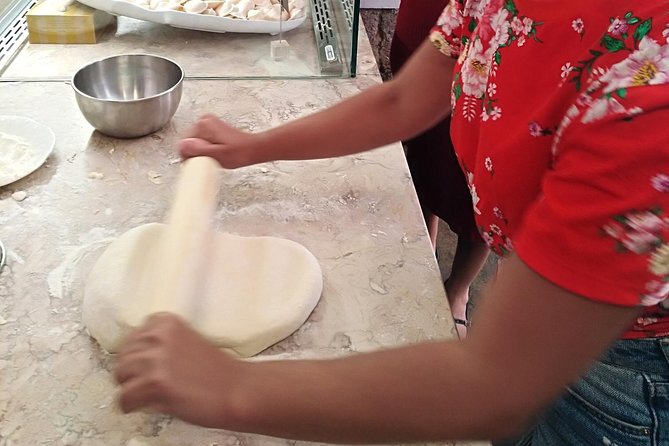
The best part of this Lisbon workshop is that you make the pastel de nata from scratch, including the pastry dough. You are not simply watching a chef pipe custard into ready-made shells. You work through the fiddly parts, then eat the warm result with port or ginja.
I like the maximum of six people, which gives you real time at the counter rather than a spot at the back of a crowd. I also like the recipe to take home, since it turns a tasty Lisbon memory into something you can try again in your own kitchen.
The main caution is timing. It is advertised at about two hours, but one detailed account advises allowing three, especially if the class runs at a relaxed pace. The teaching style may also feel firm to some people, so this is better for anyone who welcomes hands-on correction than for someone seeking a purely casual demonstration.
Key points at a glance
- Handmade pastry from start to finish: You learn the dough, filling, shaping, and baking process rather than assembling prepared ingredients.
- A very small class: The maximum is six people, so each person gets a practical role and personal guidance.
- Led by Filipa: She is praised for her warmth, humor, patience, pastry skill, and clear English instruction.
- A proper Portuguese finish: Your baked tarts come with a choice of port wine or local ginja liquor.
- A useful souvenir: You receive a written recipe so you can repeat the method at home.
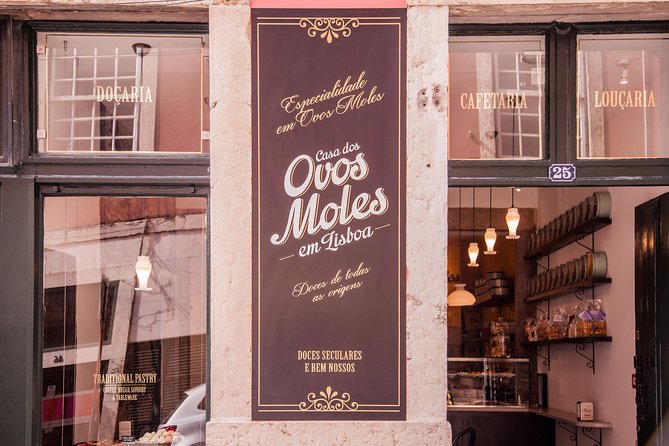
- Central Chiado setting: The workshop takes place at Casa dos Ovos Moles, on Calçada do Sacramento 25, near public transportation.
Making Lisbon’s famous custard tart by hand
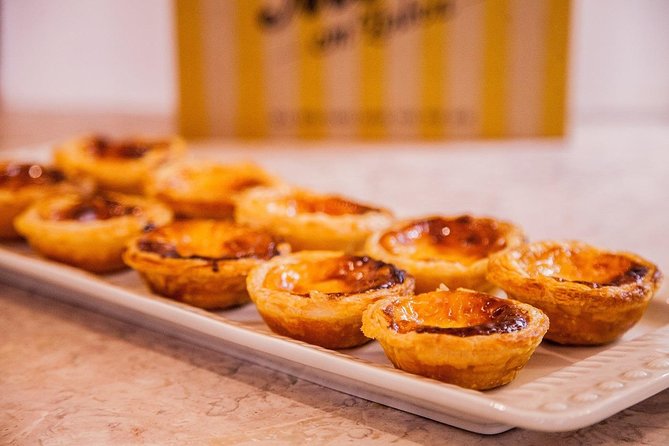
Pastel de nata looks simple in a bakery case: crisp pastry, a small pool of custard, and browned spots on top. The method is more involved than the finished tart suggests. This class lets you see why the pastry depends on technique, not just a list of ingredients.
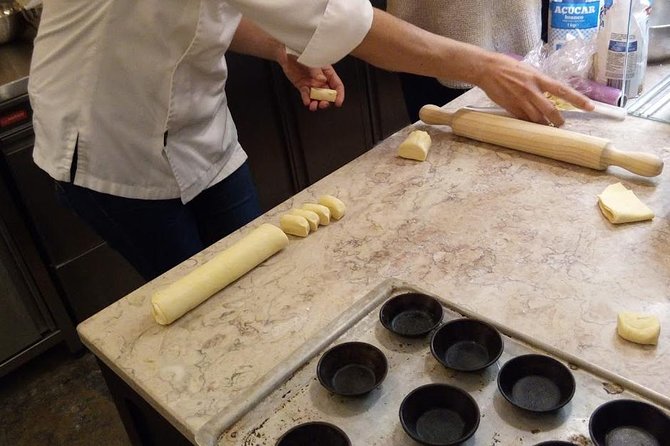
The workshop covers the full process, including the dough. That matters because the pastry shell is half the pleasure. A good nata needs a crisp, layered base that holds the soft custard without becoming soggy. You get to handle the stages yourself, with the instructor showing how the pieces fit together.
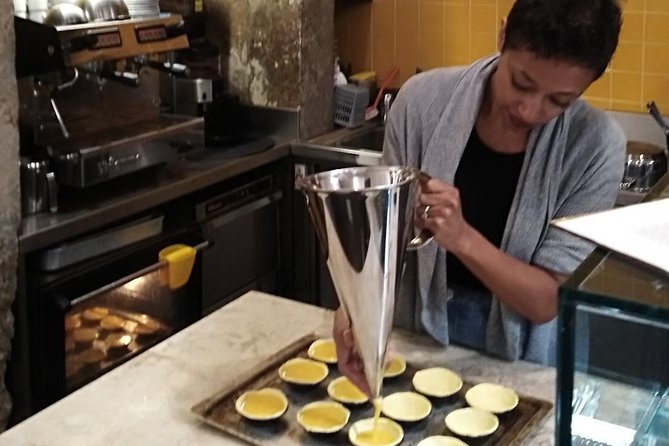
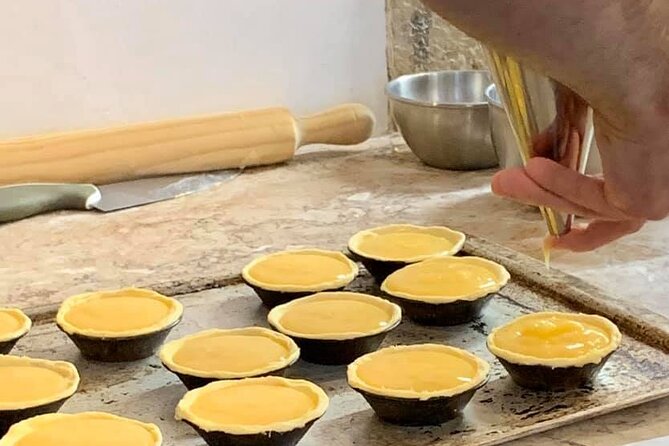
The filling is another reason this class earns its place on a Lisbon schedule. The custard is familiar, but small details affect the final texture and flavor. A professional pastry instructor can point out where home bakers commonly go wrong, then help you correct the problem before the tarts reach the oven.
You should expect an active class, not a talk with a tasting attached. Everyone participates in the preparation, and the small group makes it easier to ask questions. If you enjoy learning by doing, this format gives you more value than a quick bakery visit.
More Lisbon Cooking Classes:
- Lisbon: Pastel de Nata Baking Class
★ 4.9 · 2,106 reviews - Lisbon: Traditional Portuguese Cooking Class
★ 4.9 · 592 reviews - Pastel de Nata Masterclass at a Real Bakery in Downtown Lisbon
★ 5.0 · 491 reviews
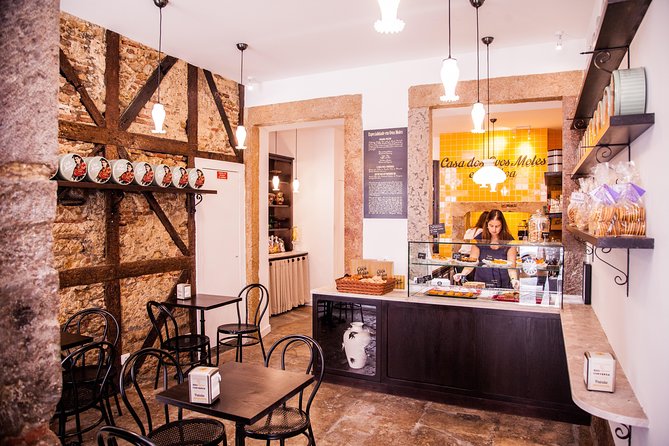
Inside Casa dos Ovos Moles in Chiado
The workshop is held at Casa dos Ovos Moles, a pastry shop focused on conventual sweets. Portuguese convent pastry dates back to recipes developed in convents from the 16th century, and the shop connects the class to that wider baking tradition.
The name refers to ovos moles, a traditional sweet associated with Aveiro. The shop also works with other Portuguese specialties, including pão de ló from Ovar, ovos moles de Aveiro, and pudim abade de priscos. You are taking a class in one pastry, but the setting gives you a glimpse of Portugal’s broader dessert culture.
The location is Calçada do Sacramento 25 in central Lisbon. It is near public transportation, and the activity begins and ends at the same address. That makes it easy to pair with time in Chiado, though the listing does not provide a walking route or specific transit instructions, so check your map before setting out.
Several comments describe the shop as attractive and comfortable, with friendly staff beyond the instructor. That is useful if you want a class that feels tied to a working pastry shop rather than a generic cooking studio.
Filipa’s teaching style and the value of six people
The instructor identified most often in the feedback is Filipa. She is described as funny, patient, warm, professional, and deeply interested in pastry. Her English is described as strong, and the class includes room for questions and conversation about life in Portugal.
A six-person limit changes the experience. Each person can take part in the work, and you are less likely to lose the explanation behind a taller participant or a busy demonstration table. The small group also suits couples, solo visitors, friends, and families with older children or teenagers.
The class is not presented as a competition, but the teaching can be direct. One less favorable account found the instructor too intense and felt that the class included too much correction. That is worth noting. Pastry dough takes technique, and an instructor who cares about the result may correct your movements often. Some people will find that helpful. Others may prefer a looser holiday activity.
The strongest fit is someone who wants to learn a real method and does not mind being shown how to improve. If you only want to eat a tart and enjoy a drink, a pastry shop stop will cost less time and probably less money.
The two-hour schedule, and why you should keep extra time
The advertised duration is about two hours. In practical terms, you should avoid placing a timed museum entry, airport transfer, or dinner reservation immediately afterward. One account says the class lasted two and a half hours, while another advises allowing three hours if your schedule is tight.
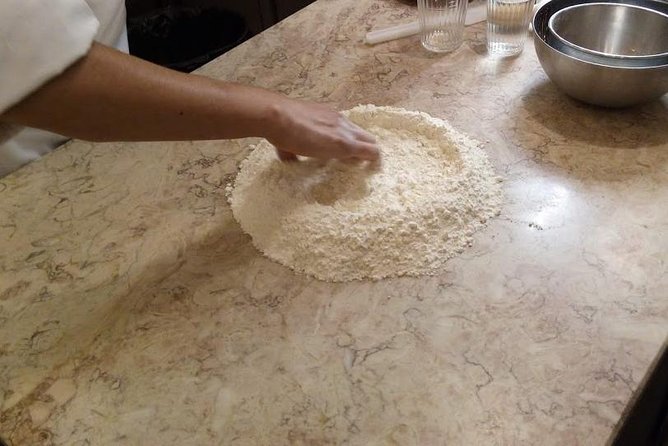
The first part focuses on preparation. You learn the dough and the steps needed to form the shells. The wording of the experience makes clear that the pastry is handmade rather than supplied ready to fill. That is the part that gives the workshop its educational value, but it also explains why the pace can stretch.
Next comes the custard and assembly. You take part in the shaping and filling, with the instructor guiding the group through the details. Since the final pastry is small and delicate, the work rewards patience. You may not produce identical tarts on your first attempt, but you will understand the process far better than you would from a recipe alone.
The last stage is the best kind of class ending: you taste what you made. The sample menu is pastel de nata with either port wine or ginja liquor. The drink turns the tasting into a distinctly Portuguese pause, rather than a rushed bite at the counter.
Something different to do with a day in Lisbon:
- Lisbon City Center Tour – The Unmissable Lisbon
★ 5.0 · 22,234 reviews - Lisbon: Sintra, Pena, Regaleira, Cabo da Roca & Cascais
★ 4.7 · 19,656 reviews - Sintra: Pena Palace and Park Entrance Ticket
★ 4.2 · 17,410 reviews - Lisbon: Jerónimos Monastery Entrance Ticket
★ 4.1 · 14,164 reviews
Warm tarts, port, and ginja
Freshness is a major advantage here. You eat the pastries at the end of the class, shortly after making them. That gives you a useful comparison with the tarts you sample around Lisbon, since you can pay attention to the contrast between a fresh homemade shell and a bakery version.
The drink choice adds a small but worthwhile cultural touch. Port is a fortified Portuguese wine with a sweet profile that suits custard. Ginja is a local sour-cherry liqueur, another traditional option. The supplied details do not specify the exact port or ginja served, so you should treat the choice as a simple tasting accompaniment rather than a formal wine lesson.
This is also a good moment to ask questions and talk with the host. The class has been praised for its friendly atmosphere and relaxed conversation after the practical work. If you are traveling with family, the food provides an easy reward at the end. Several parents and teenagers have enjoyed the hands-on format.
Is $72.41 a fair price?
At $72.41 per person, this is not the cheapest way to eat pastel de nata in Lisbon. You can buy a tart from a bakery for a small amount. The price makes sense only if you want the instruction, the small group, the recipe, and the social part of the experience.
The value is strongest for people who cook at home. You leave with a written recipe and a better feel for the dough and custard. Even if your first attempt at home is not perfect, you have learned which stages require care. That practical knowledge is harder to gain from a printed recipe alone.
The value is also reasonable for a special occasion or a short Lisbon visit. A two-hour food activity gives you a break from sightseeing and connects you with a local pastry tradition. You are paying for access to an instructor and a limited class size, not just for the dessert.
For budget-minded visitors, I would book it only if you genuinely want the class. If you are simply looking for a good nata, spend part of the money on several bakery stops and compare them yourself. This workshop is about making the pastry, not maximizing the number of sweets you eat.
Who will enjoy this pastry workshop most
I would recommend the class to:
- Home bakers: You get a recipe and practical guidance on a technically demanding pastry.
- Food-focused visitors: The workshop explains a famous Portuguese food through preparation, not just tasting.
- Couples and friends: The six-person format gives you a shared activity without a large class crowd.
- Families with teens: Everyone can take part, and the finished tart provides an appealing reward.
- Solo visitors: A small group makes it easier to join in and speak with the instructor.
- People with flexible schedules: You can enjoy the class without worrying if it runs beyond the advertised two hours.
I would be more cautious if you dislike direct instruction, have a very tight itinerary, or are paying mainly for a quick snack. The class asks for attention and participation. It is not a drop-in tasting.
Booking, timing, and cancellation details
You can choose between two class times, which helps fit the workshop around sightseeing. The experience is offered in English, and confirmation is provided when you book. The activity accepts mobile tickets, so you can keep the booking on your phone.
The meeting point is Calçada do Sacramento 25, 1200-393 Lisboa, Portugal. The experience ends there as well. It is near public transportation, but you should still allow time to find the pastry shop, especially if you are arriving from another part of Lisbon.
The stated cancellation policy allows a full refund if you cancel at least 24 hours before the start time. Changes or cancellations inside that window are not accepted and are not refunded. The activity also requires good weather and a minimum number of participants. If the provider cancels for either reason, you are offered another date or experience, or a full refund.
That weather condition is unusual for an indoor pastry class, so check the provider’s message before setting out if conditions look poor. The class has a maximum of six people, but the supplied details do not state the minimum required to operate.
What to know before you go
Bring an appetite, but do not arrive expecting a full meal. The stated menu is the pastel de nata you prepare, paired with port or ginja. If you need a substantial lunch or dinner, plan that separately.
Wear something comfortable for standing and hands-on preparation. The available details do not state a dress code, kitchen equipment list, or accessibility information, so contact the provider if you need specific arrangements.
Try to arrive with enough time to locate the address. Since the class can run longer than two hours, keep your following plans loose. I would not schedule a nonrefundable attraction directly afterward.
The recipe is one of the most useful takeaways. Take a moment to make notes about the instructor’s demonstrations while the method is fresh. The written instructions give you a base, while your memory of the texture and handling will help when you try again at home.
Should you book the Casa dos Ovos Moles workshop?
Yes, if you want a small, active food class and have room for a relaxed two to three hours in Lisbon. The handmade dough, six-person limit, English instruction, recipe, and port or ginja tasting make this more substantial than a standard pastry stop.
I would book it especially for a couple, family with teens, solo food lover, or home baker. Filipa’s style appears warm and engaging, but also hands-on and corrective, so expect instruction rather than a passive demonstration.
Skip it if your schedule is packed or if $72.41 feels too high for a dessert activity. For everyone else, this is a practical way to understand one of Portugal’s most famous pastries, eat it fresh, and take the method home with you.
FAQ
Where does the pastel de nata workshop take place?
It takes place at Casa dos Ovos Moles, Calçada do Sacramento 25, 1200-393 Lisboa, Portugal. The activity ends at the same meeting point.
How long does the class last?
The advertised duration is approximately two hours. You should allow up to three hours if your schedule is tight, since the class may run longer.
How many people can join the workshop?
The maximum is six participants. This small format allows each person to take part and receive guidance from the instructor.
Is the workshop offered in English?
Yes. The experience is offered in English, and the instructor’s English has been described as clear.
What do you eat and drink at the end?
You eat the pastel de nata prepared during the class. It is served with a choice of port wine or ginja liqueur.
Can I cancel for a full refund?
Yes, if you cancel at least 24 hours before the scheduled start time. Cancellations or changes made less than 24 hours in advance are not refunded.
Just reviewed in Lisbon
- Private tour Lisbon – full day★ 5.0 · 8 reviews
- Private Tour: Portuguese Food and Wine Tour★ 5.0 · 33 reviews
- Lisbon Football Experience – Private stadium and Museum Tour★ 4.0 · 10 reviews
- Lisbon and Sintra Essence 8H – Private Tour★ 5.0 · 5 reviews
- Private Tour: Lisbon Sunset Walking Tour with Fado Show and Dinner★ 5.0 · 30 reviews
- Private Catamaran Tour: Lisbon coast cruise with barbecue and drinks★ 5.0 · 20 reviews
- Lisbon: Helicopter Tour over Cascais & Cabo da Roca★ 5.0 · 4 reviews
- Private Tour Fátima, Nazaré, and Óbidos Day Trip from Lisbon★ 5.0 · 25 reviews
Lisbon Cooking Classes, compared.
Pastel de Nata Masterclass at a Real Bakery in Downtown Lisbon
Read our review →
Pastel de Nata Pastry Class: Bake and Enjoy Your Own Treats
Read our review →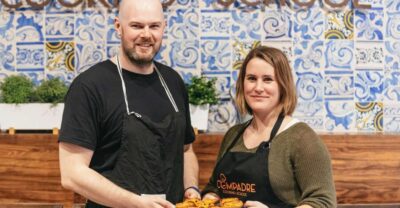
Lisbon Portuguese Cooking Class with 3-Course Dinner
Read our review →
Traditional Portuguese Cooking Class in Lisbon
Read our review →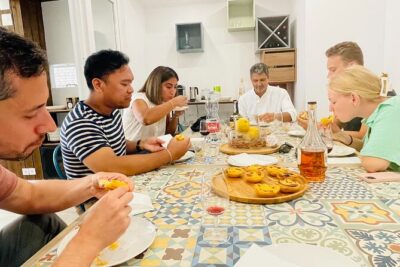
Browse the lists this tour appears in