
Reviewed · LISBON COOKING CLASSES
Portuguese Pastry Workshop in Lisbon
Lisbon is full of places selling pastel de nata. This workshop shows you what goes into one. At Casa dos Ovos Moles em Lisboa, you make pastel de nata and travesseiro de Sintra by hand, including the pastry itself, then sit down to eat the results with Port wine or Ginja.
I like two things right away: the class is capped at six people, so you get real time with the instructor, and the lesson covers two pastries rather than just one. You also get the story behind Portugal’s convent sweets, not just a recipe. The main drawback is the fixed afternoon start, listed as 3 p.m., which may not fit every sightseeing plan.
Key points
- Two Lisbon-area pastries: Make pastel de nata and the flaky travesseiro de Sintra.
- Pastry from scratch: The lesson includes preparing the puff pastry by hand, not simply filling ready-made shells.
- Small class size: A maximum of six people keeps the instruction personal.
- A proper tasting: Eat the finished pastries with Port wine or Ginja liqueur, plus coffee or tea.
- Central meeting point: The shop is at Calçada do Sacramento 25, near public transportation.
- Useful take-home skill: Recipes are provided so you can try the pastries again at home.
Making Two Famous Portuguese Pastries
This is a short, focused cooking class rather than a long food tour. Over about two hours, you work through two pastries that are closely tied to the Lisbon region.
The first is pastel de nata, Portugal’s famous custard tart. The second is travesseiro de Sintra, a sweet pastry associated with Sintra. Its name means pillow, a fitting description for its soft, folded shape.
The appeal is practical. You are not just watching a baker work behind a counter. You handle the ingredients, help shape the pastry, and take part in the process from start to finish. That gives you a better sense of why a good pastel de nata is harder to make than it looks.
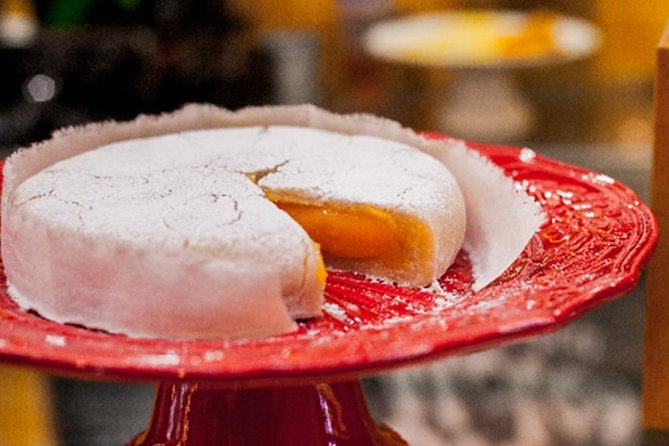
The class also places both pastries in Portuguese food culture. You hear about their links to convent baking and the long tradition of sweets made in monasteries. Casa dos Ovos Moles em Lisboa specializes in ovos moles, a Portuguese sweet with a stated 500-year tradition, so the setting connects the lesson to a broader pastry culture rather than treating the tarts as an isolated food fad.
More Lisbon Cooking Classes:
- Lisbon: Pastel de Nata Baking Class
★ 4.9 · 2,106 reviews - Lisbon: Traditional Portuguese Cooking Class
★ 4.9 · 592 reviews - Pastel de Nata Masterclass at a Real Bakery in Downtown Lisbon
★ 5.0 · 491 reviews
Inside Casa dos Ovos Moles em Lisboa
The workshop takes place at the pastry shop at Calçada do Sacramento 25, 1200-393 Lisbon. It is in a central part of the city and close to public transportation, making it a sensible stop during an afternoon in Lisbon.
The shop itself is part of the experience. One class description places the baking in an 18th-century building, giving the session a more distinctive setting than a modern cooking studio. You are working in a real pastry shop, not a room designed only for demonstrations.
That setting matters because the lesson feels tied to Lisbon’s food traditions. You can see the connection between the shop’s own focus on ovos moles and the pastries you are learning to prepare.
You should allow a little extra time to reach the address, especially if you are walking through central Lisbon’s steep streets. The meeting point is specific, and the activity ends at the same place, so you do not need to arrange a separate return transfer.
What You Actually Make During the Two Hours
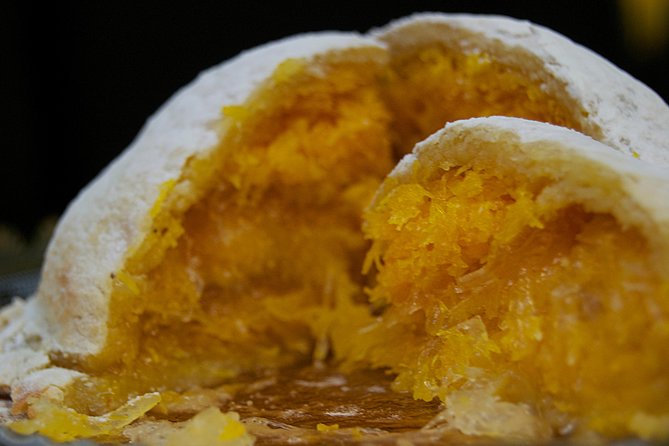
The class starts with the preparation of the pastries. The most useful part is the work on the dough. You learn how to make the puff pastry by hand, rather than arriving at the final stage with premade pastry.
That step adds both value and effort. It gives you a real appreciation for the technique behind the flaky layers, but it also means this is not a quick demonstration where you simply spoon custard into pastry cups. You should expect to participate.
The pastel de nata process includes the pastry and the sweet filling. The travesseiro de Sintra gives you a second style of Portuguese baking, with a different shape and character. Working on both makes the class more worthwhile than a single-recipe lesson, particularly if you enjoy baking or want to understand how regional pastries differ.
The instructors explain each stage and give participants something to do. Past sessions have been led by Maria, Filipa, and Filipe, and the teaching style described across the experience is patient, friendly, and hands-on. Since the class can include as few as one person or up to six, the exact feel may vary. A full group will be social, while a very small group can offer more individual attention.
Once the pastries are baked, you taste them at the shop. The serving includes two pastries, Port wine or Ginja liqueur, and coffee or tea. The alcohol is part of the standard food pairing, not an optional extra listed separately, so tell the provider if you do not drink and want to confirm the available alternatives.
Why the Small Group Size Matters
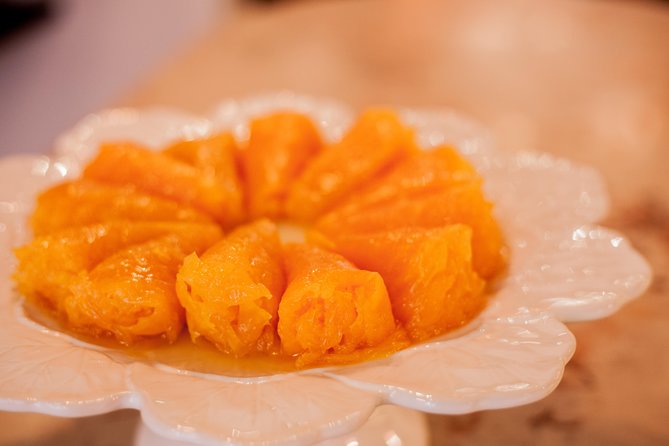
A six-person maximum is one of the strongest practical features. Baking requires room, tools, and attention. In a large class, it is easy to spend much of the time watching someone else shape dough. Here, each person has a better chance to work directly with the ingredients.
That small scale also suits families. The activity has worked well for parents with children and teenagers, including ages 11, 13, and 14. The recipes are engaging enough for younger participants, while the pastry techniques give adults something more serious to focus on.
I would also consider it for a couple or solo visitor. One person has taken the class alone and received the full workshop experience, including time to taste the pastries afterward. For a solo visitor, this can be a comfortable way to meet people without committing to a full-day group activity.
The group size is not guaranteed to be four or six. You may have a small class, and that can be a plus if you prefer detailed instruction. If you want a lively group atmosphere, the experience may feel quieter on a lightly booked date.
Something different to do with a day in Lisbon:
- Lisbon City Center Tour – The Unmissable Lisbon
★ 5.0 · 22,234 reviews - Lisbon: Sintra, Pena, Regaleira, Cabo da Roca & Cascais
★ 4.7 · 19,656 reviews - Sintra: Pena Palace and Park Entrance Ticket
★ 4.2 · 17,410 reviews - Lisbon: Jerónimos Monastery Entrance Ticket
★ 4.1 · 14,164 reviews
The Portuguese Story Behind the Sweets
The lesson includes the story of Portuguese pastries and their monastery origins. That context gives the food more meaning. Many Portuguese sweets are linked to convent kitchens, where egg yolks were used in large quantities after egg whites served other purposes in cooking and household work.
The supplied information specifically presents these pastries as products of Portuguese monastery traditions. You do not need to be a food historian to enjoy that background. It simply helps explain why Portuguese baking has so many egg-rich desserts and why these sweets are treated as part of the country’s cultural identity.
Casa dos Ovos Moles adds another layer. Ovos moles are associated with a 500-year Portuguese tradition, and the shop’s specialty makes it a fitting place to discuss old pastry methods. You will not just learn a modern recipe adapted for tourists. The class is built around food with a clear local connection.
I especially like this combination of history and work. A short talk alone can fade quickly. A story told while you are mixing, shaping, and baking is easier to remember.
Tasting the Results With Port or Ginja
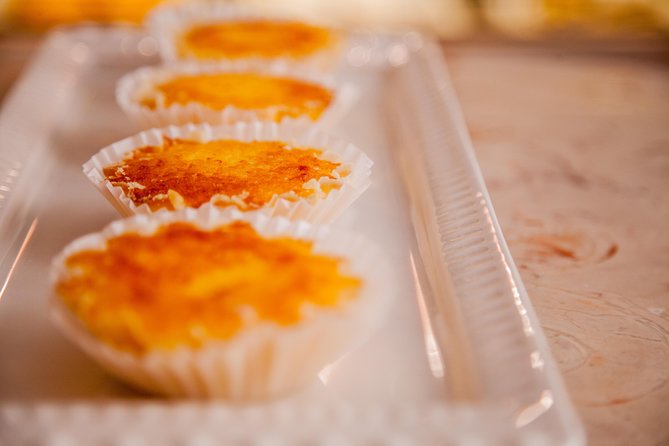
The final tasting is simple but well chosen. You eat the two pastries you made, accompanied by Port wine or Ginja liqueur. Coffee and tea are also included.
Port gives the pastry a classic Portuguese pairing, while Ginja brings in Lisbon’s well-known sour-cherry liqueur tradition. The tasting turns the lesson into a complete afternoon activity rather than ending as soon as the oven work is finished.
The finished pastries may be the best part of the class because you have handled the process yourself. Even small imperfections become useful. You can taste the result, compare the texture with pastries bought elsewhere, and understand how much care goes into a crisp shell and properly cooked filling.
The portion and presentation are described as a dessert tasting, not a full meal. If you are hungry, have lunch beforehand or plan dinner afterward. Two pastries with drinks can be satisfying, but this should not replace a substantial meal.
Is the $96.55 Price Fair?
At $96.55 per person, this is not the cheapest way to eat pastel de nata in Lisbon. You can buy a tart for a few euros and sample several bakeries for less money.
The price makes more sense if you value instruction and participation. You are paying for about two hours, two recipes, ingredients, hands-on preparation, the instructor’s time, food tasting, and drinks. You also receive recipes to use at home, which adds lasting value if you plan to bake again.
For a family, the cost can add up quickly, especially with four participants. Still, the small class size means the fee supports a more personal lesson rather than a large demonstration. For a serious pastry fan, a couple, or a family looking for an activity beyond standard sightseeing, the experience offers more than a snack stop.
I would not book it solely for the quantity of food. Book it for the skill, the setting, the Portuguese food background, and the chance to make something yourself.
Timing, Transport, and Planning Your Afternoon
The listed start time is 3 p.m., although class times can differ by day of the week. Confirm the exact time when booking and build your sightseeing plan around it.
The central meeting point is near public transportation. Transportation to and from the activity is not included, so you make your own way to the shop. The activity ends back at the meeting point, which keeps the logistics simple.
A mobile ticket is accepted, and confirmation is provided when you book. The experience is offered in English.
The workshop is often booked well ahead, with an average booking lead time of 94 days. That does not guarantee that every date sells out, but it is a useful warning for anyone planning a short Lisbon stay. If the class is important to your schedule, reserve it early rather than trying to fit it in at the last minute.
Free cancellation is available until 24 hours before the start time. Cancellations or changes inside that window are not refunded or accepted. The activity also requires good weather and a minimum number of participants. If the provider cancels for either reason, you are offered another date or experience, or a full refund.
Who Will Enjoy This Workshop Most?
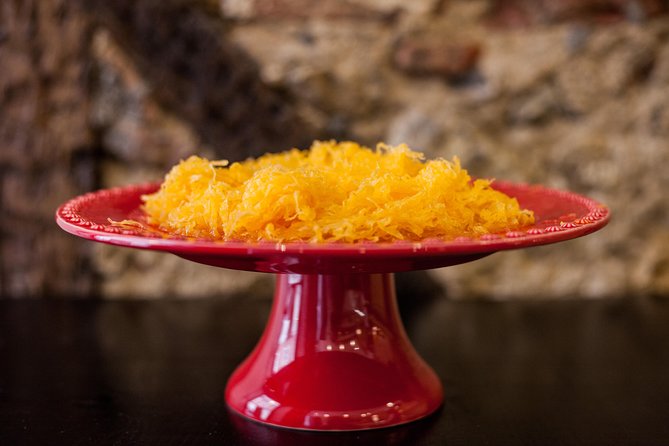
I would recommend this class to:
- People who enjoy baking and want to learn the pastry itself, not just taste it
- Families with children or teenagers who like hands-on activities
- Couples looking for a food-focused afternoon in central Lisbon
- Solo visitors who prefer a small, social class
- Repeat visitors who have already seen Lisbon’s main sights
- Anyone curious about the monastery traditions behind Portuguese desserts
It is less suitable if you want a quick tasting, dislike alcohol pairings, or have no room in your schedule for a two-hour fixed activity. It may also be frustrating if you expect professional bakery results immediately. The point is to learn a difficult technique, not to produce identical pastries with no practice.
The class is conducted in English, so you should be comfortable following spoken instructions in English. The small group format helps, but the workshop still depends on understanding the steps as they are explained.
Should You Book the Portuguese Pastry Workshop?
I would book this if you want to do something active and local in Lisbon. The strongest reasons are the small class size, the chance to make both pastries from scratch, and the mix of baking instruction, Portuguese food history, and tasting.
The $96.55 price is fair for a two-hour private-feeling lesson with food and drinks, though it is high if your only goal is to eat pastel de nata. Families should weigh the total cost, while pastry fans will likely find the hands-on work worthwhile.
Choose it for a 3 p.m. afternoon when you can reach central Lisbon without rushing. If you want a recipe, a story, and a skill to take home, this is a smart pick. If you simply want the best-value dessert in town, visit a bakery instead.
FAQ
How long does the Portuguese pastry workshop last?
The workshop lasts approximately two hours.
What pastries will I make?
You will make pastel de nata and travesseiro de Sintra, two pastries associated with the Lisbon region.
Is the class taught in English?
Yes. The experience is offered in English.
What is included with the pastry tasting?
The tasting includes the two pastries you make, Port wine or Ginja liqueur, coffee or tea, snacks, and other listed beverages.
Where does the workshop begin?
The meeting point is Casa dos Ovos Moles em Lisboa at Calçada do Sacramento 25, 1200-393 Lisbon, Portugal. The activity also ends at the meeting point.
What is the cancellation policy?
You can cancel up to 24 hours before the start time for a full refund. Cancellations or changes made less than 24 hours before the activity are not refunded or accepted.
Just reviewed in Lisbon
- Private tour Lisbon – full day★ 5.0 · 8 reviews
- Private Tour: Portuguese Food and Wine Tour★ 5.0 · 33 reviews
- Private Tour: Lisbon Sunset Walking Tour with Fado Show and Dinner★ 5.0 · 30 reviews
- Lisbon Football Experience – Private stadium and Museum Tour★ 4.0 · 10 reviews
- Lisbon and Sintra Essence 8H – Private Tour★ 5.0 · 5 reviews
- Private Catamaran Tour: Lisbon coast cruise with barbecue and drinks★ 5.0 · 20 reviews
- Lisbon: Helicopter Tour over Cascais & Cabo da Roca★ 5.0 · 4 reviews
- Private Tour Fátima – Nazaré – Batalha – Óbidos★ 5.0 · 6 reviews
Lisbon Cooking Classes, compared.
Pastel de Nata Masterclass at a Real Bakery in Downtown Lisbon
Read our review →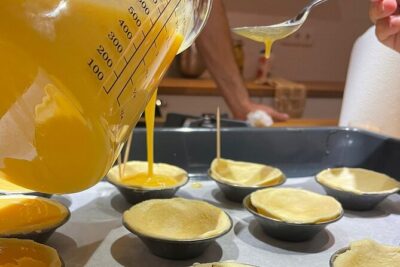
Pastel de Nata Pastry Class: Bake and Enjoy Your Own Treats
Read our review →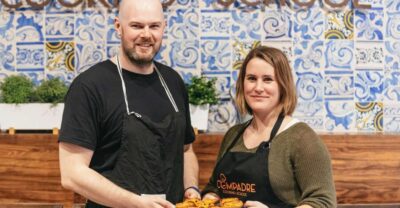
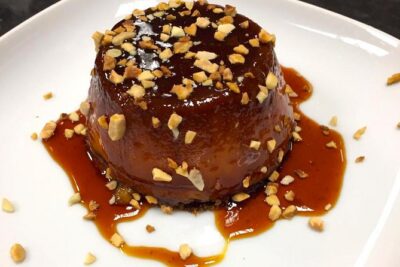
Lisbon Portuguese Cooking Class with 3-Course Dinner
Read our review →
Traditional Portuguese Cooking Class in Lisbon
Read our review →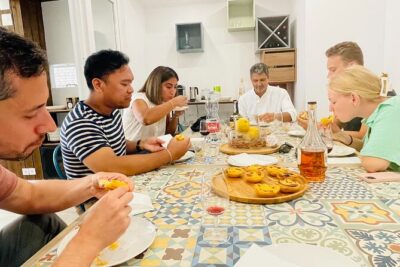
Browse the lists this tour appears in