
Reviewed · LISBON COOKING CLASSES
Pastel de Nata Cooking Class in a Lisbon Pastry Shop
Lisbon’s famous custard tart looks simple, but the pastry takes real hand skill. At Casa dos Ovos Moles, Filipa leads you through the dough, custard, shaping, and baking, then serves the results fresh from the oven. The small group makes this more useful than a watch-and-copy demonstration.
I like the mix of hands-on cooking and local flavor, especially the port wine, ginjinha, and talk about Portugal’s favorite pastry. I also like that the class takes place in an established pastry shop near central sights, rather than in a generic cooking studio. The main drawback is the price: at $99.72 per person for about 90 minutes, you pay for instruction and atmosphere, not simply a plate of tarts.
Key points to know before booking
- Maximum of six people: You get a better chance to handle the dough and ask Filipa questions.
- A true pastry lesson: The pastry and custard are made from scratch, with close attention to technique.
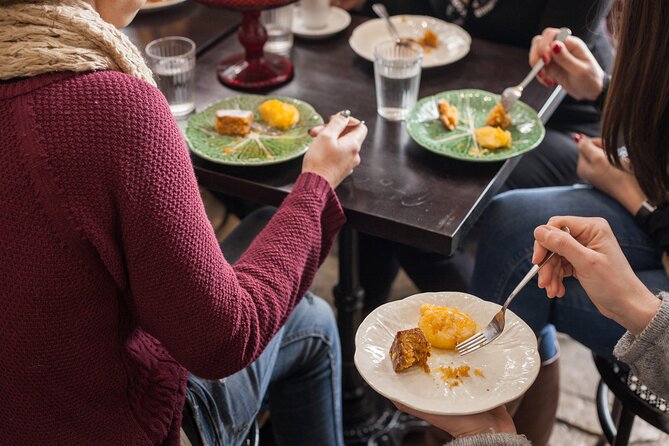
- Fresh results at the end: You eat the pastel de nata made during the session, straight from the oven.
- Portuguese drinks included: The tasting features port wine and ginjinha, a local cherry liqueur.
- Central Lisbon setting: The class meets at Calçada do Sacramento 25, near public transportation and a castle.
- Best for ages 12 and up: Children are welcome, but the activity is better suited to older children and adults who can follow detailed steps.
Why this 90-minute pastry class is more than a tasting
You can buy pastel de nata all over Lisbon. That is easy. The harder and more useful experience is learning why some tarts have crisp, flaky layers and a custard that is firm but silky.
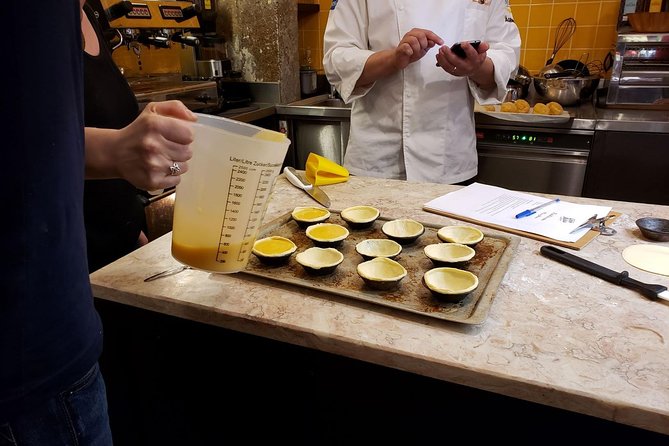
This class gives you that process in a compact format. You work with the dough, prepare the filling, shape the pastry, and watch it bake. It is not a private tart-making session for each person. The group works together, and each person takes part in different steps. That distinction matters if you expect to make a full batch alone from start to finish.
The reward is fresh pastry at the end, along with a better eye for the work behind the display counter. One part of the lesson that especially deserves attention is the dough. Shifting and shaping it without tearing the layers is harder than Filipa makes it look. Her job is not just to give instructions, but to show the hand movements and correct mistakes before they ruin the pastry.
You also get context about the pastry’s place in Portuguese food culture. The lesson connects the recipe to everyday life in Portugal, so the class is not just a cooking exercise. It gives you a reason to pay closer attention the next time you order a pastel de nata at a cafe.
More Lisbon Cooking Classes:
- Lisbon: Pastel de Nata Baking Class
★ 4.9 · 2,106 reviews - Lisbon: Traditional Portuguese Cooking Class
★ 4.9 · 592 reviews - Pastel de Nata Masterclass at a Real Bakery in Downtown Lisbon
★ 5.0 · 491 reviews
Meeting Filipa at Casa dos Ovos Moles
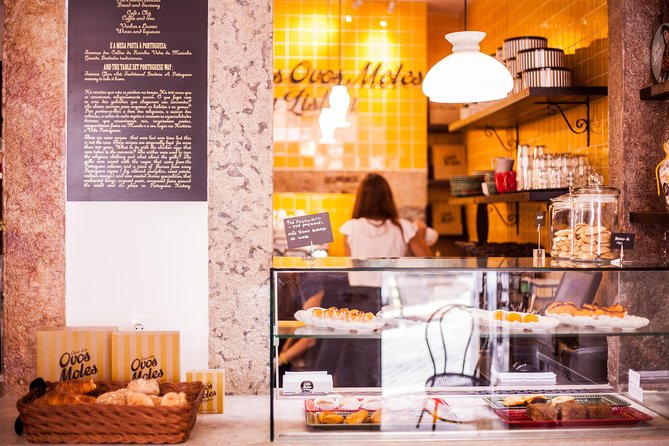
The class starts at 3:00 p.m. at Casa dos Ovos Moles, Calçada do Sacramento 25, 1200-393 Lisboa. This is an established pastry shop in the heart of Lisbon, and the setting helps the activity feel tied to the city rather than added on for tourists.
The location is near public transportation, though the supplied details do not specify a particular station or route. Plan to arrive with enough time to find the address. The class ends back at the same meeting point, so you do not need to arrange a separate pickup or worry about being left in another part of town.
A useful planning detail is the nearby castle. The class can fit neatly into a central Lisbon afternoon, with sightseeing before or after. One practical option is to pair the 3:00 p.m. start with nearby sightseeing earlier in the day, then continue exploring once the pastries are finished.
Filipa is both the instructor and the owner of the pastry shop. Her teaching style is a major part of the experience. She explains small techniques in detail, welcomes questions, and adjusts her approach when children or beginners need more help. You do not need professional baking experience. In fact, the class is designed to show you where the difficult parts are and how to handle them.
What you actually make during the class
The pastry is the central lesson. You learn how to make the flaky shell and custard filling from scratch, rather than assembling prepared ingredients. That gives the class more substance than a short demonstration followed by a tasting.
The dough requires care. It needs to be moved and shaped without breaking the layers, and the instructor demonstrates how to make that look easy. You may find the technique awkward at first. That is part of the value, because it shows why pastry shops rely on skill and repetition.
The custard is another important step. You learn how the filling is prepared and how it is combined with the pastry before baking. The available details do not provide a full recipe or exact ingredient list, but the lesson covers the process from start to finish. A recipe is also emailed after the class, which gives you a useful chance to try again at home.
Expect a shared, hands-on format. Everyone gets a turn, but no one person makes an entire batch independently. If you are attending with a partner or family member, you will be working together rather than each receiving a separate workstation and individual recipe. That can be social and fun, but it is worth knowing before you book.
The best part comes fresh from the oven
The class finishes by eating the pastel de nata made during the lesson. Fresh pastry changes the experience. The shells are at their best soon after baking, and you can judge the result while the techniques are still clear in your mind.
The tasting includes port wine and a shot of ginjinha, the local cherry liqueur. Coffee, tea, water, wine, and an aperitif are also listed with the menu. The combination gives the class a distinctly Portuguese feel without turning it into a long meal.
You are not simply handed a tart and told that it is traditional. You have watched the pastry take shape, seen the work involved, and tasted the result at the right moment. That is why the activity can change how you approach pastry shops for the rest of your time in Lisbon.
Several details make the end of the class particularly satisfying. You can compare your result with the instructor’s technique, ask about mistakes, and leave with a recipe to use later. The lesson also creates an easy setting for conversation with the other people in the group.
Something different to do with a day in Lisbon:
- Lisbon City Center Tour – The Unmissable Lisbon
★ 5.0 · 22,234 reviews - Lisbon: Sintra, Pena, Regaleira, Cabo da Roca & Cascais
★ 4.7 · 19,656 reviews - Sintra: Pena Palace and Park Entrance Ticket
★ 4.2 · 17,410 reviews - Lisbon: Jerónimos Monastery Entrance Ticket
★ 4.1 · 14,164 reviews
Small group, personal instruction, and family appeal
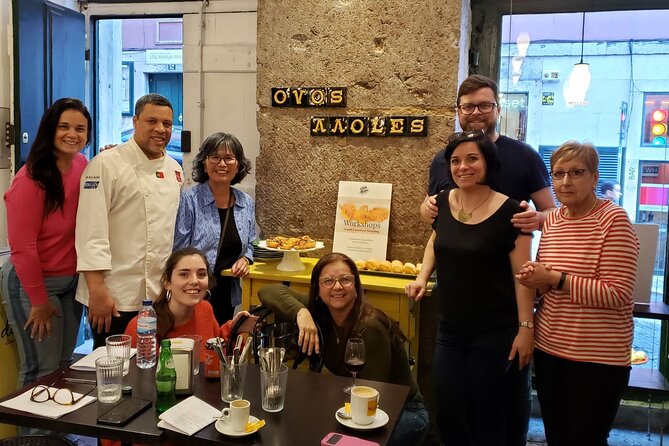
The group limit is six people. That is a strong feature for a technical class, since the instructor can see what each person is doing and step in when a movement goes wrong.
The class suits couples, families, and solo visitors who like food-based activities. Children aged 12 and older are welcome. The teaching can be adjusted for younger participants within that age range, but this is still a detailed pastry lesson, not a free-form children’s activity.
Families should also understand the shared format. Each person has a chance to participate, but the group takes turns during certain steps. Children may not be active every second, though the process is designed to hold their attention and give them a real role.
This is also a good choice if you want an activity that encourages conversation. The small group works toward one result, and the class leaves time for local recommendations and talk about daily life in Portugal. That social element is one reason the experience feels more personal than a standard food tasting.
Is $99.72 a fair price?
At $99.72 per person, this is not a budget way to eat pastel de nata. You can buy several tarts in Lisbon for far less. The price makes sense only if you want instruction, a small group, drinks, a pastry-shop setting, and the chance to make the food yourself.
The strongest value comes from the teaching. Filipa explains the fine points of the dough and filling, corrects errors, and shows the techniques needed to repeat the recipe at home. You also receive the recipe afterward, which adds something lasting to a 90-minute activity.
Still, the class is short. Ninety minutes gives you a focused introduction, not the relaxed pace of a full cooking day. The group format also means that your personal hands-on time is shared with five other people at most. If your main goal is simply to eat excellent pastel de nata, spend the money at pastry shops instead.
If you enjoy learning food traditions and want to take home a practical skill, the price is easier to justify. You are paying for access to an experienced baker, a small class, and the chance to understand a pastry that is more difficult than it looks.
Food restrictions and booking details
Tell the operator about allergies, special diets, or other food restrictions when you book. The available information does not promise that every restriction can be accommodated, so do not wait until you arrive to mention one.
Confirmation is provided at booking. The experience is offered in English and uses a mobile ticket. It is recommended by all recorded participants, with a rating of 5 from 30 reviews, but the more useful point is what the format promises: a small class led by Filipa, practical work, and a tasting at the end.
The activity requires a minimum number of people. If it is canceled because that minimum is not reached, you will be offered another date or activity, or a full refund. You can cancel for a full refund up to 24 hours before the start time. Changes or cancellations inside that 24-hour window are not accepted and are not refunded.
Who should book this Lisbon pastry experience?
Book it if you like food with a story, want to learn a technique rather than just taste a specialty, or are looking for a friendly activity away from the usual sightseeing route. It is especially suitable for couples, families with children aged 12 and older, and anyone who wants a recipe to recreate at home.
You should also book if a small class matters to you. A six-person limit gives Filipa room to offer corrections and answer questions. Beginners are welcome, and the teaching is patient rather than competitive.
Think twice if you want a private lesson, a full meal, or a long class with lots of individual baking time. You will share the work with the group, and the class lasts about an hour and a half. The cost is high for a pastry tasting, but reasonable for a compact lesson with drinks and fresh results.
FAQ
Where does the pastel de nata class meet?
The class meets at Casa dos Ovos Moles, Calçada do Sacramento 25, 1200-393 Lisboa, Portugal.
What time does the class start?
The experience starts at 3:00 p.m.
How long does the class last?
The class lasts approximately 1 hour and 30 minutes.
What will I learn to make?
You will learn to make pastel de nata from scratch, including the pastry and custard filling.
Are port wine and ginjinha included?
Yes. The experience includes a glass of port wine and a shot of ginjinha. Coffee, tea, water, wine, and an aperitif are also listed with the menu.
How many people can join the class?
The class has a maximum of six people.
Can children participate?
Yes. Children aged 12 and older are welcome.
Can I cancel for a refund?
Yes. You can cancel at least 24 hours before the local start time for a full refund. Cancellations or changes made less than 24 hours before the start time are not accepted or refunded.
Should you book it?
Book this class if you want to understand the craft behind Lisbon’s most famous pastry and enjoy eating the result fresh from the oven. Filipa’s detailed instruction, the small group, Portuguese drinks, and recipe for home use give the experience more value than a simple tasting.
Skip it if your budget is tight or your only goal is to sample custard tarts. For everyone else, this is a smart Lisbon afternoon activity, especially when you want a break from monuments and a skill you can carry home.
Just reviewed in Lisbon
- Private tour Lisbon – full day★ 5.0 · 8 reviews
- Private Tour: Portuguese Food and Wine Tour★ 5.0 · 33 reviews
- Lisbon Football Experience – Private stadium and Museum Tour★ 4.0 · 10 reviews
- Lisbon and Sintra Essence 8H – Private Tour★ 5.0 · 5 reviews
- Private Tour: Lisbon Sunset Walking Tour with Fado Show and Dinner★ 5.0 · 30 reviews
- Private Catamaran Tour: Lisbon coast cruise with barbecue and drinks★ 5.0 · 20 reviews
- Lisbon: Helicopter Tour over Cascais & Cabo da Roca★ 5.0 · 4 reviews
- Private Tour Fátima – Nazaré – Batalha – Óbidos★ 5.0 · 6 reviews
Lisbon Cooking Classes, compared.
Pastel de Nata Masterclass at a Real Bakery in Downtown Lisbon
Read our review →
Pastel de Nata Pastry Class: Bake and Enjoy Your Own Treats
Read our review →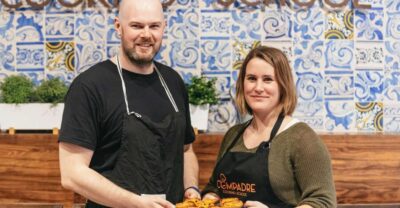
Lisbon Portuguese Cooking Class with 3-Course Dinner
Read our review →
Traditional Portuguese Cooking Class in Lisbon
Read our review →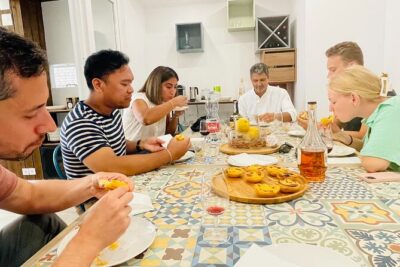
Browse the lists this tour appears in